This isn’t a guide for someone who woke up this morning and decided to “start a clothing brand.” It’s for people who already know their niche — tournament bass, saltwater fly, resort retail — and now need to turn a product idea into 50 to 200 real shirts that won’t fall apart after six washes.
We’ve spent 18 years on the factory floor watching fishing brands launch. We’ve seen what separates the ones that reorder within three months from the ones sitting on $15,000 of inventory they can’t move. This is that knowledge, compressed.
1. Before You Contact a Factory: The Four Decisions That Determine Everything
Most first-time brand owners email a factory with “I want to make fishing shirts, how much?” That’s like walking into a car dealership and saying “I want something with four wheels.” The factory can’t help you because you haven’t actually decided what you’re making yet.
Here’s what you need locked down before your first factory conversation:
Decision 1: Your Exact Niche
“The fishing market” is at least six different markets. Pick one sentence: “We make **__ for **____.”
| If your customer is… | They need… | They won't pay for… |
|---|---|---|
| Tournament bass angler | Sublimated jersey, sponsor logo placement, 4-way stretch | Premium woven fabric, tropical prints |
| Saltwater charter captain | UPF50+ hooded shirt, face mask, corrosion-resistant zipper | Lightweight feel — they want substance |
| Fly fishing guide | Button-up woven, traditional look, vented back | Loud prints, spandex-heavy stretch |
| Resort gift shop buyer | Tropical-print button-up, branded packaging, retail-ready | Tournament-level technical specs |
The brand that nails this decision ships product. The brand that skips it ships inventory problems.
Decision 2: Your Fabric Specs
You don’t need to be a textile engineer. You need to answer three questions:
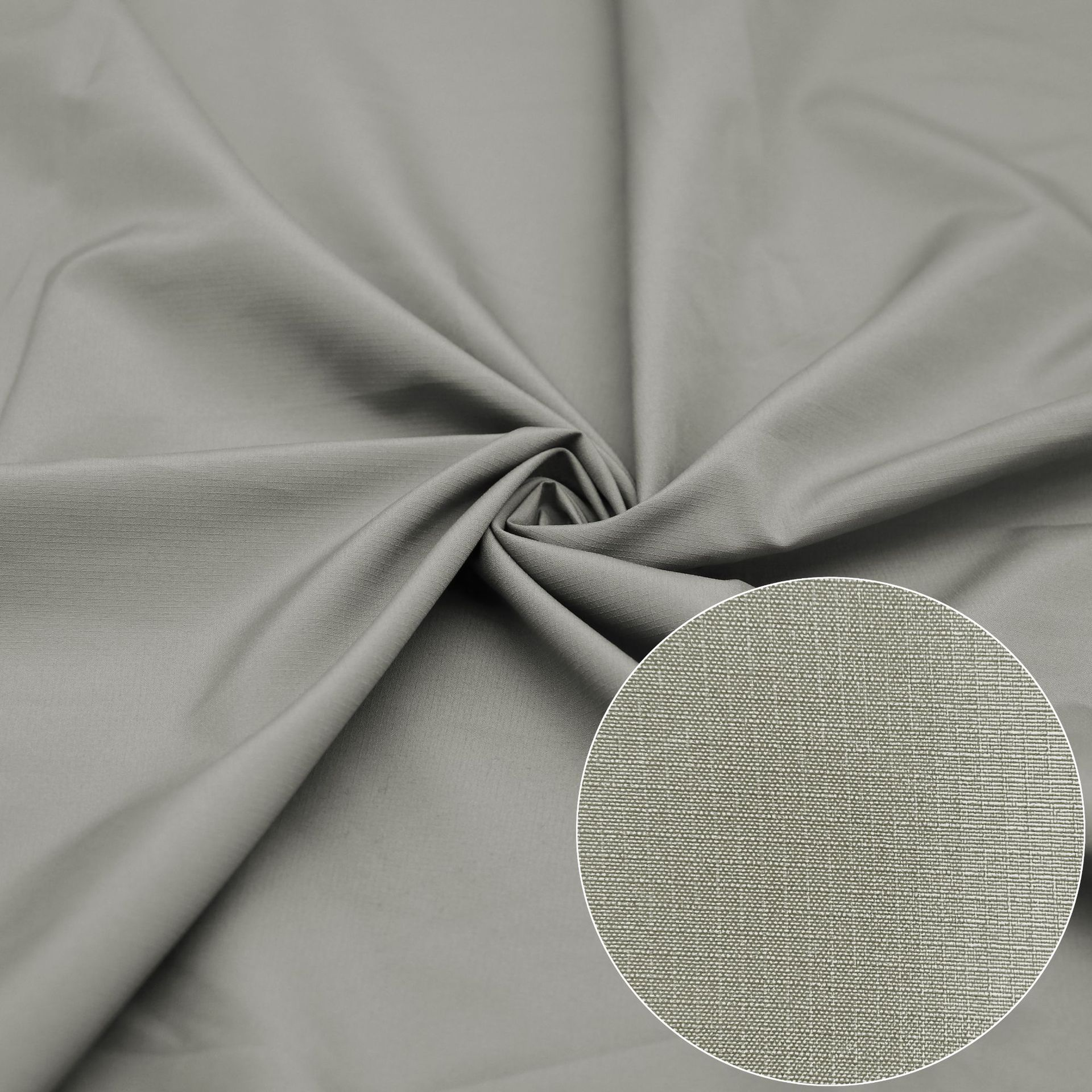
- Weight: 160gsm (all-around summer), 180gsm (heavier, UPF50+ without chemical treatment), or 140gsm (ultralight, but may need chemical UPF boost)?
- Stretch: Zero spandex (budget, durable), 10% spandex (4-way stretch, tournament-ready), or woven (button-ups only)?
- Sustainability: Standard polyester, or GRS-certified recycled polyester (8–15% fabric cost premium, but increasingly expected by REI/Orvis/Patagonia demographics)?
Decision 3: Which Features Are Worth Your Budget
Not every 2026 trend belongs in your first collection. Here’s a quick trade-off table based on what we see working right now:
| Feature | Cost/Unit | Worth It If… | Skip If… |
|---|---|---|---|
| GRS recycled polyester | +$0.50–1.10 | Your customer shops REI/Orvis/Patagonia | You're selling on price alone |
| Insect-repellent treatment | +$2.00–4.00 | You fish mosquito country (Florida, Gulf, summer freshwater) | Most of your customers fish saltwater |
| Cooling yarn technology | +$1.50–3.50 | Your retail price is $60+ and you market in Texas/Florida/Australia | Your first run is under 200 units — test demand first |
| Built-in face mask (hooded) | +$0.80–1.50 | Saltwater/offshore focus | Freshwater bass — most anglers won't use it |
The rule: If a feature adds more than 10% to your landed cost, it needs to either (a) justify a higher retail price or (b) be the reason a customer chooses you over a competitor. For a first run under 200 units, pick one premium feature and execute it well. Don’t load up on five.
Decision 4: Your Branding Components
Before printing a brand label, review the USPTO trademark process for your target market and the FTC care-labeling rules for garments sold in the United States. These are reference links, not legal advice.
Custom woven neck labels and packaging vs. printed labels. Hang tags vs. no hang tags. Individual polybags with stickers vs. bulk-packed. These add $0.40–0.80 per unit and determine whether your shirt arrives looking like a brand or a generic Alibaba purchase. Decide before sampling, because changing labels after production starts is expensive.
2. Finding the Right Factory (and Avoiding the Ones That Burn You)
There are three kinds of suppliers you’ll encounter, and only one is what you actually want.
The Three Types, Honestly Described
| Type | What They Are | What They'll Tell You | Our Experience |
|---|---|---|---|
| Trading company | Middleman. Sources from multiple factories, adds 15–30% markup. | "We have our own factory." (Technically true if they own a desk in one.) | Fine for simple orders. Problematic when something goes wrong — they can't walk onto the production floor and fix it. |
| General garment factory | Makes school uniforms, promotional T-shirts, and "also fishing shirts." | "Yes, we can do UPF50+." | Usually means they'll buy UPF-labeled fabric and hope for the best. They don't understand fishing-specific construction: thumb loops, rod holders, vent placement. |
| Fishing-specific OEM factory | Makes fishing apparel as a primary or major category. | Asks you questions before quoting. | This is what you want. They know the difference between a bass jersey and a fly fishing woven. They stock UPF-tested fabric. Their QC team knows to check hood drawcord placement and face mask stitching. |
Red Flags We’ve Learned the Hard Way
- No video call willingness: walk away. If they won't show you the factory floor, there's a reason.
- Quote arrives in under 30 minutes: they're guessing, not calculating.
- No technical questions about your design: they don't know what they don't know.
- Can't provide an existing client reference (with permission): they have no track record.
- No BSCI/SEDEX/ISO audit report available on request: quality and labor compliance are both invisible until they're not.
Questions Worth Asking
- "Can you send me a UPF test report from SGS, Intertek, or Bureau Veritas for the fabric you're proposing?"
- "What's your typical inline defect rate on fishing shirts?"
- "Walk me through what happens if I reject a bulk shipment because the color doesn't match the lab dip."
A good factory answers these directly. A bad one changes the subject or gets defensive.
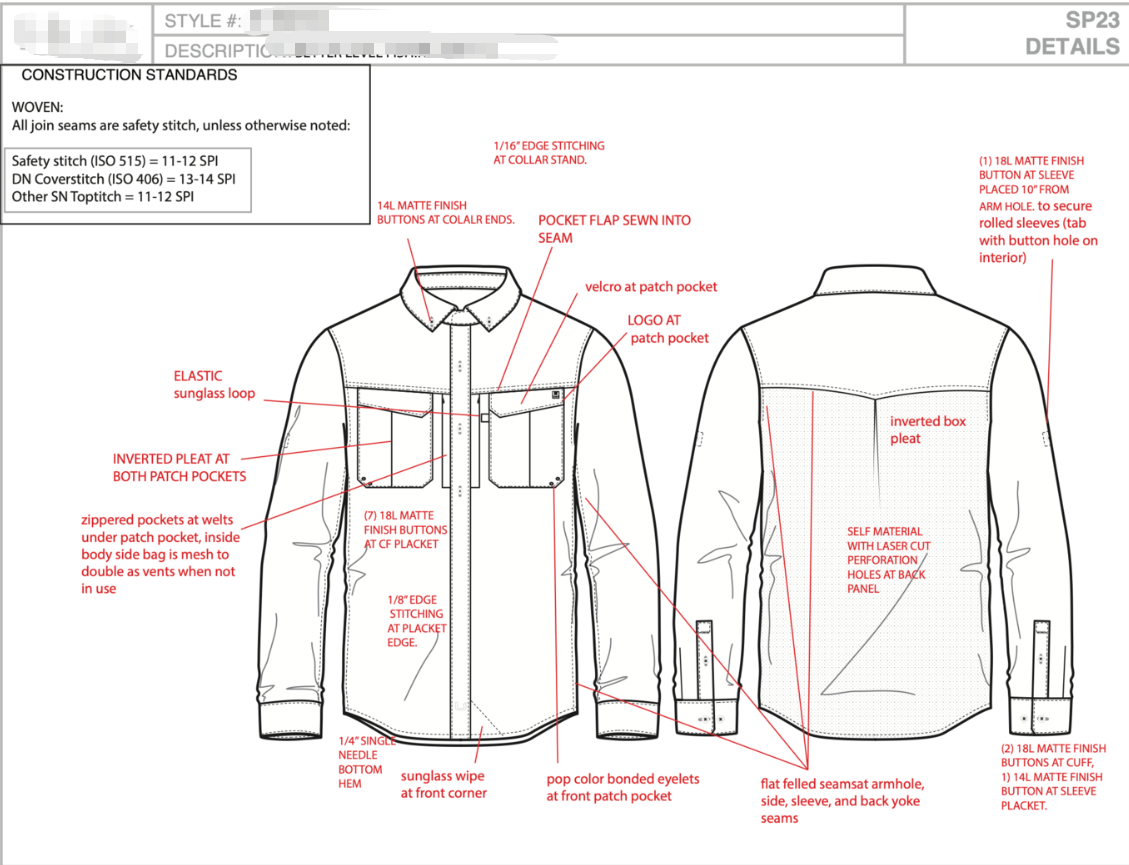
3. From Your Sketch to a Production-Ready Sample
This is where most timelines fall apart. Here’s what the sampling process actually looks like when it runs well — and where it usually breaks.
The Real Timeline
| Stage | What Happens | Realistic Time | Where Brands Get Stuck |
|---|---|---|---|
| Tech pack finalization | You provide design specs; factory confirms feasibility | 3–7 days | Sending vague instructions ("make it look like this photo") and expecting the factory to fill in the blanks |
| Lab dip | Factory dyes fabric swatches to your Pantone colors for approval | 5–10 days | Rejecting multiple rounds because the screen color doesn't match the fabric color |
| Pre-production sample | One physical sample in your base size, correct fabric, print, trims | 10–18 days | Approving a sample you haven't worn, moved in, or sweat in |
| Revision rounds (if needed) | Factory adjusts based on your feedback | 5–10 days per round | Making changes verbally instead of updating the tech pack |
| Bulk production | Manufacturing begins after sample approval | 12–20 days | — |
| Total to production start | 5–7 weeks |
The Mistake That Costs the Most Time
We see this at least once a month: a brand approves a digital mockup, approves the physical sample, production runs — and then they realize the fit is wrong because they never actually tested the sample on a real person doing real activities.
Unbreakable rule: Before approving a pre-production sample, put it on. Cast in it for 15 minutes. Sit in it. Reach overhead. If you can’t do this yourself, send it to someone who fishes your target conditions and get their feedback. One extra week of fit testing saves 8–12 weeks of remaking a production run.
4. Sample Budget, Not a Quote
Every fishing shirt costs something different to make. Material, complexity, quantity, and destination all shift the numbers. What follows is an example — not a price list — based on real 2026 costs for a specific scenario.
Scenario: 200 units of a long sleeve UPF50+ performance fishing shirt, 160gsm 90/10 polyester-spandex, all-over sublimation print, woven neck label, YKK zippered chest pocket, individual polybag. Sea freight to US West Coast.
| Cost Component | Per Unit (Example) | What Makes This Number Change |
|---|---|---|
| Fabric (160gsm, UPF50+ rated) | ~$4.50–6.50 | Weight (gsm), certification (GRS/OEKO-TEX adds 15–25%), minimum fabric order |
| Sublimation printing (all-over) | ~$2.50–4.00 | Coverage area, number of colors, setup fee amortization |
| Cut & sew labor | ~$2.80–4.20 | Complexity — hood, thumbholes, face mask, and zippered pockets each add cost |
| Trims (zippers, drawcords, labels) | ~$0.90–2.30 | YKK vs. generic zipper; custom woven labels vs. printed |
| QC and inspection | ~$0.50–0.90 | Inline inspection + AQL final inspection |
| Packaging | ~$0.40–0.80 | Individual polybag + carton; custom packaging adds $0.80–1.80 |
| Factory total (FOB) | ~$12.60–18.70 | |
| Sea freight (to USWC, per unit) | ~$1.50–2.50 | Fuel surcharges, container consolidation, seasonal rates |
| Import duties and customs | Variable | Determined by HS code classification, fabric composition, country of origin, and current import policy — not a fixed percentage |
For US-bound orders, confirm the current classification and duty with a customs professional and the USITC Harmonized Tariff Schedule.
Landing at a real number requires your exact specs. The brands that get burned are the ones who take a ballpark quote from one factory, commit to a retail price based on it, then discover the actual landed cost is 30% higher because they didn’t factor in the YKK zipper, the woven label, or the duty rate.
5. Pricing It Right — and Selling It for What It’s Worth
If your landed cost is $17–25 per shirt, here’s what sustainable pricing looks like in 2026:
| Channel | Typical Retail | Your Margin | The Reality |
|---|---|---|---|
| DTC (your own site) | $49–69 | 52–64% | Best margins. You keep the full retail minus your cost. |
| Wholesale to retailers | $27.50 wholesale ($55 retail) | Thin to negative | At $17–25 landed, you need $34+ wholesale to clear 50% margin. Most new brands can't hit that volume pricing. |
| Amazon FBA | $45–65 list | 35–48% after fees | Amazon takes ~15% referral + $3–5 fulfillment. Workable if your landed cost is at the low end of the range. |
The honest recommendation for brands starting at MOQ 50–200: Launch direct-to-consumer first. Prove demand. Build reviews. Then add wholesale and Amazon once you have volume that brings your per-unit cost down. This isn’t a shortcut — it’s math.
What We Actually Need From You
If you’ve read this far, you’re probably past the “just browsing” stage. Here’s what moves a conversation from “tell me your prices” to a real, reviewable project:
- Your product idea: What are you making? Long sleeve or hooded fishing shirts, button-up woven styles, or a tournament jersey? Send reference images - even a competitor's product you want to improve on.
- Your target quantity: 50 pieces? 200? 500? This changes everything about pricing, timeline, and what's feasible.
- Your timeline: When do you need samples? When does stock need to be in hand?
With those three things, we can tell you in 24–48 hours whether your project is feasible, what the realistic timeline looks like, and what numbers you should actually be budgeting.
Send Us Your Project for a Feasibility Review →
Last updated: July 8, 2026 | Victor, Founder of EZ Fishing Wear | Dongguan, China
This article reflects 18 years of OEM/ODM fishing apparel manufacturing experience. For legal, financial, or import/export advice, consult a qualified professional. Prices are examples based on mid-2026 conditions and will vary by specification.