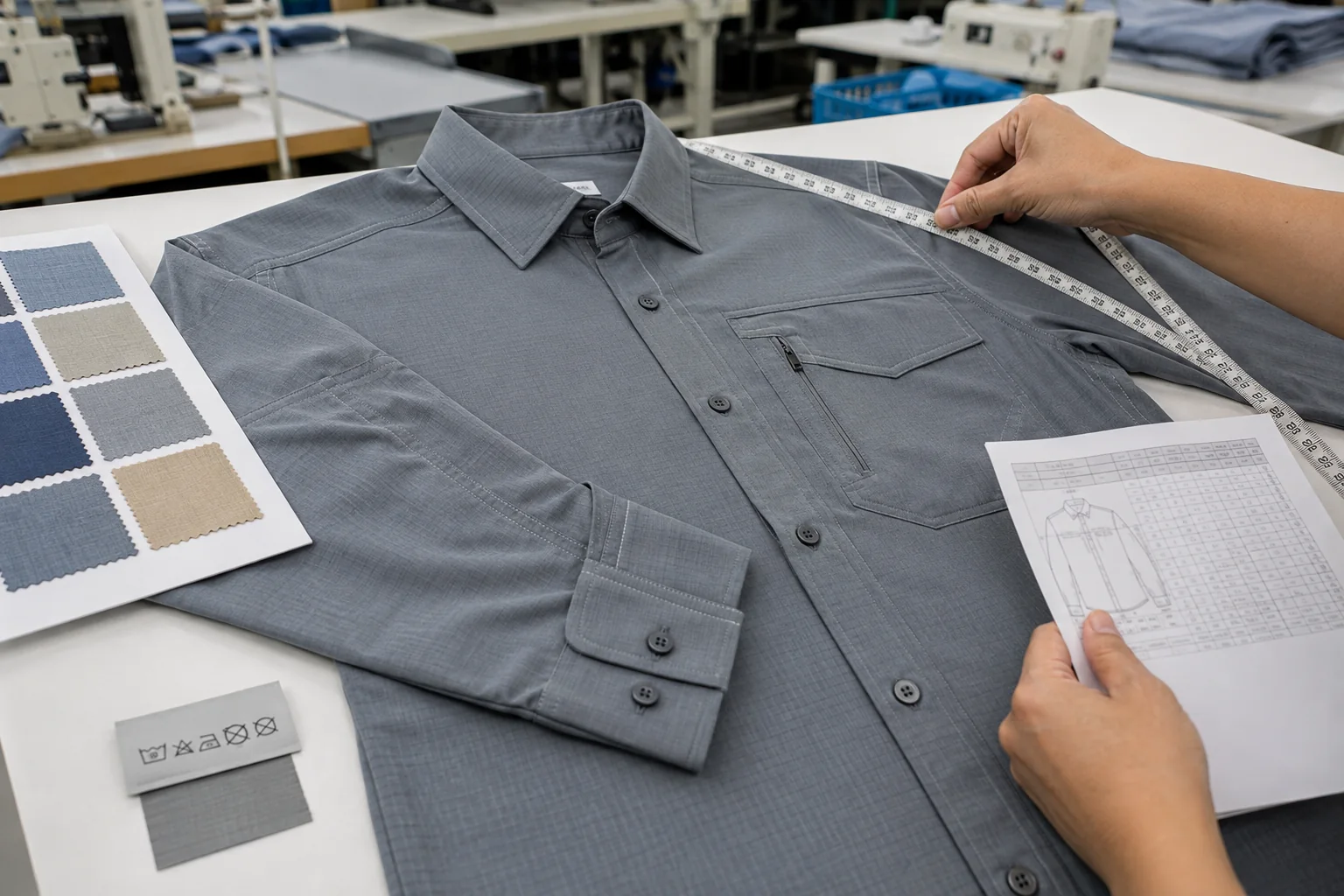
Evaluate a fishing shirt manufacturer by testing whether its evidence matches your product brief. Ask for fabric codes and reports, a sample made with production-intent materials, written MOQ assumptions, measurement records, and a defined inspection plan. Compare suppliers against the same specification. A low quote based on a different fabric or decoration scope is not a useful comparison.
How to Evaluate a Fishing Shirt Manufacturer
Use the same seven-step review for every candidate:
- Confirm that the factory already makes your fishing shirt category.
- Send one controlled product brief to every supplier.
- Match each proposed fabric to a code, specification and test evidence.
- Order a production-intent sample, not an unrelated stock garment.
- Inspect fit, stitching, vents, pockets, trims and decoration.
- Review the bulk inspection method and defect handling process.
- Compare quotes only after materials, quantities, packaging and shipping terms match.
The sequence matters. Price is useful after the product has been defined. Before that point, a quote may describe a cheaper shirt than the one you intend to sell.
Step 1: Check Category Fit Before Factory Size
A large sportswear factory may be capable of sewing a fishing shirt. Capability is different from category familiarity.
For a performance button-up, ask to see recent examples with woven quick-dry fabric, shaped chest pockets, a back-yoke or cape vent, roll-up sleeves and private labels. For a sublimated tournament shirt, ask for panel printing, color consistency and seam-alignment examples. A factory that only shows cotton promotional T-shirts has not yet proved either route.
Use specific questions:
- Which comparable fishing shirt styles have you produced in the last twelve months?
- Are patternmaking, sampling, printing and bulk sewing handled by your team or subcontracted?
- Can you identify the proposed fabric by composition, finished GSM and internal code?
- Which construction details usually create problems during sampling?
The last question is revealing. A salesperson who says every design is easy may be trying to protect the inquiry. A technical team will usually identify a real constraint, such as vent mesh curling, embroidery puckering on light woven fabric, or a pocket flap becoming too stiff after extra layers are added.
Step 2: Send the Same Product Brief to Every Supplier
Supplier comparisons fall apart when one factory prices a stock shirt with a logo and another prices a new pattern, custom fabric color, private labels and retail packaging.
Your brief should include:
| Input | Minimum useful detail |
|---|---|
| Product | Button-up, polo, sun hoodie, jersey or jacket |
| Target use | Hot coastal fishing, guide uniform, resort retail or tournament team |
| Fabric | Composition range, GSM range, stretch, hand feel and required claims |
| Construction | Sleeve length, collar, vents, pockets, closures and seam details |
| Branding | Embroidery, heat transfer, print placement and private labels |
| Quantity | Pieces per style and color, plus expected size range |
| Compliance | Destination market and required test documents |
| Timing | Sample deadline, launch date and delivery location |
Use drawings where construction matters and measurements where fit matters. A mood board can explain visual direction, but it cannot tell a patternmaker how wide the pocket flap should be. The fishing apparel tech pack checklist covers the information needed before sampling.
Step 3: Tie Fabric Recommendations to Evidence
“We have UPF fabric” is not enough. Ask for the fabric code, composition, finished weight, usable width, stock status, color route and relevant report. If the factory sends a test report, compare the report’s specimen description with the fabric proposed in the quote.
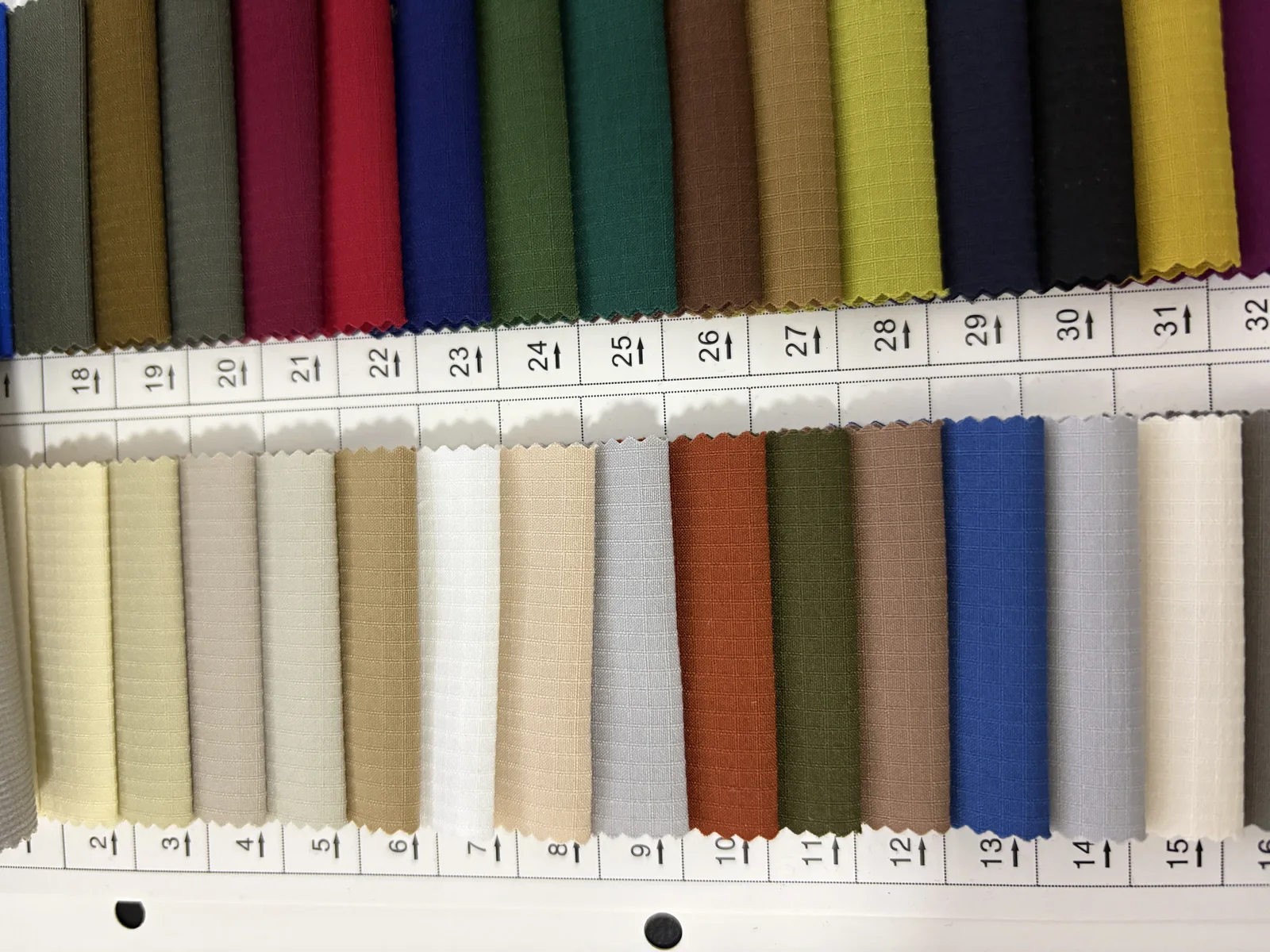
Stock colors can support a lower-risk first run because the factory does not need to meet a separate fabric-dyeing minimum. A custom Pantone color may still be the right choice for an established range, but the quote should state the lab-dip process, approval standard and minimum quantity.
For a UV claim, check which method was used. AATCC TM183 measures ultraviolet radiation transmitted through fabric, while ASTM D6603 addresses labeling of UV-protective textiles in the US context. A factory certificate, such as BSCI or ISO 9001, does not replace a product or fabric performance report. They answer different questions.
Ask for a swatch before approving a sample when hand feel is central to the product. Photographs cannot show drape, noise, stretch recovery or how the fabric feels after it becomes damp.
Step 4: Order a Production-Intent Sample
A stock sample can confirm general sewing ability. It cannot approve your product.
The useful sample is made with the proposed fabric family, pattern direction, vent structure, pocket arrangement, trims and decoration method. Custom labels can sometimes wait until a later sample, but their dimensions and placement should already be recorded.
Give each sample round a job:
- Fit sample: checks pattern balance, movement, sleeve length and body ease.
- Construction sample: checks vents, pockets, closures, seam type and reinforcement.
- Pre-production sample: freezes the approved materials, colors, decoration, labels and packing reference for bulk.
One physical garment may cover more than one purpose when the style is simple. Keep the approval record clear. “Sample approved” should mean the buyer knows exactly which version, date and comments were approved.
Do not rush past a sample that is close. A pocket placed 15 mm too low can still look acceptable in a front-view photo, but the error will repeat across the entire order. The cost of correcting the pattern before cutting is much lower than sorting finished garments.
Step 5: Inspect the Details That Repeat in Bulk
The sample review should separate subjective preference from measurable workmanship.
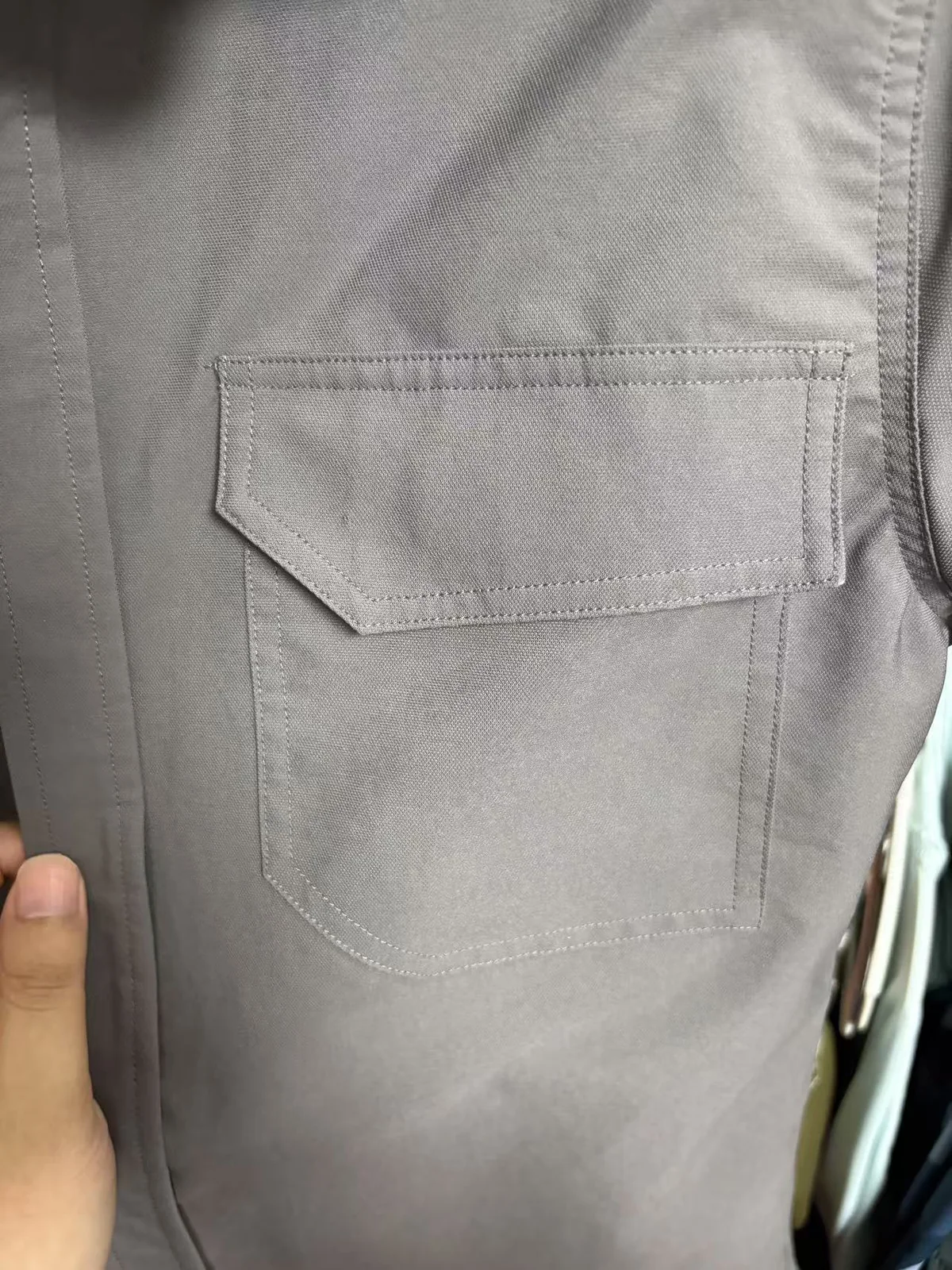
For a button-up fishing shirt, inspect:
- collar symmetry and whether the points roll after washing;
- placket width, button spacing and front-edge twisting;
- pocket position, flap shape, closure strength and corner reinforcement;
- back-vent opening, mesh recovery and edge comfort;
- armhole movement, sleeve-roll tabs and cuff alignment;
- embroidery or transfer puckering on the chosen fabric;
- loose threads, skipped stitches, seam grin and needle marks.
Then wash the sample according to the proposed care label. Measure it again, check shade change and inspect the collar, placket, pocket and vent. A dry, unworn sample only proves how the product left the sample room.
Step 6: Ask How Bulk Quality Is Controlled
“We inspect every order” is a starting statement. Ask what is inspected, when it happens, who records the result and what triggers rework.
A useful plan identifies checks at material receipt, early production, inline sewing, finishing and final packing. For your product, the checklist should include the few details that can ruin the order even when the basic sewing looks clean. On a button-up shirt, those may be pocket height, collar shape, vent opening and logo placement. On a sublimated shirt, they may be print shade, panel orientation and seam alignment.
Final sampling can be based on an agreed acceptance plan. ISO 2859-1:2026 defines AQL-indexed sampling schemes for lot-by-lot inspection by attributes. The useful discussion is not whether a factory recognizes the term “AQL.” Agree on the inspection level, defect categories, acceptance limits and remedy before shipment.
Also ask what happens when the inspection fails. Will the factory open more cartons, sort the lot, repair affected garments, replace units or negotiate another remedy? Put the agreed process in the purchase order or quality agreement.
Step 7: Compare the Full Quote Scope
Build a comparison sheet with one row for each cost or assumption:
| Quote item | What must match |
|---|---|
| Garment | Approved construction and finished measurements |
| Fabric | Code, composition, GSM, color route and finish |
| Decoration | Method, size, placements and number of colors |
| Labels | Main, size, care/content and country-of-origin requirements |
| Packaging | Polybag, hangtag, barcode, carton mark and pack ratio |
| Quantity | Pieces per style, color and size mix |
| Testing | Included reports, new testing cost and responsible party |
| Trade terms | EXW, FOB or DDP, plus named port or delivery address |
| Timing | Sample, approval, bulk production and transit assumptions |
A $1.50 difference can disappear when the lower quote excludes a woven label, custom color, inspection or export carton. It can also be genuine. The comparison sheet lets you ask the right question instead of assuming either outcome.
Our separate article on MOQ, sampling and lead time for custom fishing shirts explains how those schedule decisions connect. Keep this manufacturer review focused on proof: what the supplier says, what the documents show and what the sample demonstrates.
Warning Signs During the Evaluation
Pause the project when you see repeated inconsistencies:
- the fabric code changes between the quote, swatch and sample;
- the supplier avoids sharing composition or finished GSM;
- a UPF report cannot be connected to the proposed fabric;
- sample corrections are acknowledged in chat but missing from the next version;
- the MOQ or lead time changes without a material or process reason;
- the factory will not define its final inspection or defect remedy;
- the bank beneficiary and contracting company do not match without explanation.
One mistake can be corrected. A pattern of uncontrolled information usually becomes harder to manage when more fabric, sizes and colorways enter bulk production.
Questions to Ask a Fishing Shirt Manufacturer
What is a reasonable MOQ for custom fishing shirts?
It depends on fabric availability, custom color minimums, print or embroidery setup, number of styles and how quantity is divided by color. Ask the factory to explain the MOQ driver. A stock-fabric logo program and a custom-dyed woven button-up should not be expected to follow the same minimum.
Should I request factory certifications?
Yes, when they are relevant to your customer’s compliance or sourcing policy. Check the legal company name, scope, issuing body and validity period. Keep factory-system certificates separate from material and product tests.
Can a supplier quote before I have a tech pack?
It can provide a budget range from a clear reference garment or specification sheet. A production quote should follow once the fabric, measurements, construction, decoration, quantity and packaging scope are defined.
How many sample rounds are normal?
There is no universal number. A simple logo change may need one approval sample. A new pattern with custom vents, pockets and fit may need several rounds. Judge the process by whether each round closes recorded issues, not by whether the supplier promises approval on the first attempt.
What evidence matters most?
The most useful evidence is connected: a named fabric, a relevant report, a sample made from that fabric, a measurement record and a written bulk specification. Certificates and factory photos support the review but do not replace the product evidence.
Start With One Comparable Brief
Send every candidate the same product, quantity, performance and delivery requirements. Then compare the answers, swatches, sample quality and document control on equal terms.
Review our OEM fishing clothing manufacturing process, explore custom button-up fishing shirts, or send us your specification for a factory response.
Last updated: September 7, 2026 | Victor, Founder of EZ Fishing Wear | Dongguan, China
Factory evaluation and inspection requirements should be adjusted to the product, destination market, buyer agreement and applicable regulations.