Per style and colorway, subject to the final specification
China factory · United States market
Custom Fishing Shirts for US Brands
We are a fishing apparel factory in China—not a company pretending to manufacture in the United States. US buyers work directly with us on fabric, fit, labels, artwork, sampling, quality records, and export packing, with import compliance decisions visible from the start.
A controlled sourcing route
01
China factoryDevelopment, sampling, production, QC
02
US-ready fileApproved labels, packing, invoice data
03
US destinationBroker, port, 3PL, retailer, or warehouse
After material, measurements, and artwork are confirmed
After approval, deposit, and material readiness
Before labels, cartons, and shipment documents are released
Who we supply
Custom fishing shirt programs built for real US buyers
A US fishing apparel order is easier to control when the product is designed around the buyer’s actual sales channel. A charter fleet needs fast staff identification and repeat sizing; a retail brand needs compliant labels, consistent packaging, and a reliable reorder record. We define that use case before selecting the garment.
Performance collections for long sun exposure
Long-sleeve UPF shirts, hooded sun shirts, vented button-downs, and lightweight polos for coastal and offshore customers, with quick-dry fabric, thumb holes, face-cover compatibility, and saltwater graphics as needed.
Staff, guide, and customer merchandise
Coordinated garments for captains, guides, lodge staff, and retail counters. Logo visibility, mixed sizes, reorder identification, and packing by location are planned before production.
Deadline-driven sponsor apparel
Full-sublimation jerseys with angler names, boat names, team colors, and sponsor marks. Artwork and roster cutoff dates are set before production because event deadlines leave little room for changes.
Retail-ready products under your brand
Products prepared for tackle stores, e-commerce, distributors, or 3PL fulfillment. Labels, hangtags, barcodes, polybags, carton marks, and assortments become one approved packing system.
US compliance
FTC label requirements for custom fishing shirts sold in the USA
Most textile apparel sold in the United States needs labels that identify fiber content, country of origin, and the manufacturer or another responsible business, plus care instructions. The exact product, claim, construction, and sales channel can add requirements, so the US importer should approve the final label file before bulk production.
| Label element | What the US file should confirm | Factory approval point |
|---|---|---|
| Fiber content | Generic fiber names and percentages by weight, presented accurately and in the required order | Match the approved fabric specification and supplier record |
| Country of origin | Imported finished shirts identify the country where they were manufactured; disclosure must be in English | Approve “Made in China” wording and neck placement before label production |
| Business identity | Full qualifying company name or an FTC Registered Identification Number; an RN is optional, not mandatory | Buyer supplies and approves the legal identity used |
| Care instructions | A permanent care label gives at least one safe, complete regular-care method under the Care Labeling Rule | Confirm instructions using fabric, print, trim, and wash-test evidence |
| UPF or performance claim | The wording should be supportable by an appropriate test report for the approved material or garment | Link the report, tested color, fabric code, and claim to the production file |
Build the evidence file with the garment.
Keep the approved fabric composition, purchase records, test reports, label artwork, wash instructions, sample approval, and final inspection evidence together. FTC guidance also addresses recordkeeping, while CBP expects the importer of record to exercise reasonable care over classification, value, origin, and entry information.
Landed cost
How to calculate landed cost for fishing shirts imported from China
Landed cost is not the factory price with freight added. A useful estimate combines the merchandise value, international transport, applicable duties, broker and entry charges, terminal or courier fees, and delivery from the US port or airport to the final warehouse.
FOB merchandise+international freight+duties and entry fees+clearance and inland delivery=estimated landed cost
Classify the finished garment
Tariff treatment depends on the finished shirt. Knit or woven construction, fiber composition, gender category, and garment type can lead to different HTS codes. Confirm the code with your customs broker.
Define the Incoterm and importer
FOB, FCA, DAP, and DDP allocate different responsibilities. Confirm who books freight, acts as importer of record, supplies the bond and importer number, and pays duties.
Cost the actual packing plan
Carton dimensions, destination, 3PL rules, delivery appointments, split deliveries, and storage affect the final cost after arrival.
Freight planning
Shipping custom fishing shirts from China to US ports and warehouses
The destination coast changes both transit planning and inland cost. Los Angeles and Long Beach are common gateways for West Coast inventory; New York/New Jersey and Savannah are common East Coast options. Houston can be relevant for Gulf-region distribution. The best route depends on sailing availability, final warehouse, shipment volume, and delivery deadline.
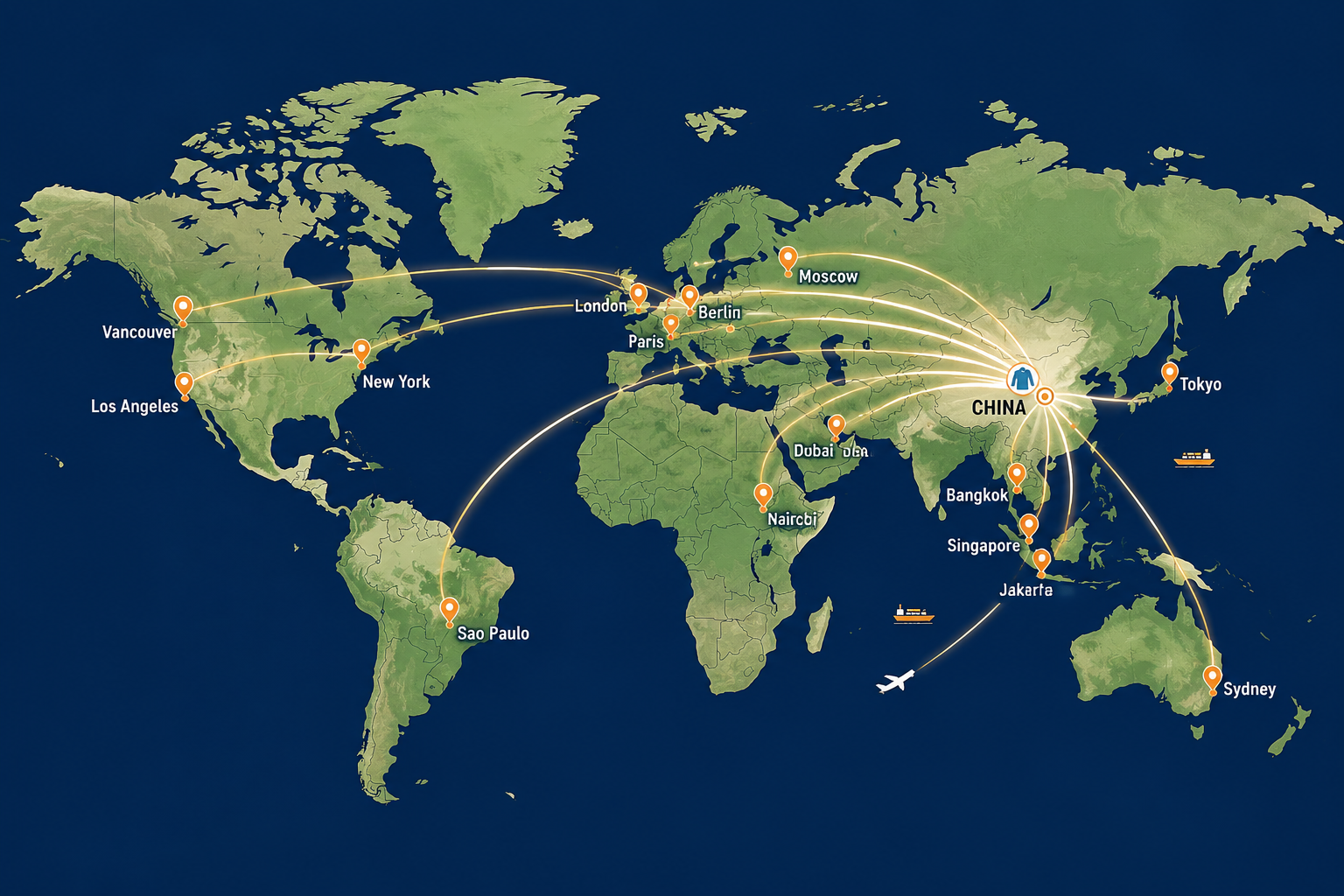
Planning note: These are working ranges, not carrier promises. Peak seasons, blank sailings, weather, inspections, port congestion, and inland appointments can change actual transit time. Our logistics and shipping service page explains what must be confirmed before booking.
Fit and sizing
US fishing shirt sizing needs more than a relabeled Asian size chart
US buyers commonly expect more room through the chest, shoulder, upper arm, and body than an Asian domestic block provides. The correct response is not to rename a factory XL as a US L. We develop or select a fit block from target-body measurements, garment measurements, intended layering, and a physical fit review.
Allow casting movement and airflow without creating excessive sleeve or body volume.
Plan grading and print placement across the real size curve, not only the medium sample.
4XL, 5XL, longer bodies, and longer sleeves may need separate blocks rather than aggressive grading.
Use dedicated proportions when the customer group justifies them; do not scale down a men’s block and call it finished.
Buying calendar
When should a US brand order custom fishing shirts?
For a new style, start approximately 14–18 weeks before inventory is needed. That allows specification review, a roughly two-week sample, feedback, about one month of production, freight, customs, and contingency. Repeat orders may move faster, but material and vessel schedules still need confirmation.
Begin development in late fall
Brands targeting February through April delivery should settle product direction and fabric before year-end where possible. Lunar New Year capacity and freight schedules need to be included in the plan.
Lock rosters and sponsors early
Set a hard artwork cutoff before production. Keep a small reorder plan for staff changes, but do not depend on a last-minute international shipment for the main event quantity.
Work backward from warehouse receipt
Retail appointment dates, marketplace check-in, photography, and merchandising all happen after production.
Treat the season as longer, not uniform
Florida, Texas, Gulf Coast, and warm-water markets may support year-round sun apparel. Use regional sales data to time color drops and replenishment instead of assuming one national fishing season.
Order control
MOQ, sampling, payment, and inspection for US orders
Our starting MOQ is from 50 pieces per style and colorway. The goal is a controlled first run, not a vague low minimum: the size breakdown, fabric lot, artwork version, labels, inspection method, payment milestones, and shipping terms must still be clear enough to repeat.
- 01
Send the US product brief
Share the product, target buyer, sizes, quantity, destination, artwork, price position, and any retailer or 3PL requirements. A reference garment and change list can start development when no tech pack exists.
- 02
Confirm cost-driving details
We align fabric, fit, construction, printing, labels, packaging, MOQ, Incoterm, and schedule. Freight and duty assumptions remain separate from the unit price.
- 03
Develop and approve the sample
The typical sample-production time is about two weeks after details are confirmed. Your team checks fit, hand feel, color, print, construction, branding, and care. Any revision is written into the controlled product file before bulk approval.
- 04
Approve payment and inspection milestones
Orders commonly use a deposit to release production, with the balance tied to completion and the agreed pre-shipment review. Buyer-appointed third-party inspection can be arranged before the order begins.
- 05
Produce, inspect, and ship
Bulk production is typically about one month after final approval and material readiness. Measurements, appearance, artwork, labels, quantity, and packing are checked against the approved file before shipment documents and freight handoff are completed.
Plan the next decision
US fishing apparel sourcing resources
Use these product and factory pages to define the garment before requesting a landed-cost estimate. Strong inquiries identify the product, market, quantity, destination, compliance owner, and delivery window.
Product page
Custom Fishing Shirts
Compare shirt types, fabrics, printing, features, and product-development options.
View product details → Buyer researchFishing Apparel Manufacturers for US Brands
Evaluate category experience, development support, factory evidence, MOQ, and location.
Read the article → Order planningMOQ, Sampling, and Lead Time
See how approvals and material decisions affect a first custom fishing shirt order.
Read the article → Development fileFishing Apparel Tech Pack Before Sampling
Prepare measurements, fabric, artwork, construction, labels, and packing information.
Read the article → Brand programPrivate Label Fishing Apparel
Build the garment, brand assets, packaging, and reorder records as one system.
Explore private label → Print programCustom Sublimation Fishing Shirts
Plan all-over artwork, sponsor placement, color approval, and panel production.
Explore sublimation → US buyer questions
Custom fishing shirts USA manufacturing FAQ
Can a US brand buy custom fishing shirts directly from your factory in China?
Yes. We work directly with US fishing brands, outdoor businesses, teams, charters, retailers, and distributors. Your company or appointed customs broker normally coordinates the US import entry, while we prepare the agreed commercial invoice, packing list, carton information, labels, and shipment records.
What is your MOQ for custom fishing shirts shipped to the USA?
Our practical starting MOQ is from 50 pieces per style and colorway. Sizes can normally be mixed within that program. Fabric, custom-dyed colors, complex trims, printing method, and packaging can change the final minimum, so we confirm the complete specification before quoting.
How long do samples and bulk production take?
A typical sample takes about two weeks after fabric, measurements, construction, and artwork are confirmed. Bulk production is normally about one month after sample approval, deposit, and material readiness. Freight, customs clearance, revisions, and peak-season capacity need separate time in the launch plan.
What labels do fishing shirts need for sale in the United States?
Most textile apparel needs accurate fiber content, country of origin, and the responsible business name or RN, plus permanent care instructions. Garments with a neck have specific placement rules for the country-of-origin disclosure. The importer should approve final copy and placement against current FTC and CBP requirements before production.
Can you prepare FTC-ready neck and care labels?
We can develop and apply neck, size, care, origin, woven, printed, or heat-transfer labels from buyer-approved artwork. We review the production proof for content, order, legibility, placement, and attachment, but the US importer or its compliance adviser remains responsible for approving the final legal wording.
Do you provide UPF 50+ test reports for the US market?
UPF fabric options and third-party testing can be included in the program. We confirm the test method, tested color and construction, report owner, and permitted claim before the label or product listing is approved. A report for one fabric should not automatically be applied to a materially different fabric, color, stretch, or finished garment.
Who pays US duties and acts as importer of record?
That depends on the agreed Incoterm and import arrangement. Under common FOB or DAP structures, the US buyer normally appoints a broker and remains responsible for entry information, classification, duties, and compliance. DDP should only be quoted after the importer-of-record and tax responsibilities are explicitly confirmed.
United States project review
Request a custom fishing shirt quote for your US program
Send the target product, quantity, destination state, artwork or reference, size range, and required warehouse date. We will review the practical development, US label, production, QC, packing, and shipping route before quoting.
- MOQ from 50 pieces per style and colorway
- Sample production in about two weeks
- Bulk production in about one month after approval