Pattern version
Artwork begins on the same graded panel set that will be printed and cut. A presentation mockup is not used as the production template.
Custom sublimation fishing shirts
We convert your fishing artwork into cut-panel production files, test color on the selected polyester, sew a physical sample, and release bulk printing only after placement and variable data are approved.
What the process does
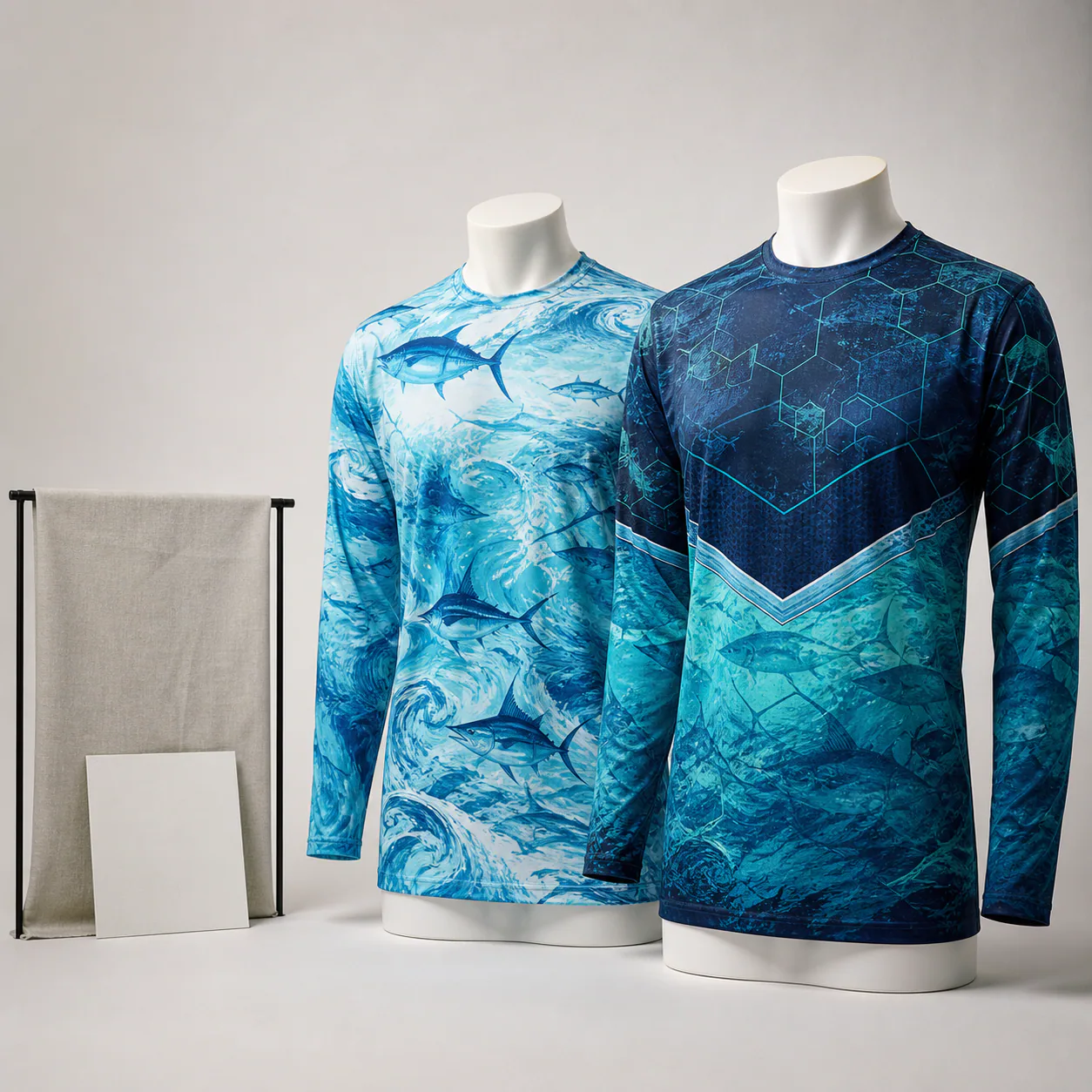
Dye sublimation uses heat to transfer printed dye into compatible polyester fibers. It supports full-color artwork, gradients, repeat patterns, names, and numbers without adding a thick film on top of the fabric. The garment panels are printed first, then cut and sewn.
This sequence is why the panel map matters. A chest logo, sleeve mark, or collar graphic must account for bleed, grading, seam allowance, and the shape the fabric takes after sewing.
Choose the garment before finalising the print file: our performance fishing shirts and collared fishing polos have different panel and collar requirements.
Production release
Each gate closes a different risk. Skipping one does not save time if the mistake appears after every panel has been printed.
Artwork begins on the same graded panel set that will be printed and cut. A presentation mockup is not used as the production template.
Key colors and dark areas are checked on the selected polyester fabric. The approved strike-off records more than what a monitor can show.
Logo clearance, collar joins, sleeve transitions, side seams, hem position, and variable data are reviewed on a physical garment.
The buyer approves the final artwork version, color reference, size breakdown, roster, labels, and packing before the production print run.
Panel map
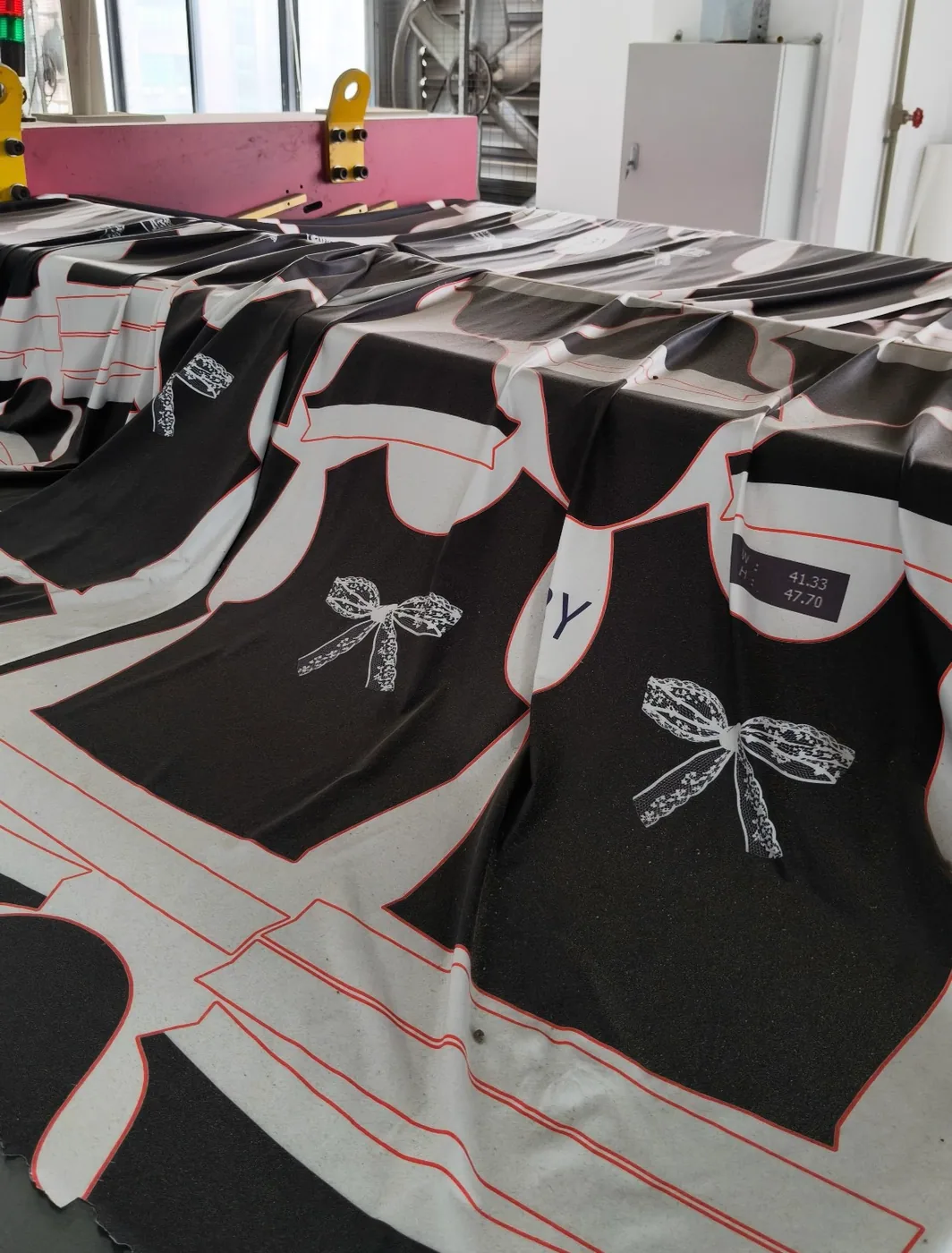
A designer can make a convincing front-and-back mockup without knowing where the shoulder seam sits or how the sleeve is graded. Production artwork starts from the real cut panels.
Color approval
A Pantone reference is a target, not a promise that every fabric will reproduce the same color. Yarn, surface texture, optical brightener, stretch, heat, and lighting all change what the eye sees.
1Name the critical colors. Brand blue and sponsor red deserve more control than a background texture.
2Print the chosen fabric. A strike-off on another fabric cannot confirm the final result.
3Keep the signed reference. Bulk comparison needs a physical or recorded approval, not memory.
Choose the garment first
Teams and sponsor-heavy programs
Retail fishing brands
Clubs, guides, and resort uniforms
What goes wrong
The logo looked centered on a flat screen mockup, but the cut line removed part of the text. Keep critical marks inside the panel safe zone.
A dark design lost shadow detail because the file was approved only on screen. Check a strike-off on the actual fabric.
A continuous graphic was expected to align perfectly across a moving seam. Decide which joins are critical and design a tolerance around the rest.
The newest spreadsheet reached production after variable files were output. Freeze one final roster and identify every revision.

Recorded order
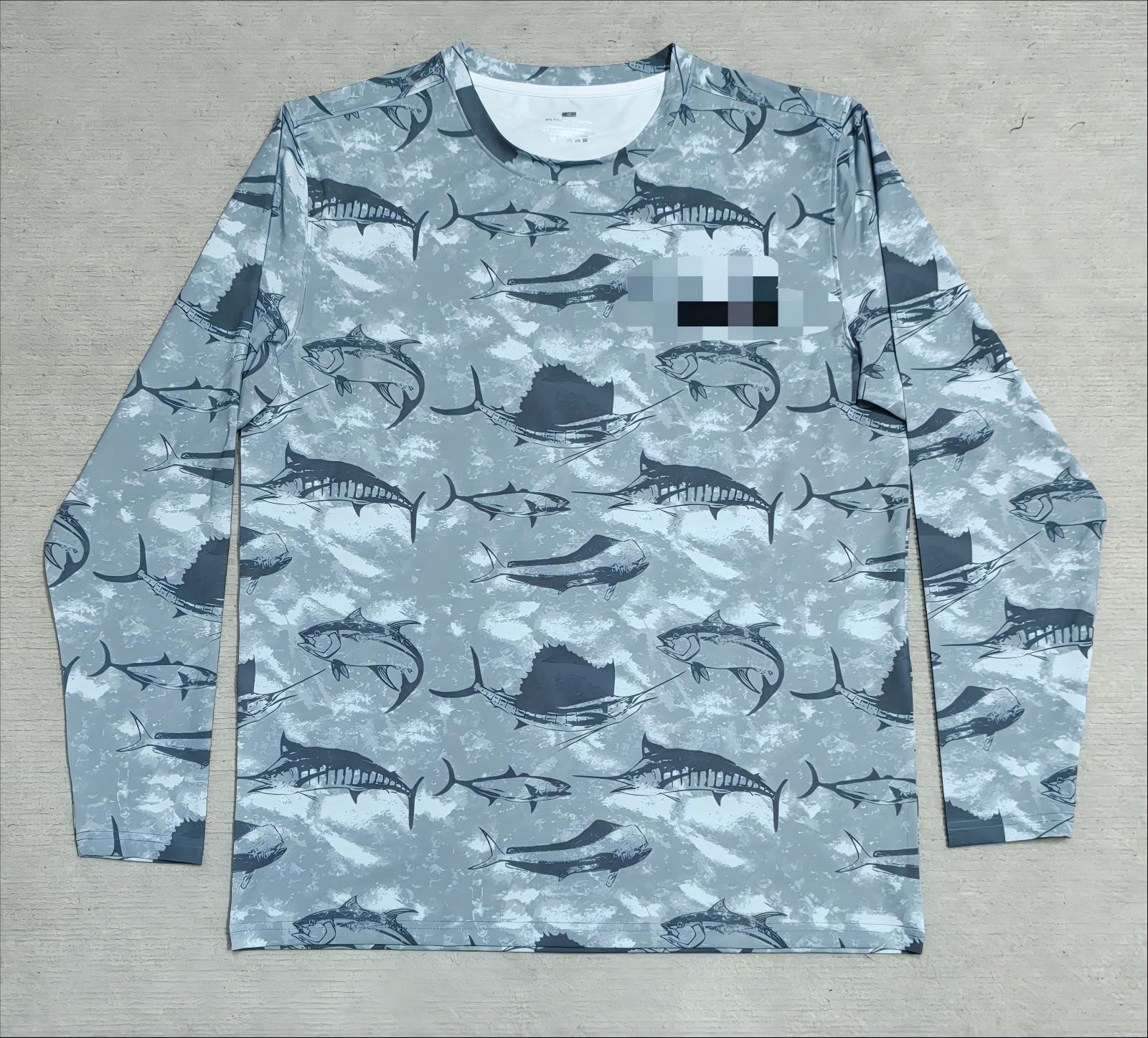
For an Australian fishing club order, we held one approved construction across 800 shirts and changed the artwork into four 200-piece colorways. The selected 170 GSM fabric was 92% polyester and 8% spandex with UPF 50+ performance.
Artwork and production
Our starting MOQ for custom fishing shirts is 100 pieces per style and colorway. Sizes can normally be mixed within an approved style. Fabric, custom-dyed colors, trims, decoration, and packaging may affect the final minimum, so we confirm the complete specification before quoting.
Editable vector logos are preferred. Supply the repeat or background artwork at usable print resolution, written color references, sponsor files, and confirmation that you have the right to reproduce every element. We place the artwork on the approved garment panels.
Sublimation dye is transferred into compatible polyester rather than applied as a thick surface film. Correctly processed artwork will not crack or peel like a vinyl transfer. Fabric choice, heat settings, color management, and washing still affect the finished appearance.
Yes. Names, numbers, and selected sponsor variations can be changed by garment when the buyer supplies one final roster. Variable files are checked against the size and quantity breakdown before printing.
Pantone references give a target, but dye sublimation is affected by the fabric, finish, ink profile, heat, and lighting. Important colors should be approved on a strike-off made with the selected production fabric.
Standard dye sublimation is intended for compatible polyester surfaces. Cotton and many nylon fabrics need a different print route or special treatment. We select the decoration method after the material and use case are confirmed.
Artwork review
We can first check whether the garment, fabric, print method, logo count, and quantity fit the project. Final panel files follow after the pattern route is agreed.