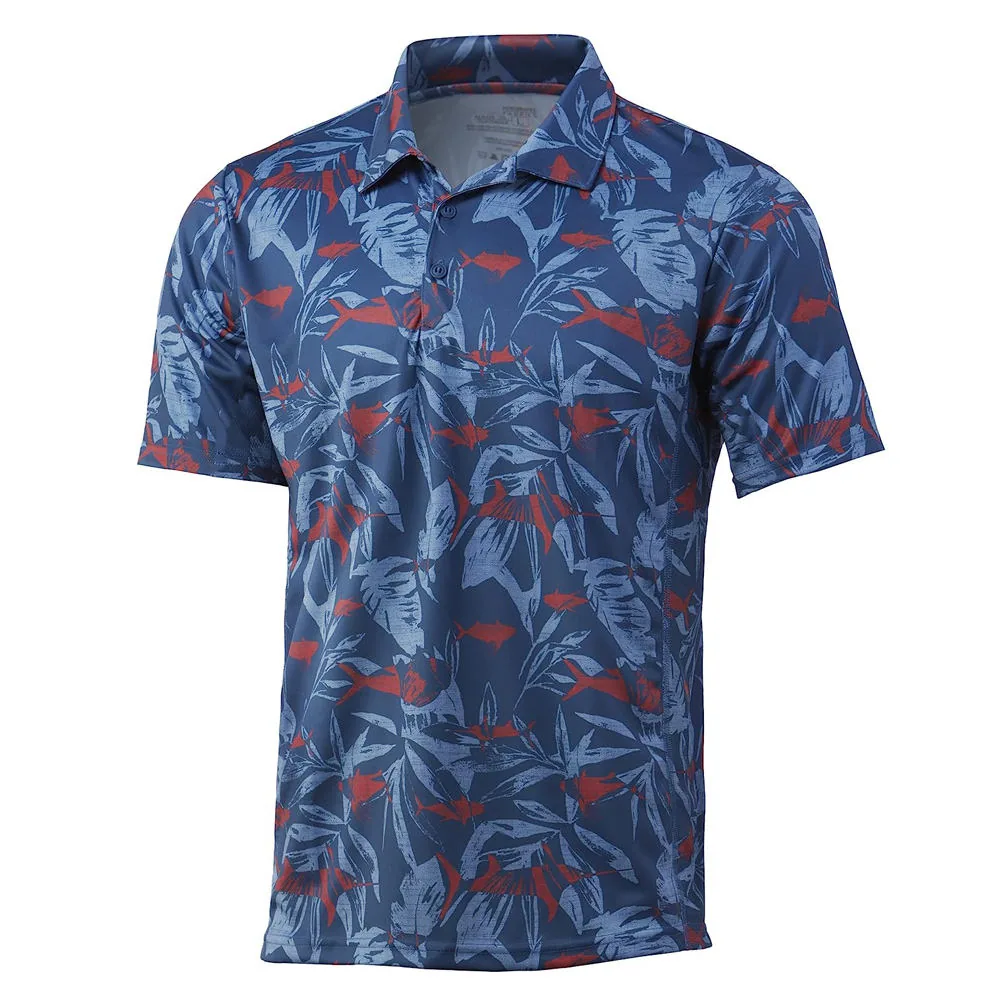
A sublimation fishing polo shirt works best when the artwork, polyester fabric, garment pattern, and production settings are developed together. For hot-weather tournaments, a lightweight 150 GSM polyester can be a practical starting point. A resort program or premium activewear collection may need more structure, stretch, or a heavier knit. The right answer depends on what the polo has to do after it leaves the factory.
That last part is easy to miss. A bright print sample can look impressive on a table and still feel too warm, restrict casting, fade sooner than expected, or put a sponsor logo across a seam. We review the product from the other direction: where it will be worn, how it should move, what claims the brand intends to make, and what the buyer needs to approve before bulk production.
Start with the end use, then choose the GSM
GSM means grams per square metre. It describes fabric weight, not fabric quality. Two fabrics can both weigh 150 GSM and behave very differently because of the yarn, knit construction, finishing, stretch, and moisture management.
Here is a useful starting point for product development:
| Fishing polo direction | Typical starting range | What the buyer should review |
|---|---|---|
| Lightweight tournament or hot-climate polo | 140-160 GSM | Airflow, opacity, cling when wet, print saturation, and seam stability |
| Guide, resort, or all-day team polo | 160-180 GSM | Balance of structure, drying speed, collar shape, and comfort |
| Premium activewear or retail polo | 170-200 GSM | Hand feel, stretch recovery, drape, collar support, and retail presentation |
These ranges aren’t purchase specifications. They narrow the first fabric selection. The final GSM should be checked on the actual knit, in the intended color and finish.
Is 150 GSM polyester a good choice?
Often, yes. A 150 GSM polyester fishing polo can feel light in warm weather, dry quickly, and accept a clear sublimation print. It can work well for events where anglers, marshals, guides, or sponsor teams will be outside for hours.
But lighter isn’t automatically better. Ask three practical questions:
- Does the fabric become transparent when stretched or wet?
- Does it hold the placket and collar cleanly?
- Does the surface stay stable after printing, cutting, sewing, and washing?
If the answers aren’t clear, compare a 150 GSM option with a slightly heavier fabric rather than approving from a swatch alone. Our broader fishing shirt fabric comparison explains why fiber content and knit structure need to be reviewed together.
100% polyester or polyester with stretch?
Traditional dye sublimation works most predictably on polyester because the dye bonds with the polyester under heat. Sawgrass describes the process as dye moving under heat and pressure before bonding into the polyester fiber or a polymer surface. Its sublimation glossary also notes that a higher polyester content generally produces a brighter result.
That makes 100% polyester a sensible option when the priorities are:
- Strong, saturated all-over color
- A lightweight quick-dry shirt
- Repeatable sponsor graphics across many sizes
- A straightforward tournament or club uniform
A polyester-spandex fabric can add comfort and recovery, especially through the shoulders and body. It also introduces another variable. Heat can affect stretch fabrics differently, and the non-polyester portion may not take the dye in the same way. The sample should be checked for color, shrinkage, width change, hand feel, and stretch recovery after pressing.
There isn’t one universal blend that suits every fishing polo. A compact resort polo, a loose tournament uniform, and a fitted activewear polo shouldn’t be forced into the same fabric specification.
What “permanent sublimation print” actually means
Sublimation doesn’t add a film that sits on top of the fabric. There is no vinyl edge to lift and no thick ink layer to crack. That is the practical reason the method works well for large fishing graphics.
It does not mean every color is guaranteed to remain unchanged forever.
Color still depends on:
- The approved polyester fabric and its base shade
- Ink, paper, color profile, temperature, pressure, and transfer time
- Washing conditions
- Abrasion from seats, bags, life jackets, or boat hardware
- Long exposure to daylight
- Saltwater and repeated wet-dry cycles
For a brand making a durability claim, a physical color strike-off is more useful than a screen rendering. For higher-risk programs, the testing plan can include accelerated laundering such as AATCC TM61, light exposure such as ISO 105-B02, and colour fastness to sea water under ISO 105-E02. The buyer and test laboratory should agree which methods and acceptance levels apply to the destination market and intended use.
Be careful with the phrase “eco ink”
“Eco ink” sounds reassuring, but it isn’t a complete specification. It may refer to an ink formulation, a supplier program, restricted-substance testing, lower emissions, or simply marketing language.
Before repeating the claim on a product page, ask for:
- The exact ink manufacturer and ink series
- The certificate or compliance document
- The certificate number, scope, and expiry date
- Confirmation that the document covers the ink being used
- Any separate test required for the finished fabric or garment
OEKO-TEX explains that its ECO PASSPORT is intended for chemicals, colourants, and auxiliaries used in textile production. That is useful evidence for an ink or chemical input, but it shouldn’t be presented as automatic certification of the finished polo. Final-garment claims need evidence that matches the actual product.
In short: use a verified statement such as “printed with an ink covered by certificate X” when the paperwork supports it. Don’t turn a vague ink description into a broad environmental promise.
A marine environment changes the approval checklist
A fishing polo may be worn around saltwater, sunscreen, sweat, fuel, fish residue, and hard sunlight. None of those conditions is solved by sublimation alone.
For regular marine use, review:
- Color change after sea-water exposure and laundering
- Staining or transfer onto adjacent light fabrics
- Dark-color heat absorption in exposed conditions
- Collar and placket shape after repeated wetting
- Abrasion at the lower back, shoulder, and side body
- Odor retention and drying behaviour
- Care instructions that the end customer can realistically follow
Dark navy and black backgrounds are popular because they make bright logos stand out. They can also feel hotter in direct sun. A good artwork decision considers both visual identity and wearing conditions.
Pattern and movement matter as much as stretch
Adding spandex doesn’t automatically make a fishing polo comfortable. The garment still needs enough room through the shoulder, upper back, armhole, and sleeve opening for casting and handling equipment.
For an ergonomic fishing polo, sample the following:
- Shoulder reach: the back should not pull sharply when both arms move forward.
- Sleeve opening: it should allow movement without flaring excessively.
- Body ease: a team uniform may need more room than a retail-fit polo.
- Side vents: these can improve movement and help an untucked polo sit cleanly.
- Front length: the placket and body should stay balanced across the full size range.
- Collar support: the collar has to suit the lightweight body fabric rather than collapse after washing.
Use the fishing polo size chart as a measurement starting point, then adjust it around the target customer. A size label by itself doesn’t tell a factory how the polo should fit.
Artwork has to survive cutting and sewing
Full sublimation gives a designer a large canvas, but every polo is still made from separate panels. Logos and patterns close to an armhole, side seam, placket, or hem can shift when those panels are cut and joined.
Before printing, mark:
- Safe zones for sponsor logos and names
- Center-front and center-back reference lines
- Pattern alignment points
- Collar, cuff, and placket artwork
- Bleed outside each cut line
- Size-dependent artwork changes
Small sponsor text deserves particular attention. A logo that is legible on an XL screen mockup may become crowded on an XS panel. Keep editable vector artwork and outline the text before production.
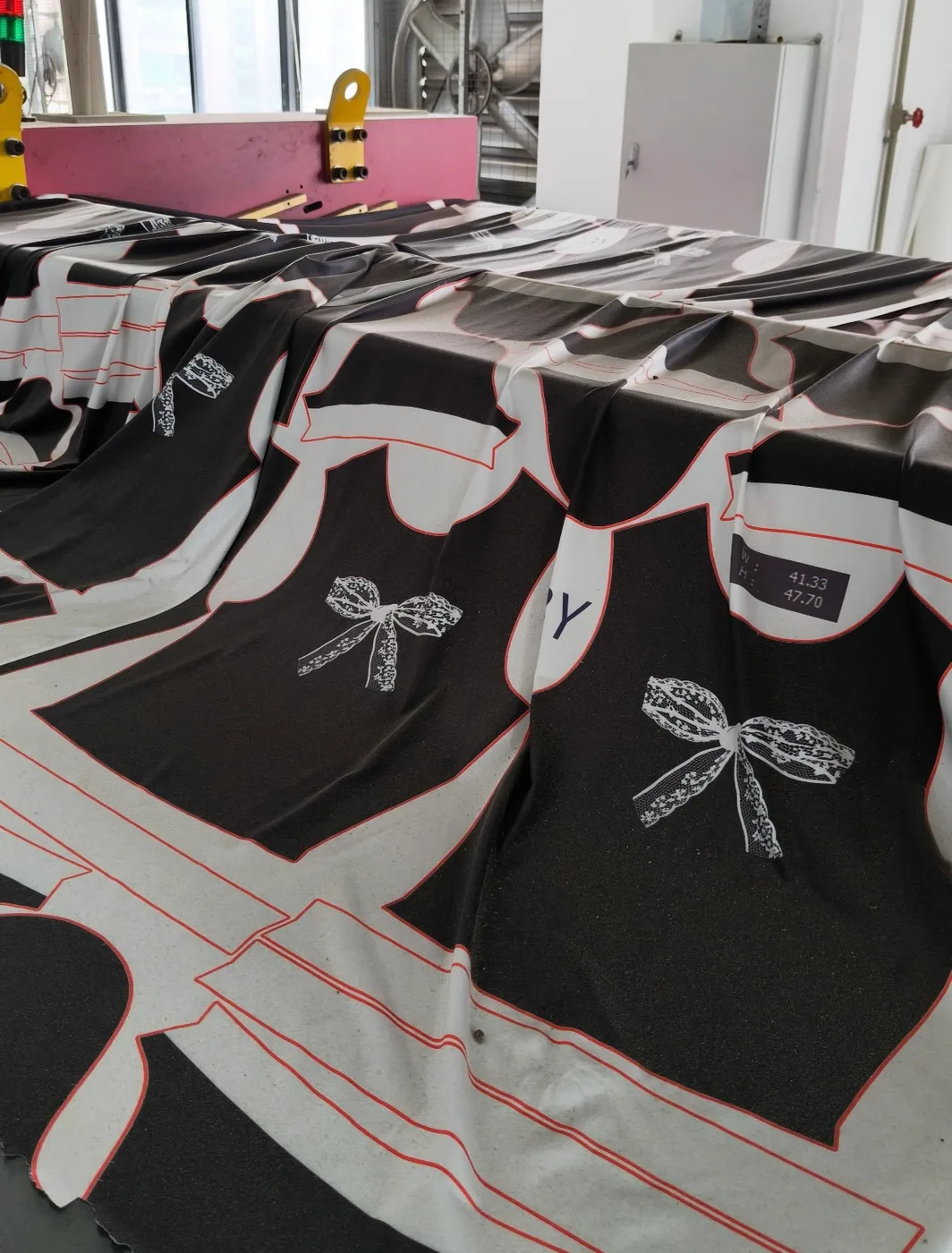
From printed panel to finished fishing polo
The production sequence is more than printing a finished blank shirt. For an all-over custom program, it usually follows this logic:
- Approve the fabric, GSM, stretch, and base color.
- Confirm the size specification and garment pattern.
- Place the artwork onto each digital pattern piece.
- Print and transfer a color strike-off on the approved fabric.
- Review color, scale, logo position, and panel alignment.
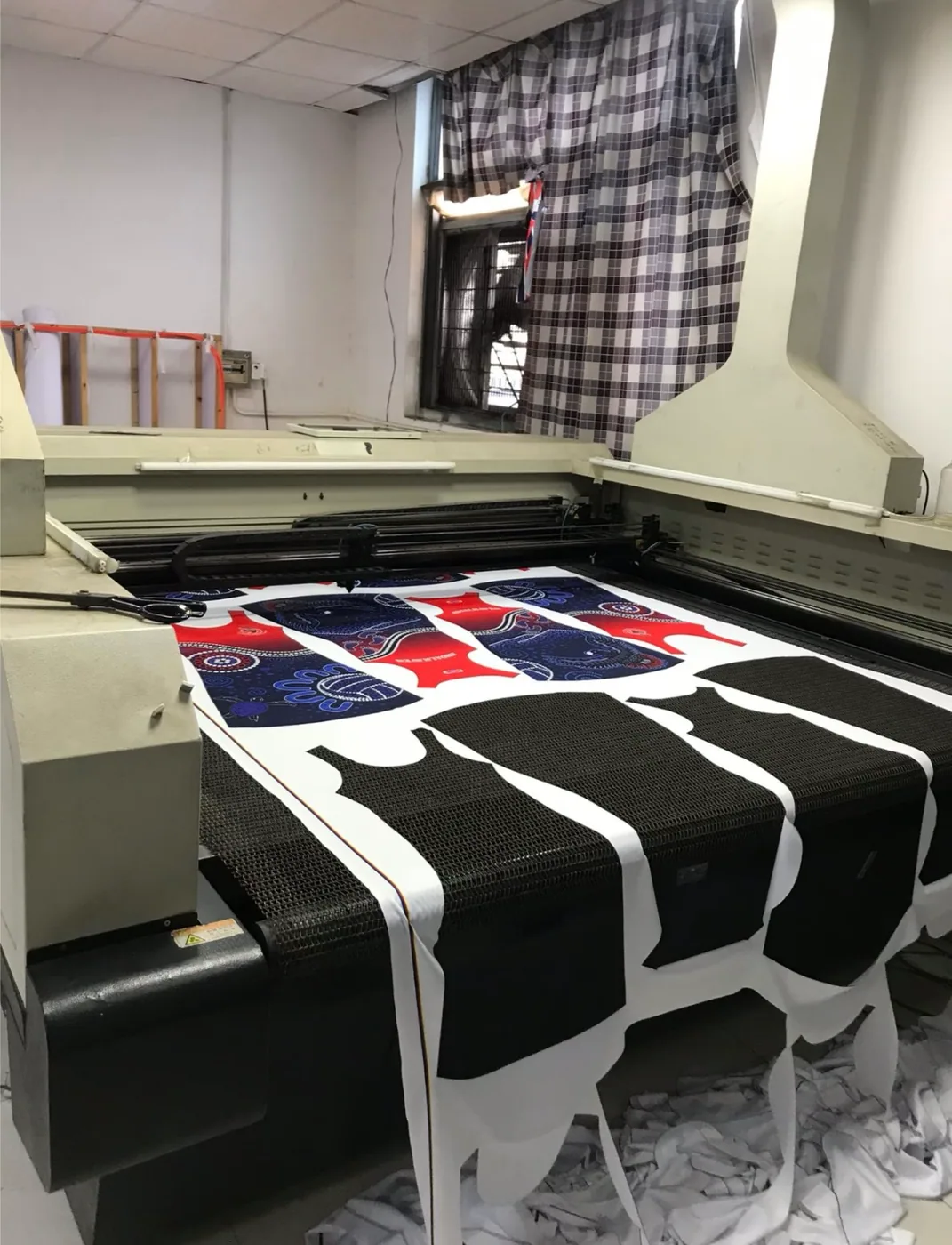
- Print the production panels.
- Cut the panels to the approved pattern.
- Sew the body, sleeves, collar, placket, labels, and other trims.
- Inspect measurements, workmanship, print placement, and packing.
This sequence is why a factory needs the artwork and size plan early. Changing the fit after the full panel layout is complete can force the artwork to be rebuilt.
What tournament buyers should send before sampling
A factory can quote more accurately when the brief is specific. For a custom fishing tournament polo, send:
- Editable AI, EPS, or vector PDF artwork
- Brand colors or physical color references
- Sponsor logo files and placement sizes
- Target fabric composition and GSM, if already known
- Required size range and quantity by size
- Collar, placket, cuff, vent, and hem direction
- Intended market and wearing environment
- Required tests or product claims
- Individual packing and private-label requirements
- Event date and required delivery date
If the artwork is still rough, say so. It is better to identify missing files before sampling than to approve a polished mockup that can’t be reproduced cleanly.
For logo-specific decisions, compare embroidery and sublimation for fishing shirts. A polo can also combine the methods: sublimation for the full body and a compact embroidered logo on a stable chest or collar area.
FAQ
Are lightweight sublimation fishing polo shirts suitable for tournaments?
Yes, provided the fabric has enough opacity and stability for the selected fit, collar, and placket. A 140-160 GSM polyester is a common development range for hot-weather team programs, but the actual fabric should be sampled and tested.
Does a sublimation fishing polo have to be 100% polyester?
Not always, but traditional dye sublimation performs most predictably on polyester. A polyester-spandex blend may add stretch while changing color yield and heat behaviour. Test the proposed blend rather than assuming it will match a 100% polyester sample.
Will sublimation crack or peel?
Traditional dye sublimation does not create the raised film associated with transfer vinyl, so there is no surface edge to crack or peel. The fabric and color can still change through weak processing, abrasion, washing, sunlight, or chemical exposure.
Can a factory use eco-certified sublimation ink?
Potentially, yes. Ask for the ink name and current certification documents. Check whether the certificate applies to the ink formulation, the printing process, or the finished textile. Those scopes are not interchangeable.
What should be tested for saltwater fishing use?
Depending on the product claim and market, buyers may consider colour fastness to sea water, laundering, light, rubbing, dimensional change, and relevant chemical requirements. Agree the exact methods and acceptance levels before testing.
Approve a product, not just a print
The strongest sublimation fishing polo isn’t necessarily the one with the loudest artwork. It is the one where the print, fabric, fit, collar, movement, and production controls support the same end use.
Start with a real wearing scenario. Then approve the physical fabric, printed color, garment pattern, and size set before bulk production. If you are developing a team, tournament, resort, or private-label program, review our custom fishing polo shirts and send the requirements for a factory assessment.
Production note: GSM ranges and construction suggestions in this article are development starting points, not universal pass/fail specifications. Final performance depends on the approved fabric, ink system, artwork, production settings, garment construction, care conditions, and testing requirements agreed for the order.