Sun hoodie
View product →- Coverage job
- Head, neck, arms, and optional hand coverage
- Decisions to lock
- Hood depth, face opening, neck overlap, sleeve length, thumbholes, and fabric stretch.
Custom UPF fishing shirts
We develop fishing sun shirts around three linked decisions: the test evidence, the production material, and the skin coverage of the finished garment. Claims are confirmed from the applicable report, not from fabric appearance.
What UPF 50 means
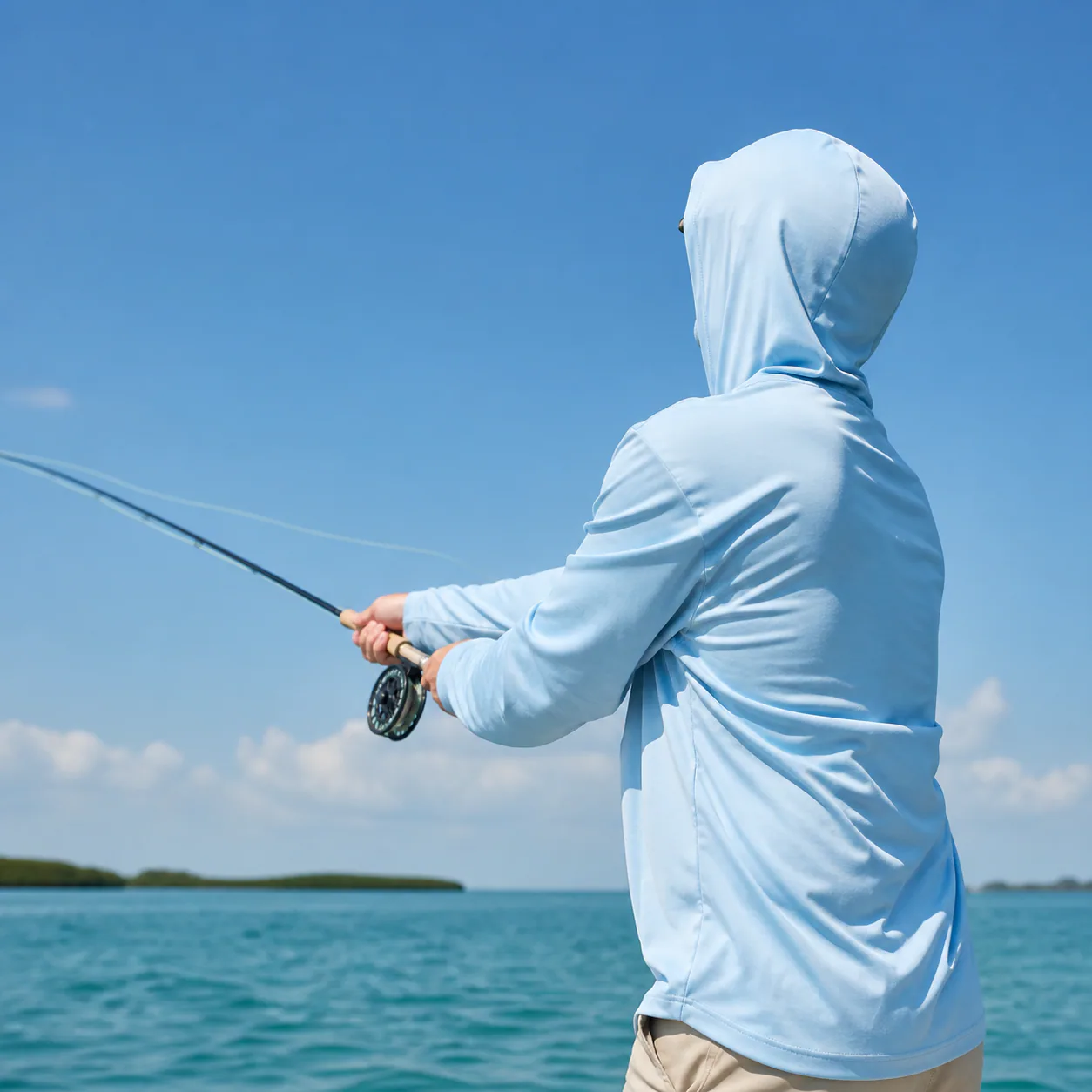
UPF 50 indicates that no more than one-fiftieth of the relevant ultraviolet radiation passes through the tested textile under the stated conditions. It is commonly described as blocking at least 98%. A claim still needs to match the material, color, preparation, method, and market-specific labeling scope.
Protection also depends on coverage. A strong fabric rating cannot cover an open neckline, shortened sleeve, loose hood, or gap created when the shirt moves.
Read the document, not the badge
A PDF with “UPF 50+” on the first page is not enough. The buyer needs to connect that result to the actual fabric and the claim planned for the final product.
Does the report identify the fabric code, composition, construction, weight, or sample description clearly enough to match the bulk material?
Which named method was used, which laboratory performed it, and when was the report issued?
Does the tested color or finish cover the version you plan to produce? Dark and light colors should not be assumed to behave identically.
Was the specimen tested dry, wet, stretched, prepared, or after laundering? The intended use determines which conditions matter.
What UPF value or classification is stated, and what label or marketing language does that evidence support?
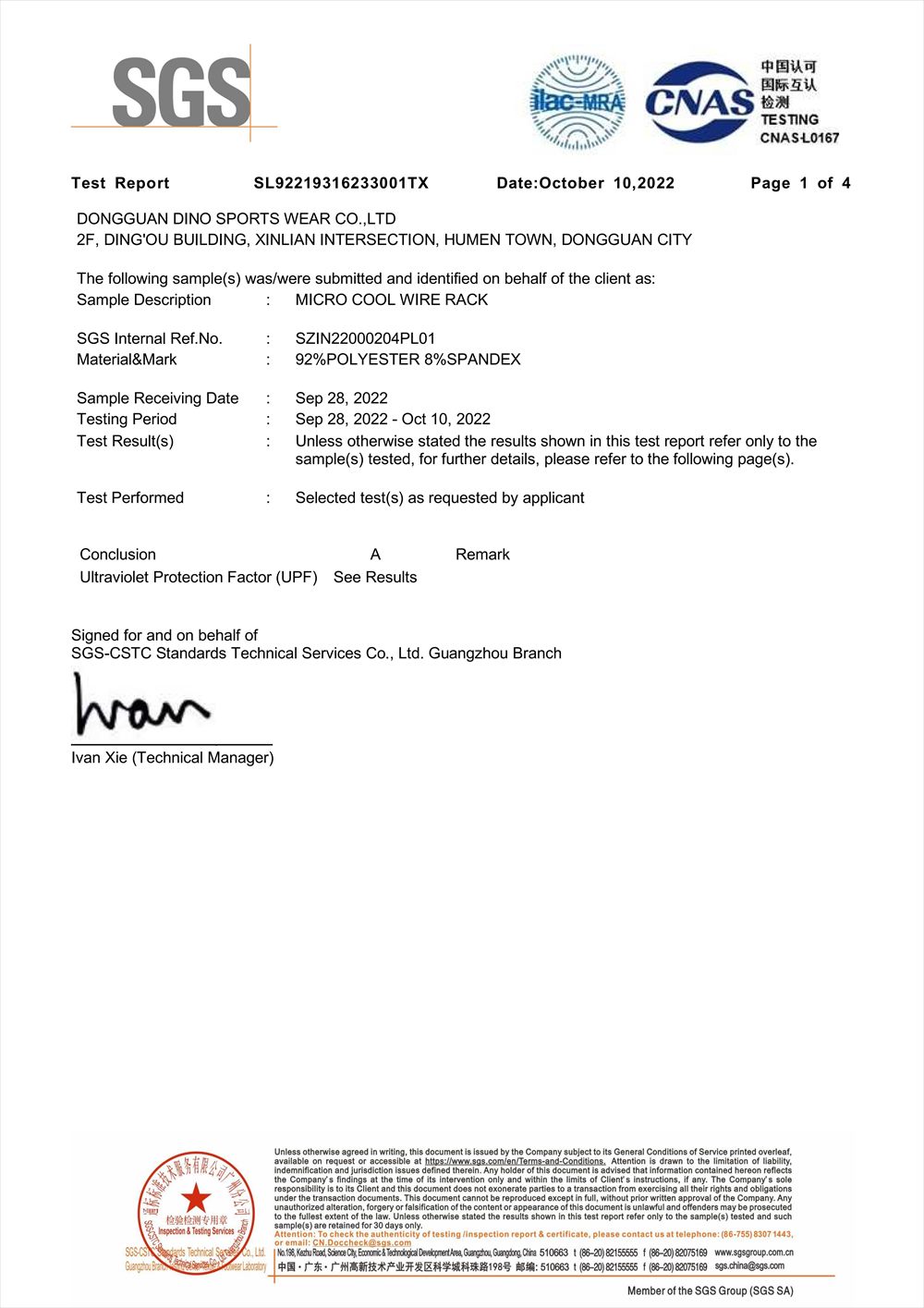
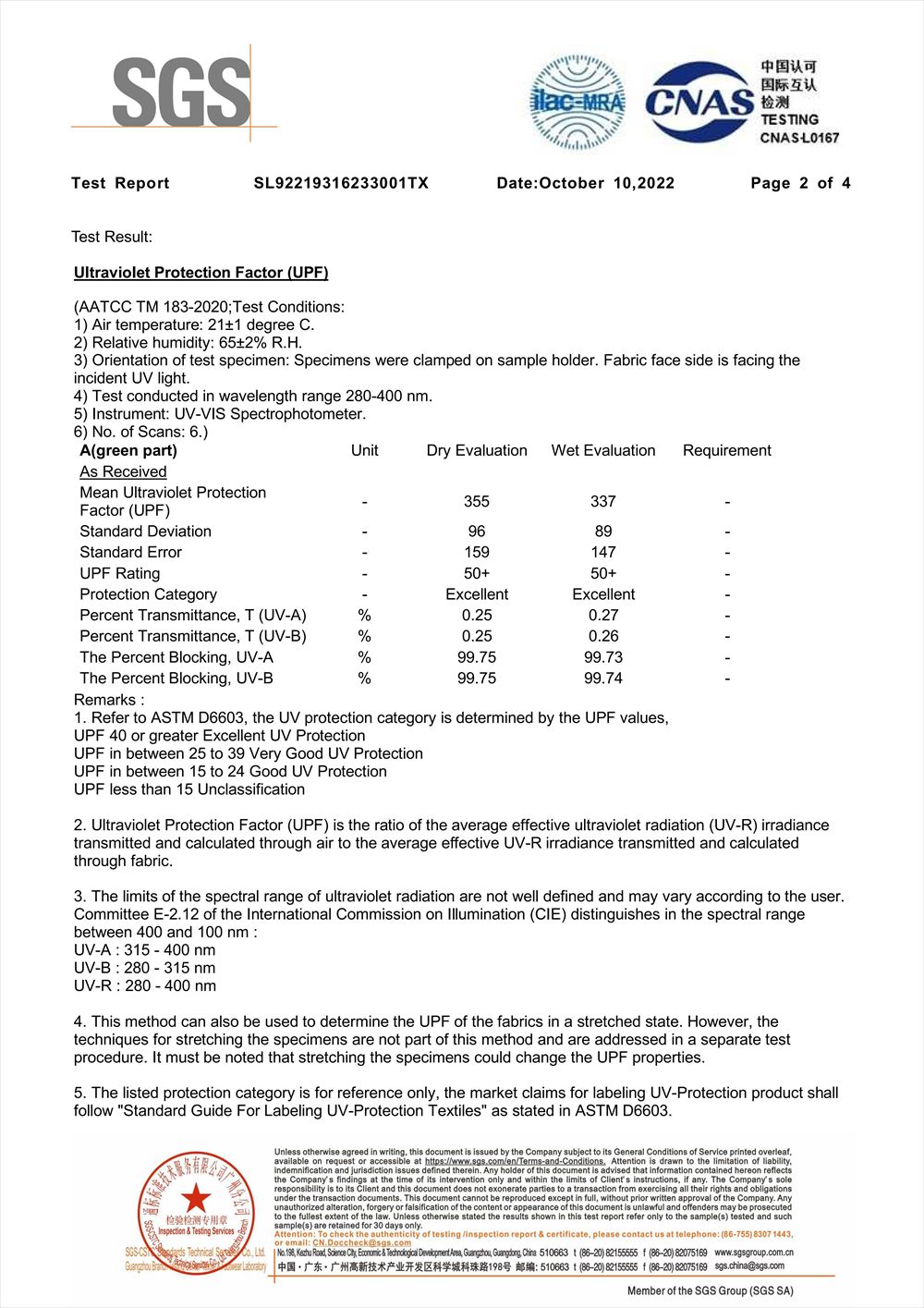
The fabric certificates and test reports displayed on this website belong to our company and apply to the materials and testing scope shown.
Coverage is product design
Fabric selection
GSM alone does not establish a UPF rating. The same nominal weight can be built with different yarns, structures, colors, stretch, and finishes.
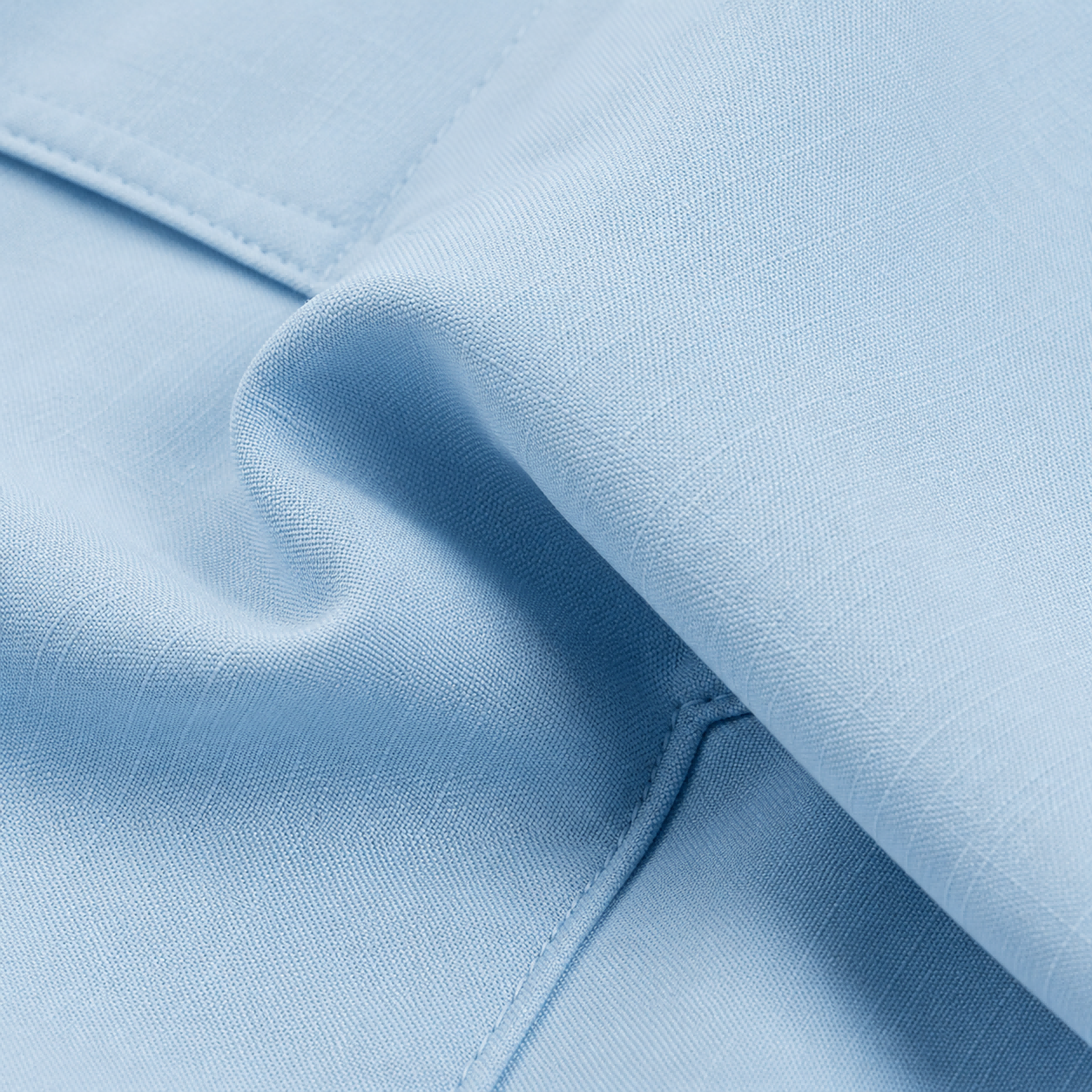
Tighter constructions generally reduce the open space through which UV can pass. The finished fabric still needs the relevant test.
A knit or elastane blend may open when worn. Fit and any stretched-condition requirement should be decided before relying on the claim.
Color can affect ultraviolet transmission. A report for one shade should not be treated as automatic evidence for every colorway.
Fishing garments may become wet. If wet performance is commercially important, include it in the testing discussion.
Laundering, abrasion, and long-term use can change a textile. The applicable preparation and labeling route depends on the target market.
Sublimation, mesh inserts, perforation, embroidery, and transfers can change local structure, stretch, weight, or comfort.
Development sequence
Do not add sun-protection wording after the shirt is finished. The market, test route, material, coverage, label, and product copy should be discussed before bulk fabric is released.
State the destination market, product type, intended label wording, and whether dry, wet, stretched, or prepared conditions need review.
Decide what skin the hood, collar, sleeve, cuff, and body actually cover during casting and movement.
Review composition, GSM, construction, color, stretch, moisture behavior, decoration, and the available report scope.
Confirm fit and coverage on a physical garment. A typical sample takes about two weeks after the main details are confirmed.
Bulk fabric, color, labels, hangtags, and website copy should stay within the approved evidence and final specification.
Evidence boundary
Buyer questions
SPF is normally used for sunscreen applied to skin. UPF is the rating used for textiles and clothing. A garment should use the appropriate UPF evidence and labeling route rather than calling itself an SPF shirt.
UPF 50 indicates that no more than one-fiftieth of the relevant ultraviolet radiation passes through the tested material under the stated test conditions. That corresponds to at least 98% blocked. The result applies to the tested sample and scope, not automatically to every color, stretch state, or garment made from a similar-looking fabric.
Yes. We manufacture sun hoodies, long-sleeve shirts, sublimated shirts, polos, and button-ups using suitable tested fabrics. The allowed claim is confirmed from the applicable report and the final production specification.
Our starting MOQ for custom fishing shirts is 100 pieces per style and colorway. Sizes can normally be mixed within an approved style. Fabric, custom-dyed colors, trims, decoration, and packaging may affect the final minimum, so we confirm the complete specification before quoting.
Not necessarily. A fabric report confirms the sample and conditions named in that document. Finished-garment coverage, mesh panels, openings, stretch, color, decoration, labels, and target-market rules may require separate consideration.
Yes, when the selected polyester fabric, print process, colorway, and evidence route are compatible. Important claims and colors should be confirmed before bulk labels are printed.
Start with the intended claim
Tell us where the product will be sold, which garment areas need coverage, what decoration is planned, and whether you already have a required test or labeling route.