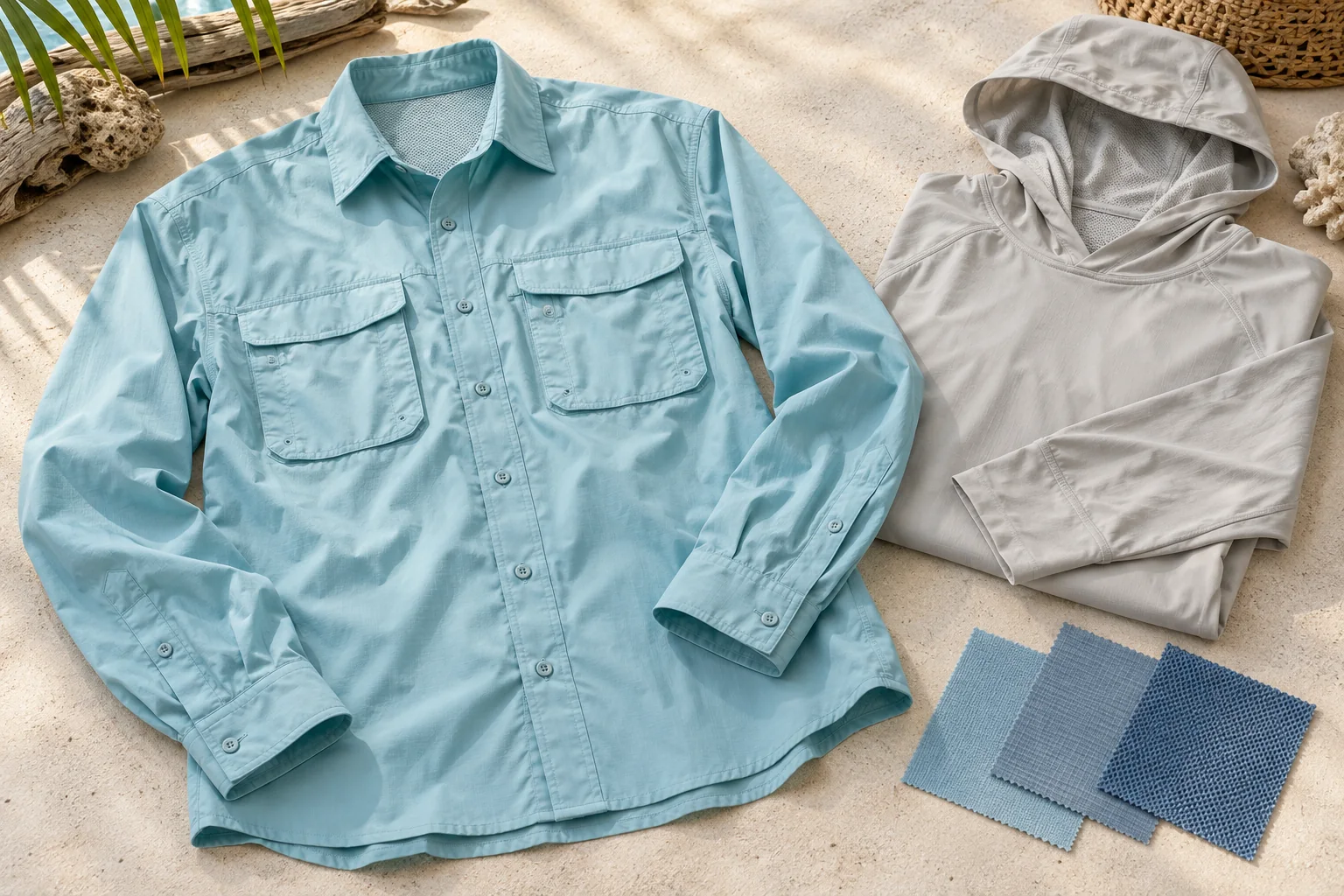
For a UAE fishing brand or Gulf charter operator, choosing a comfortable fishing shirt means checking the fabric, garment coverage and ventilation together. Start with a suitable material and the evidence for its proposed sun-protection claim. Then compare fit, airflow and how the complete shirt behaves when damp, moving and worn with the crew’s normal equipment.
A brief that says only “lightweight, breathable, UPF 50+” leaves several decisions open. The best next step is to turn those words into a material comparison and a sample review that both buyer and factory can follow.
This guide focuses on coastal fishing and marine-use briefs for buyers in places such as Dubai, Abu Dhabi and Doha. Specify the actual season, trip and working conditions for your project rather than applying one fabric recommendation across every Middle Eastern location.
In this guide: Define the wearer · Separate the performance questions · Compare fabrics · Check ventilation · Review samples · Prepare a quote brief.
Start with the wearer and the trip
A guest on a short fishing outing and a guide using the same uniform repeatedly may value different details. A retail brand also needs a product it can describe accurately and reorder consistently. Decide who will wear the shirt before choosing a fiber blend or adding features.
| Intended use | Decisions to include in the brief |
|---|---|
| Leisure fishing or a retail collection | Intended fit, styling, coverage, movement, fabric hand and the claims used on the product listing. |
| Charter crew or fishing guides | Working duration, reach, useful pockets, logo placement, laundering routine and repeat-order needs. |
| Marina or shore-based activity team | Presentation, time outdoors, storage, bending and reaching, size range and equipment worn over the shirt. |
Describe the setting as well: time on deck versus under cover, likely spray or wetting, walking or active casting, and the clothing or life jacket worn with the shirt. These details help define what the sample should demonstrate.
Where a life jacket or other equipment is required, review the shirt with that equipment used according to its instructions. Note restricted pocket access, rubbing at the neck and areas where a hood or vent becomes covered.
Evaluate four performance questions separately
Ask suppliers what they mean by each performance description and which evidence is available for the proposed material. “Breathable” is particularly worth clarifying: a discussion about air passing through fabric is different from one about moisture vapor.
| Performance question | What to establish | Useful evidence or review |
|---|---|---|
| Sun protection | Which material, color and stated conditions support the planned UPF claim? | The applicable report, specimen description and a separate review of garment coverage. |
| Airflow and ventilation | How will fabric, openings, fit and additional layers affect the intended design? | Relevant air-permeability information, where available, plus a review of the worn garment. |
| Moisture management and drying | What exactly does “wicking” or “quick-dry” mean in the quotation? | Identified methods, conditions and results for the property being claimed. |
| Wet comfort | Does the shirt cling, rub, become transparent or restrict movement when damp? | Recorded wearer observations using the agreed sample and comparison conditions. |
The AATCC standards directory lists liquid moisture management, drying rate and water-vapor transmission as separate test methods. For example, TM195 addresses liquid moisture management, while TM201 addresses drying rate using a heated plate. Ask a laboratory which method and conditions suit the intended claim; a result for one property does not establish all the others.
Keep wearer comments beside the relevant material information. “This sample felt less sticky across the back during our comparison” is a useful observation when its conditions are recorded. It does not establish a universal drying rate or a measured body-cooling effect.
Compare fabric structure, composition and GSM
For an initial shortlist, we can discuss polyester knits, polyester/elastane blends and suitable woven materials, including nylon or nylon blends. Each option still needs an identified construction, finished weight, color and intended decoration.
Ask for a small, traceable shortlist rather than a large bundle of unnamed swatches. Give each candidate a reference and use the same fields for comparison.
| Fabric field | What to record before sampling |
|---|---|
| Identity | Supplier reference, fiber composition, knit or weave, finish and color reference. |
| Finished GSM | The proposed finished fabric weight and any agreed variation. |
| Stretch and recovery | Where movement is needed and how the material behaves after extension. |
| Appearance and hand | Surface texture, stiffness, drape, seams and intended next-to-skin feel. |
| Wet behavior | The opacity, cling, friction and drying questions to evaluate. |
| Decoration route | Whether sublimation, transfers, screen print or embroidery suit that particular material and design. |
| Evidence | Available reports, specimen identity, test conditions and any additional evaluation required. |
A GSM value describes mass per unit area. It does not by itself establish UV protection, airflow or comfort. Keep the weight attached to the actual fabric reference rather than approving every material within a broad weight range as equivalent.
Give pale colors and stretch their own checks
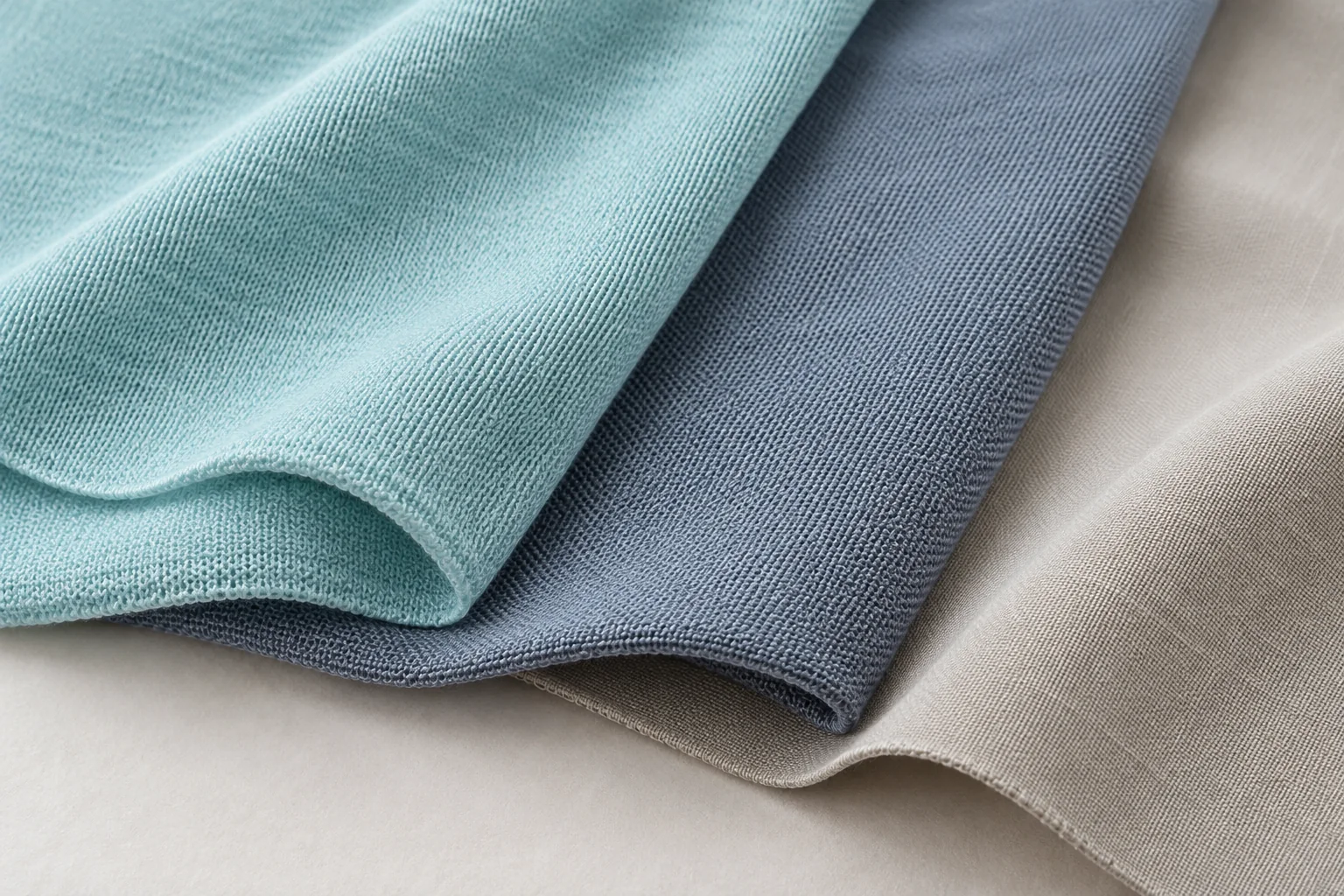
White, stone and pale blue can be part of the design brief. Ask for the evidence applicable to that selected version and review wet opacity on a sample. Visible transparency and ultraviolet transmission are separate questions; neither should be inferred from a product photograph.
ARPANSA’s clothing guidance identifies fabric density, construction, stretch, color and condition among the factors affecting UV protection. Use the proposed material and color in the evidence review instead of copying a result from a different fabric or shade.
For a planned wet-use claim, ask specifically about wet testing. UK government guidance on clothing protection explains that the effect of wetness needs measurement on wet fabric and cannot simply be predicted from a dry result and the fabric type. These references explain testing considerations; they do not establish a UAE or Gulf certification requirement.
Check ventilation on the complete garment
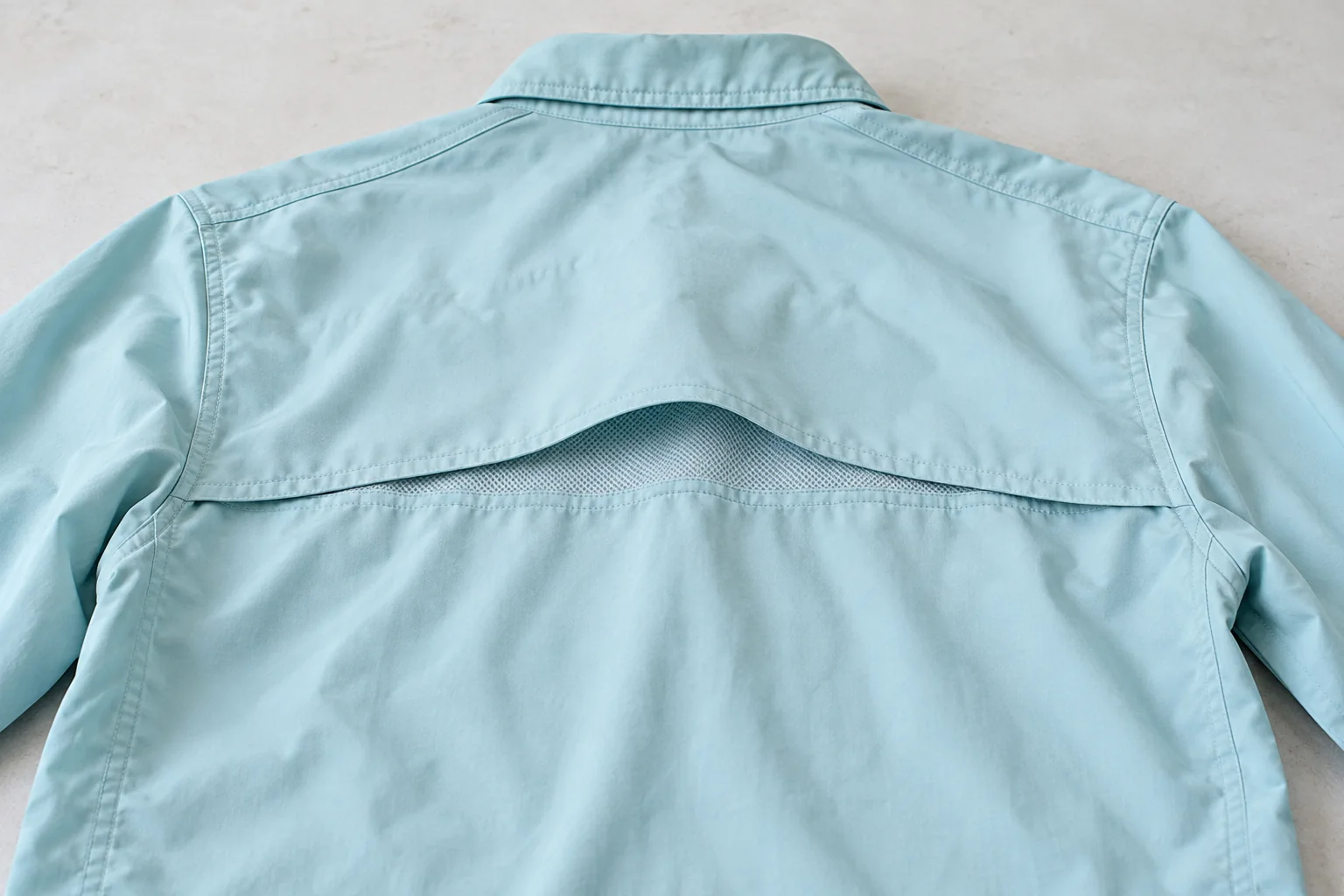
An attractive vent drawing leaves practical questions for the sample. Inspect the opening, outer overlap, mesh, stitching and worn fit together. Compare how the construction sits when the wearer reaches forward, lifts an arm or bends.
For a cape-style back vent, look under the flap as well as at the outside. Record whether the mesh feels comfortable, whether the opening stays in its intended position and whether the overlap shifts during movement. For underarm ventilation, check seam comfort and the placement of exposed panels.
The material behind a vent needs its own review. A main-fabric UPF report does not automatically establish the performance of a different mesh or an opening. Agree how the final design and coverage will be assessed before approving the claim or label wording.
Bring the rest of the garment into that inspection:
- Body and shoulder ease: reach forward as if holding a rod and check restriction or excess fabric.
- Collar, hood and face panel: review coverage, visibility, movement and how the parts sit when lowered.
- Sleeves and cuffs: check wrist coverage, tabs or thumbholes across the intended movements.
- Pockets: test access with normal equipment worn over the shirt and with the intended items inside.
- Decoration: inspect the hand and movement of large print or embroidery areas on the actual material.
Use our hot-weather button-up construction guide for a closer look at woven-shirt details. Record any agreed changes in the same sample file as the measurements and material reference.
Choose a shirt format around the role
Shortlist the construction that serves the wearer before treating a hood, collar or pocket as a required feature. Each garment format creates different sample decisions.
| Shirt format | Questions to answer on the sample |
|---|---|
| Button-up fishing shirt | Are the collar, vents, pockets and sleeve tabs useful for the role? Does the shirt allow casting and bending while keeping the required presentation? |
| Long-sleeve fishing jersey | Does the cut allow movement? How do the seams, neckline and printed areas feel when damp? |
| Sun hoodie | Does the hood stay where intended? Are the face opening, neck overlap and cuffs comfortable and compatible with normal equipment? |
| Performance polo | Do collar, placket, sleeve length and branding fit the team’s work and coverage brief? |
For a charter business, compare one or two relevant constructions with the crew before extending the design to guest merchandise. For a brand, confirm the intended fit and size range with representative wearers. A single sample size does not establish every men’s, women’s or youth pattern.
Compare samples with a repeatable review
Use a short review sheet so comments from several wearers remain comparable. Keep the garment version, fabric reference, size and any substitutions visible. If two samples use different fits as well as different fabrics, record both differences before attributing the preference to the fabric alone.
Conduct the comparison within normal, appropriate operating conditions. Record the setting and activity rather than trying to create an extreme exposure test. A trial is for gathering product feedback, not demonstrating protection from heat illness.
| Review stage | Record for each candidate |
|---|---|
| Dry fit and movement | Neckline, shoulder reach, sleeve position, hem coverage, pocket access and seam contact. |
| Damp-use observation | How the sample became damp, where it clings or rubs, opacity and any restricted movement. |
| Equipment check | Life jacket or other normal equipment used, covered vents, pressure areas and inaccessible pockets. |
| Care review | Agreed wash and dry instructions, visible changes, measurements and decoration observations. |
| Buyer decision | Preferred sample, reason, required correction and evidence still outstanding. |
Use the same tasks and as similar conditions as practical. Record air movement, sun or shade, duration and whether wetting came from spray, water or normal perspiration. These details matter when interpreting comments made on different days or trips.
Keep any formal claims separate. A wearer cannot verify fiber composition or UPF by touching a sample, and a casual wetting comparison is not a standardized drying test. Agree any additional laboratory work by property, method, specimen, conditions, cost and approval responsibility.
Our sample approval checklist explains how to connect comments and corrections to a specific production reference. Once changes are closed, retain the approved sample and current files for bulk checks and later reorders.
Send a brief for fabric options and a sample quote
You can begin with a reference garment or annotated images. Tell us which requirements are fixed and where you would like a recommendation:
- Market and wearer: UAE or other Gulf destination, retail customer or crew, intended role and size range.
- Use conditions: season, trip duration, activity, likely wetting and equipment worn over the shirt.
- Garment direction: button-up, jersey, hoodie or polo, with the coverage, pockets and ventilation required.
- Material priorities: preferred hand, composition or GSM if known, stretch, colors and decoration.
- Evidence: intended UPF wording and the moisture, drying or other performance questions you need resolved.
- Brand details: artwork positions, labels, hangtags, packing and any Arabic/English logo files.
- Order plan: quantity per style and colorway, sample scope, delivery city and required arrival date.
Our starting fishing shirt MOQ is 100 pieces per style and colorway, with sizes normally mixed within an approved style. Fabric, custom-dyed colors, trims, decoration and packaging can affect the final minimum. We review the full specification before confirming the sample and production quotation.
Ask for the proposed fabric references, available evidence, sample inclusions, revision terms and shipping scope together. That gives your team a clear basis for deciding which option to sample first.
UAE and Gulf fishing shirt questions
Does UPF 50+ tell me how cool a fishing shirt will feel?
No. A UPF result concerns ultraviolet transmission through the tested material under the stated conditions. Compare airflow, moisture behavior, fit, coverage and wet comfort separately on the proposed garment.
Is the lightest fishing shirt fabric always the best choice for Gulf use?
No single GSM establishes comfort or suitability. Compare the actual fabric structure, fit, stretch, opacity, decoration and performance evidence, then review samples in the intended use conditions.
Can white or pale fishing shirts support a UPF 50+ claim?
A pale fabric can be considered, but its claim needs applicable evidence for the selected material and color. Do not transfer a result from a darker color automatically. Check wet opacity separately from ultraviolet protection.
Do mesh vents need to be included in the garment review?
Yes. Review mesh, outer overlaps, openings and coverage during movement. A report for the main fabric does not automatically establish the UV protection of a different mesh panel or an open area.
Is a sun hoodie or button-up better for a charter crew?
Choose around the role and wearer. Compare hood and neck coverage, pocket access, ventilation, branding, movement and compatibility with the crew’s normal life jacket or other required equipment. Test the preferred construction on a complete sample.
Can we compare fabrics before ordering fully customized samples?
Yes. We can discuss available swatches and suitable constructions first, then quote a sample brief that identifies the fabric, fit, artwork, labels and decisions to be approved. Confirm sample fees, revisions and shipping separately.