Final quantity follows style, fabric, colorway, and packaging scope
OEM fishing clothing manufacturer
OEM Fishing Clothing Manufacturing for Brand and Wholesale Programs
Turn an approved product concept, tech pack, or reference garment into a controlled fishing apparel production program. We help buyers confirm the material, fit, construction, artwork, labels, packaging, quality checkpoints, and export route before the bulk run begins.
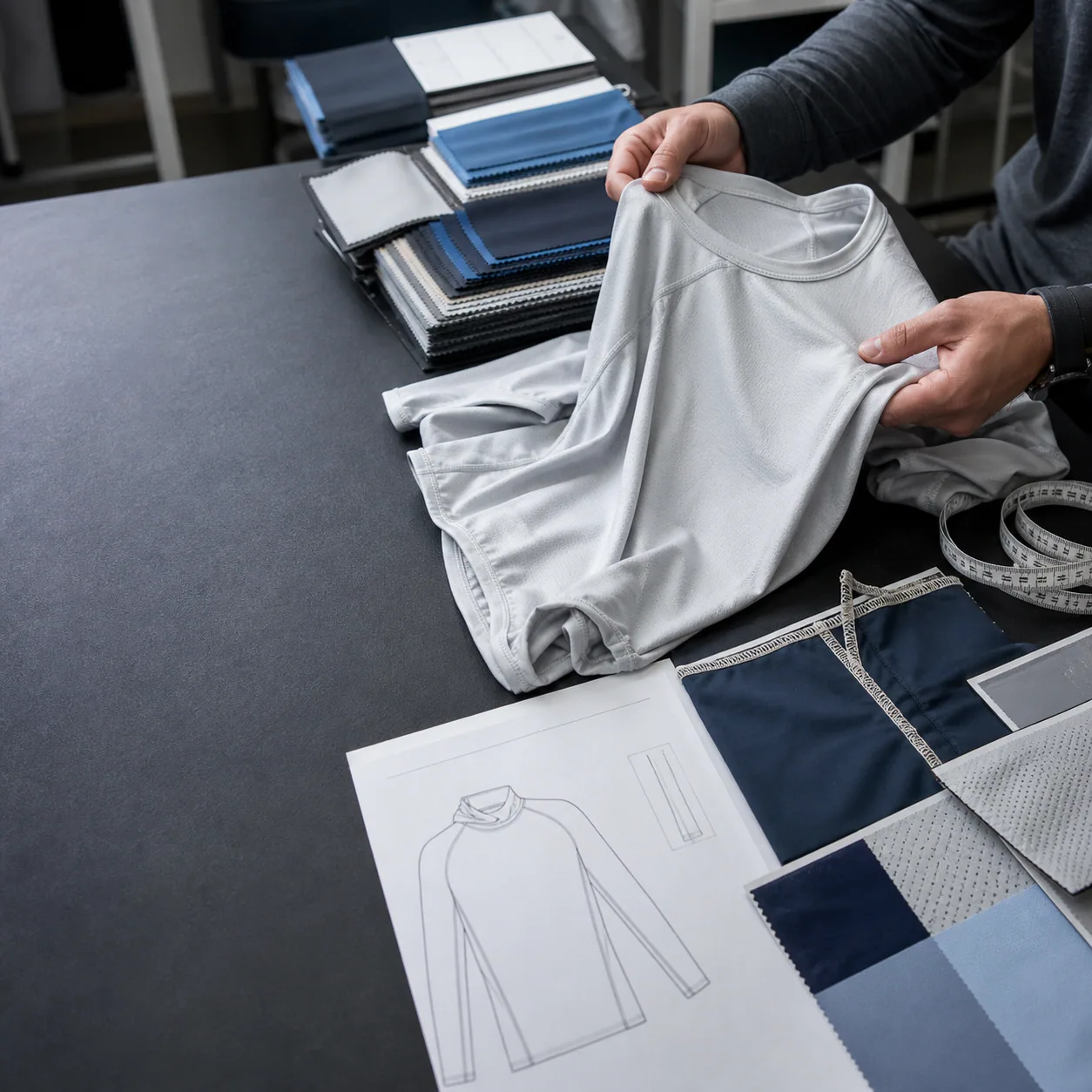
Start with a specification, approved sample, or defined concept
After materials, measurements, and artwork are confirmed
Approved specifications, QC checkpoints, packing, and export support
Who we support
Which buyers need an OEM fishing clothing manufacturer?
We start with the commercial use case so product details, approvals, packing, and production records match the buyer behind the program.
Brand Owners and Startups
Build a focused first range around a clear product, sales market, and practical sampling plan.
Retail and E-commerce Sellers
Develop private-label fishing apparel with consistent product details and retail-ready presentation.
Teams, Charters, and Events
Coordinate shirts, roster data, sponsor placements, and delivery timing through one approval route.
Wholesalers and Distributors
Set repeatable specifications, size runs, packing instructions, and reorder records for seasonal programs.
Service paths
OEM vs ODM fishing apparel: choose the correct starting point
Both paths end with an approved production record. The difference is how much of the product is already defined when development begins.
Bring the product direction you already have
Best when you have a tech pack, approved sample, measurement chart, artwork system, or established product standard.
- Production follows agreed specifications
- Fabric, construction, branding, and packing are reviewed against the brief
- Suitable for repeat orders and defined wholesale programs
Start with the use case, reference, or range idea
Best when the product needs direction before the final specification can be written and sampled.
- Confirm the product role, fabric direction, fit, and artwork route
- Use sampling to turn the concept into an approvable product
- Suitable for new labels, range extensions, and focused launches
Product directions
OEM fishing clothing programs built around approved specifications
We start with where the garment will be worn, then align fabric, fit, artwork, trims, and testing around the commercial program.
Fishing Brand Product Development
Develop fishing shirts, hoodies, button-up styles, outerwear, bottoms, and accessories from your product brief, tech pack, or approved reference.
Private Label Range Extensions
Carry an approved fit, fabric direction, color system, labels, and packaging into new fishing apparel categories without restarting every decision.
Wholesale and Distributor Programs
Build repeatable specifications, size runs, carton marks, inspection points, and reorder records for regional distribution and seasonal replenishment.
Production route
OEM, ODM, or a reference sample: what should you send first?
The right development route depends on which product decisions are already owned by the buyer. Clear inputs reduce assumptions during sampling and create a stronger production record for repeat orders.
Build from an approved specification
Best for buyers who already control the product definition and need a factory to execute it accurately.
- Tech pack and measurement chart
- Fabric, trim, artwork, and packing callouts
- Defined tolerances and approval owner
Develop from a product brief or use case
Best when the target customer and product role are clear but construction details still need development.
- Target market and price position
- Reference images or desired performance
- Sampling used to create the final specification
Engineer from an approved garment sample
Best when the buyer has a physical benchmark and needs its fit, fabric, and construction translated into controlled files.
- Reference garment and requested changes
- Measured pattern and material comparison
- Written approval of every deviation
| Development route | Starting input | Primary approval record | Best fit |
|---|---|---|---|
| OEM | Tech pack, pattern, BOM, artwork, and measurements | Pre-production sample plus signed specification | Established products and controlled reorders |
| ODM | Use case, target market, price position, and references | Developed tech pack, sample, and component approvals | New collections and buyers without full technical files |
| Reference sample | Physical garment plus written change list | Measurement report, construction file, and revised sample | Fit replication and product upgrades |
| Repeat order | Previous order reference and approved change notice | Version-controlled specification and packing record | Seasonal replenishment and stable programs |
How it works
OEM fishing apparel production from tech pack to export packing
Each stage has an owner and an approval point, so decisions do not get lost between development, production, and delivery.
- 01
Brief and Program Review
Confirm the target garment, quantity, market, budget, and required delivery window.
- 02
Specification Direction
Review fabric, fit, construction, artwork, labels, and packaging before sampling.
- 03
Sample Development
Make a physical sample or strike-off so the key product decisions can be checked in real conditions.
- 04
Approval and Production Plan
Freeze the approved specifications, quantity breakdown, inspection points, and production schedule.
- 05
Bulk Production and QC
Check materials, measurements, construction, artwork, and packing against the approved record.
- 06
Packing and Export Support
Prepare the agreed branded packing, carton information, and shipping documents for dispatch.
Before sampling
OEM specifications to approve before bulk production
A clear brief prevents avoidable revisions and makes the sample useful for an actual production decision.
- 01
Target product, end use, sales market, first-order quantity, and reorder expectation
- 02
Tech pack, measurement chart, approved reference garment, or a clear construction brief
- 03
Fabric composition, weight, stretch, finish, color, intended UPF claim, and testing scope
- 04
Artwork, logo ownership, panel map, decoration method, labels, trims, and packaging
- 05
Sample approval route, tolerances, inspection standard, and who signs off each stage
- 06
Required delivery date, shipping terms, export documents, and destination requirements
Buyer questions
OEM fishing clothing manufacturing FAQ
What does an OEM fishing clothing manufacturer do?
An OEM fishing clothing manufacturer produces garments to the buyer’s approved specification. That can include the pattern, measurements, fabric, construction, artwork, labels, packaging, inspection requirements, and export preparation rather than simply adding a logo to a stock item.
Can you work from a tech pack or approved sample?
Yes. A tech pack is the clearest starting point, but an approved sample, measurement chart, reference photos, and written construction notes can also start development. Missing details should be confirmed before sampling, not assumed during bulk production.
What should be approved before OEM fishing clothing goes into bulk production?
Approve the sample, measurements, fabric, color, artwork placement, trims, labels, packaging, quantity breakdown, and inspection standard. The approved set should become the production record for the bulk run and future reorders.
Can OEM fishing apparel include private labels and custom packaging?
Yes. Programs can include woven or printed labels, care labels, size labels, hang tags, bags, carton marks, embroidery, sublimation, screen printing, and other agreed private-label details.
What is the MOQ for OEM fishing clothing?
A practical starting point is usually 50 pieces per style and colorway. The final MOQ depends on the fabric, construction, decoration, trim, size plan, and packaging requirements.
How do you control quality on an OEM order?
Quality control begins with the approved production specification. We use material checks, in-process checkpoints, measurement review, appearance checks, logo and label verification, packing checks, and final inspection before shipment.
From the blog
Technical resources for OEM fishing apparel buyers
These factory and product-development articles answer the next questions buyers usually ask before requesting a quote.
Fishing Apparel Tech Pack Before Sampling
Prepare the fabric, fit, construction, artwork, label, and packaging information a factory needs to quote accurately.
Read articleMOQ, Sampling and Lead Time for Custom Fishing Shirts
Plan the order sequence and approvals that affect a first fishing shirt production run.
Read articleFactory vs Trading Company for Fishing Apparel
Compare production control, sampling, quality, and communication before selecting a sourcing route.
Read articleStart your inquiry
Send your OEM fishing clothing specification for review
Send the project basics and we will review the practical fabric, sampling, branding, and production route before quoting.
Your inquiry is protected by Cloudflare Turnstile and routed to our project mailbox.