
If you are choosing between a sun hoodie and a non-hooded UPF fishing shirt, start with coverage and the way the garment will be worn. A sun hoodie gives the neck, ears, and part of the head more coverage. A non-hooded fishing shirt can feel less enclosed and may work better with a separate hat, neck gaiter, or uniform system.
One important clarification: a sun hoodie can also be a UPF fishing shirt. “Hoodie” describes the garment format. “UPF” describes a tested textile protection rating. The product name alone proves neither the rating nor how well the garment will suit a day on the water.
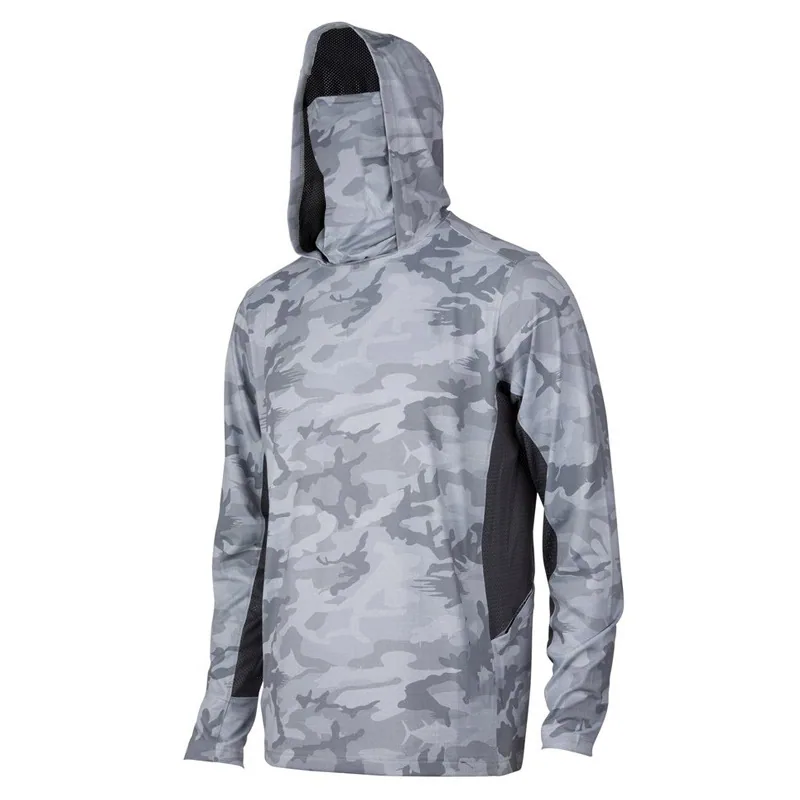
Sun hoodie vs. UPF fishing shirt: the short answer
| Decision point | Sun hoodie | Non-hooded UPF fishing shirt |
|---|---|---|
| Coverage | Adds fabric coverage around the neck, ears, and head when the hood is worn | Relies on the collar, hat, gaiter, or other accessories for those areas |
| Heat management | Depends heavily on hood volume, fabric, mesh placement, and airflow | Leaves the head and neck more open, but performance still depends on fabric and construction |
| Fit system | Hood depth and face opening must work with hats and sunglasses | Collar shape and neckline must work with the intended uniform or layering system |
| Branding | Large hood and body panels create more artwork options | Cleaner neckline for polos, crews, button-ups, and coordinated team looks |
| Typical program | Open-water, kayak, guide, and high-coverage sun collections | Tournament teams, resort retail, uniforms, and mixed-use fishing ranges |
This is not a universal comfort ranking. A poorly fitted lightweight hoodie can flap, pull, or block peripheral vision. A dense non-hooded shirt can feel warmer than a breathable hooded style. Compare the actual fabric and pattern, not just the product names.
Coverage is useful only where the garment stays in place
The hood should turn with the head, sit securely over or under a cap, and avoid pulling the front neckline backward. It also needs enough depth to cover the sides of the face without collapsing into the eyes. These are pattern questions, not fabric claims.
Sleeve length matters for the same reason. When the angler reaches forward to cast, a short sleeve can expose the wrist. Thumb holes help anchor the cuff over part of the hand, but they must be sized and finished so they do not pinch.
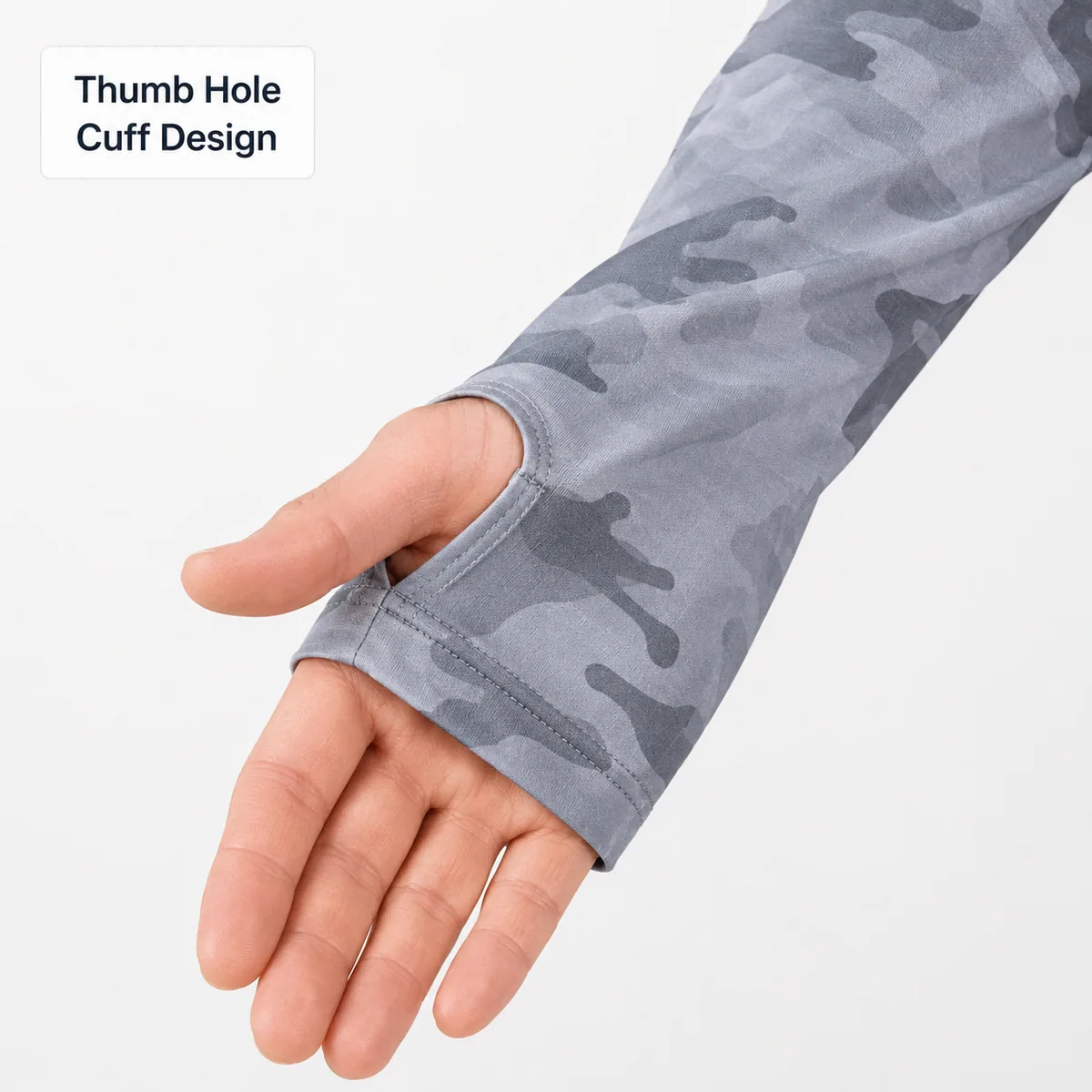
Our separate article on thumb hole design for custom fishing hoodies explains opening position, edge finishing, grading, and fit testing in more detail.
The ARPANSA guidance for sun-protective clothing makes a useful distinction: the garment protects only the area it covers. It also notes that protection can be affected by factors such as wetness, stretch, wear, and chemicals. That is why coverage and test evidence need to be reviewed together.
When a hooded format makes more sense
A sun hoodie is often the stronger starting point when the product is meant for long, exposed sessions and the buyer wants fewer separate accessories.
Open-water and offshore fishing. There may be little shade, and reflected light can reach the face and neck from different angles. A stable hood can add useful coverage without asking the wearer to manage a separate gaiter.
Kayak and guide programs. The wearer may stay in one position for hours. A hood, long sleeves, and anchored cuffs can help maintain consistent coverage as the body moves.
Retail collections built around sun coverage. A hooded silhouette immediately communicates the intended use. It also gives a brand more surface area for sublimation patterns, contrast panels, and identity details.
The trade-off is pattern complexity. Hood depth, face opening, cap compatibility, seam placement, and ventilation all need to be sampled. Adding a hood to an existing shirt body without testing the balance usually creates more problems than it solves.
When a non-hooded fishing shirt is the cleaner choice
A non-hooded UPF fishing shirt is often easier to coordinate across a team or mixed product line.
Tournament uniforms. A crew neck, polo, or button-up can give the team a more consistent appearance. Anglers can add their own caps and gaiters according to conditions.
Resort and lifestyle programs. Some buyers want a product that moves between the boat, clubhouse, shop, and casual wear. A custom fishing polo shirt or button-up fishing shirt may fit that brief better than a hooded style.
Layering systems. A non-hooded base avoids stacking two hoods under a rain jacket or outer layer. This matters when the shirt is one item in a larger fishing apparel system.
Do not assume that removing the hood automatically makes the shirt cooler. Knit structure, fabric weight, color, fit, moisture handling, and vent construction can have a larger effect on comfort.
The UPF report matters more than the label
The AATCC TM183 test method is used to measure ultraviolet radiation transmitted or blocked by textile fabrics, including stated dry or wet conditions. For a custom program, ask which exact material was tested and whether the report matches the approved color, construction, and treatment.
Before approving a sun hoodie or fishing shirt, confirm:
- Fabric composition, construction, weight, color, and finish
- Test method, report date, sample description, and stated conditions
- Whether the report covers a fabric sample or a finished garment
- Hood, collar, cuff, mesh, and stretch-panel construction
- Fit across the smallest, middle, and largest sizes
- Final artwork and whether it changes the tested material
- Claim wording planned for labels and the product page
Our UPF30 vs. UPF50+ fishing shirt comparison explains how to read the rating and what a fabric report should show.
Decide from the use case, then build the specification
Choose a sun hoodie when added head and neck coverage is central to the product. Choose a non-hooded fishing shirt when the program needs easier layering, a cleaner uniform look, or separate control over hats and neckwear.
For either format, the factory brief should define the actual garment rather than say only “make it UPF50+.” Coverage, fit, fabric, test evidence, artwork, and end use belong in the same development conversation.
Can a sun hoodie be UPF50+?
Yes, if the applicable tested material or garment supports that rating under the stated method and conditions. The word “sun” in the product name is not test evidence.
Is a sun hoodie always hotter than a fishing shirt?
No. The result depends on fabric, knit construction, fit, color, hood design, ventilation, humidity, wind, and activity. A sample wear test is more useful than judging by silhouette alone.
Do thumb holes increase UPF?
Thumb holes can help keep the sleeve over part of the hand, so they may improve practical coverage. They do not change or prove the textile’s UPF rating.