
A thumb hole looks like a small detail on a tech pack. Two cuts in the cuff, maybe a bit of binding, and the sleeve is done. In practice, it affects how the hoodie feels after an hour on the water, how well the sleeve stays in place while casting, and how many defects show up in a bulk inspection.
If you are developing a custom fishing hoodie, the right thumb hole design depends on the job the garment needs to do. A lightweight sun hoodie needs a different opening from a cold-weather layer. A rib cuff behaves differently from a straight-cut sleeve. The edge finish also matters more than most first-time brands expect.
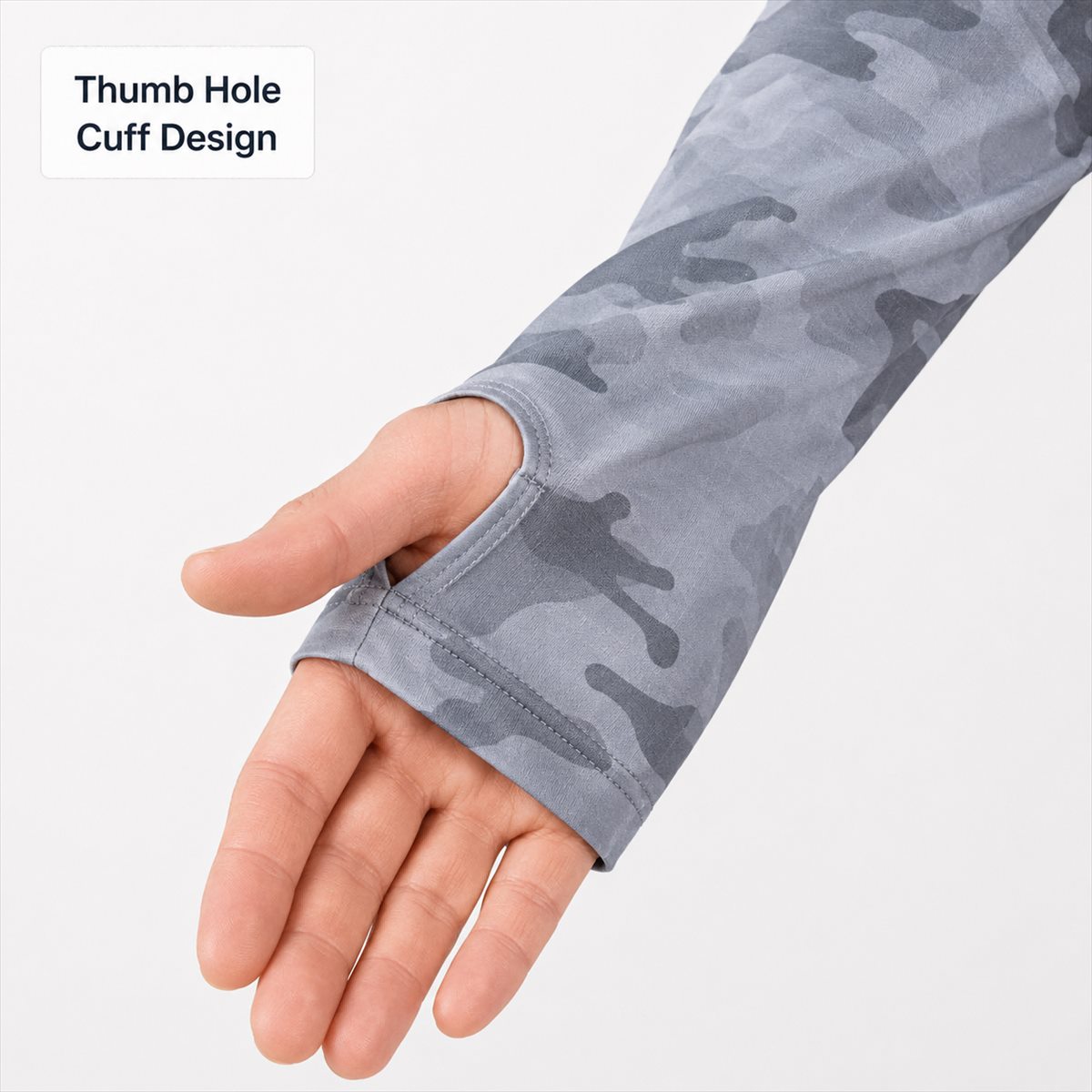
Start with the job of the thumb hole
Before choosing an opening size or edge finish, decide what the detail is supposed to do. Most custom fishing hoodies use thumb holes for one or more of these reasons.
Sun coverage. The sleeve stays pulled over the back of the hand while casting and reeling. That reduces the gap between the cuff and the glove or exposed skin. For this use, the hole does not need to be extremely tight. It needs to hold position while the hand moves.
Warmth and wind blocking. On a cold-water or early-season hoodie, the cuff becomes a partial hand covering. The opening should stay anchored when the wearer pulls on another layer, but it should not restrict circulation or make knot tying difficult. A longer rib cuff usually gives better control here than a straight-cut cuff.
Dexterity. Some anglers want to move their thumbs in and out of the opening without thinking about it. That calls for a flexible edge and enough room to release the hand quickly. If the hole feels rigid or too tight, customers will simply stop using it.
This is also where your wider custom fishing hoodie direction matters. A lightweight summer hoodie, a brushed cold-weather layer, and a team hoodie may all need different cuff specifications even if they share the same base pattern.
Straight-cut cuff or extended rib cuff?
The cuff determines how the hole sits on the wrist. It also affects the sleeve pattern, fabric consumption, and the way the garment behaves after washing.
| Decision point | Straight-cut cuff | Extended rib cuff |
|---|---|---|
| Construction | The sleeve ends near the wrist and the hole is cut close to the hem. | A separate rib-knit panel extends beyond the main sleeve body. |
| Wrist fit | More relaxed and easier to treat as an optional detail. | Snugger and better at keeping the sleeve anchored. |
| Best use | Lightweight sun hoodies and casual fishing layers. | Cold-weather layers, repeated use, and garments worn over base layers. |
| Cost | Lower because the sleeve uses one main fabric and a simpler cut. | Higher because the rib panel adds material, a seam, and assembly time. |
| Main risk | The opening can ride up when the arm is extended. | Rib tension can feel restrictive if it is not tested across the size range. |
For many performance fishing hoodies, an extended rib cuff is a practical starting point. It holds the thumb hole in a more stable position and still works in warmer conditions when the wearer leaves the thumb out. A straight-cut cuff makes more sense when the hoodie is designed mainly as a light sun shirt and the wearer wants the option to ignore the hole.
Do not approve this detail from a medium sample alone. The smallest and largest sizes often reveal a cuff problem that is invisible in the middle of the range.
Choose the edge finish before sampling
The two common choices are a bound seam and a laser-cut edge. Neither is automatically better. The best option depends on the fabric, garment weight, target price, and expected use.
| Edge finish | Strengths | Watch-outs |
|---|---|---|
| Bound seam | Reinforces the opening, gives a familiar sewn finish, and is reliable for repeated pulling. | Adds bulk, labor, and another visible design line. |
| Laser-cut edge | Clean look, minimal hand feel, and fast production on suitable synthetic fabrics. | Settings must be tested by fabric lot; too much heat can burn the edge, while too little can leave roughness or stretch. |
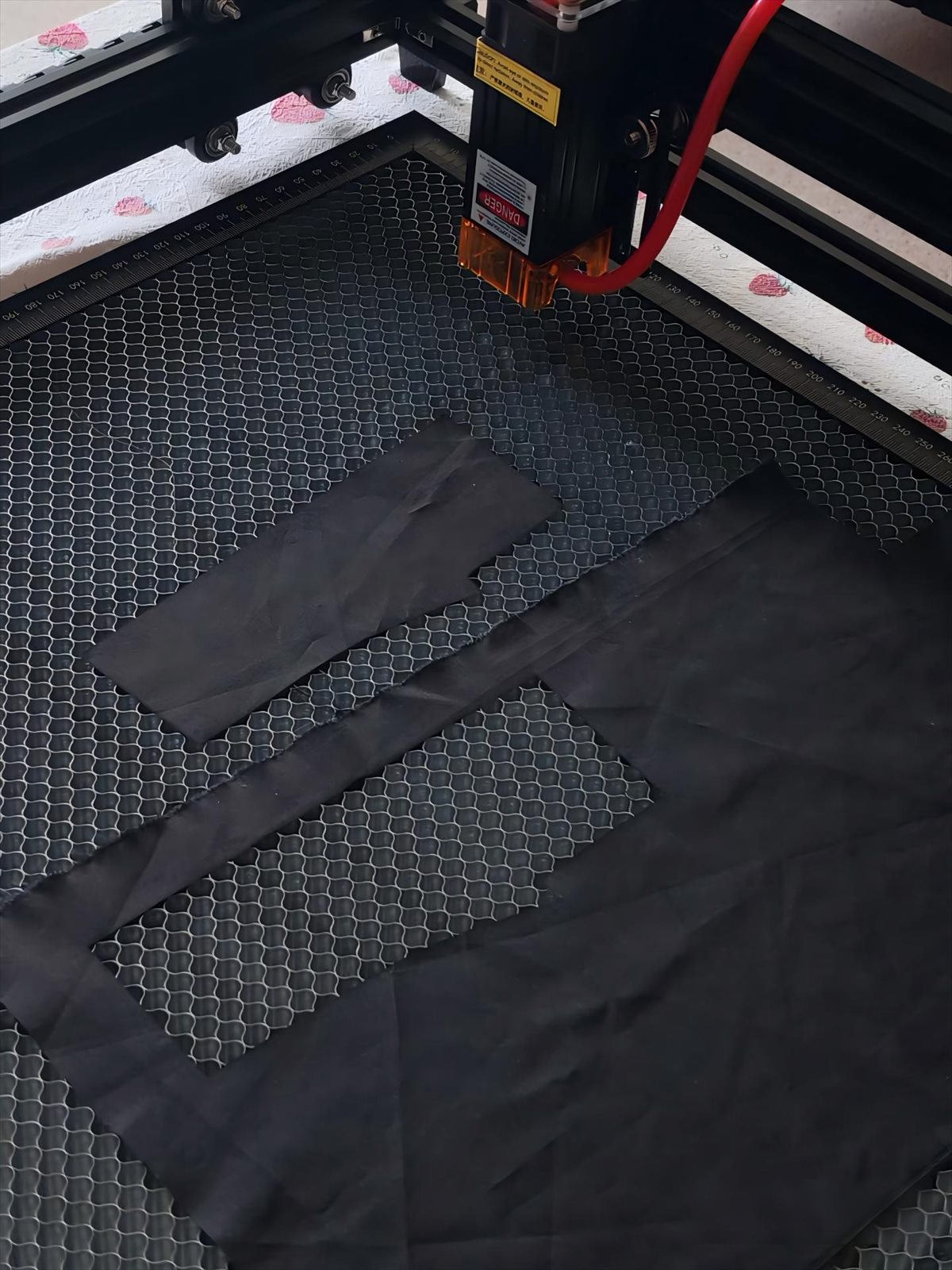
For a hoodie around 200gsm or heavier, a bound seam is often the safer starting point when durability is the priority. For a lightweight sun hoodie under roughly 160gsm, laser cutting may give a cleaner, less noticeable finish. Treat those numbers as development starting points, not universal rules. Nylon, polyester, elastane content, coating, color, and fabric construction can all change the result.
If the product carries a UV-protection claim, keep the thumb hole discussion separate from the fabric claim. A thumb hole can extend coverage, but it does not prove a UPF rating. Confirm the relevant fabric or finished-garment test method, such as the AATCC TM183 method for measuring UV transmission through fabrics, before writing a market-facing claim.
Grade the opening across the size range
This is where many new brands save a few minutes during sampling and create a customer-service problem later.
Position. If the opening is too close to the hem, the sleeve can ride up when the arm is extended. If it is too far from the hem, fabric bunches between the thumb and forefinger. A useful starting point is around 3-5cm from the hem on a medium sample, followed by a fit review across the full size range.
Diameter. A hole that feels comfortable on a medium may pinch an XS or feel loose on a 2XL. Do not assume the same measurement works for every size. A graduated starting spec, for example 3.0cm on XS, 3.3cm on M, and 3.6cm on XL, gives the pattern maker something concrete to test.
Angle. A vertical opening parallel to the sleeve seam is simple to pattern and generally reliable. An angled opening toward the palm can feel natural during casting, but it is harder to finish consistently. Use it when there is a clear fit or performance reason, not just because it looks different.
Tension. The hole should hold the sleeve without pressing hard against the thumb joint. Test it with the hand relaxed, the thumb extended, and the arm reaching forward. A standing try-on is not enough.
A simple thumb hole tech pack checklist
Before you approve the sample, write the detail into the tech pack instead of leaving it in a message thread with the factory.
| Spec | Starting point | What to confirm |
|---|---|---|
| Cuff type | Straight cut or extended rib | Does the cuff stay in position during casting and layering? |
| Opening position | About 3-5cm from the hem on M | Does the position scale correctly to XS and the largest size? |
| Opening size | Graduated by size, not one fixed number | Can the thumb pass through without pinching or gaping? |
| Edge finish | Bound seam or tested laser cut | Does the edge stay smooth after stretch and wash testing? |
| Stitching | Specify stitch type and thread color for bound seams | Is the seam flat enough for skin contact? |
| Tolerance | Add a measurement tolerance agreed with the factory | Can QC measure it consistently during inspection? |
| Fit approval | Test the smallest, middle, and largest sizes | Does the same detail work across the range? |
The exact measurements should be confirmed with your pattern maker and fabric sample. The point is to make every decision visible before production starts.
Common mistakes that appear after production
Leaving the edge finish to the factory default. If the finish is not written down, the factory may choose the fastest workable method. That can be fine when it matches your product plan, but it is risky when you expected a reinforced bound seam and receive a raw laser-cut edge.
Using one opening size for every garment. A medium fit model can make the sample look perfect while the smallest size pinches and the largest size loses sleeve tension. Grade the opening and check at least three sizes.
Testing only at rest. Thumb holes are pulled during casting, reeling, layering, and pushing the sleeve back down. Put the garment through those movements during fit approval. Check for rolling, fraying, distortion, and pressure around the thumb joint.
Ignoring the fabric lot. Laser settings that work on one polyester-spandex fabric may not work on another fabric with a different weight, coating, or stretch percentage. Keep a cutting sample with the approved tech pack and repeat the edge check when the material changes.
For the same reason, fabric selection should be reviewed alongside construction details. Our guide to choosing fabrics for custom fishing shirts covers weight, stretch, breathability, and care considerations that can affect the final hoodie specification.
FAQ
What is the best thumb hole style for a fishing hoodie?
For many fishing applications, a vertical oval opening with bound finishing on an extended rib cuff is a reliable starting point. It holds the sleeve in place and tolerates repeated use. A laser-cut opening can be a better fit for a lightweight sun hoodie when the fabric and settings have been tested properly.
Do thumb holes affect sleeve durability?
They can if the edge is poorly finished or the opening is too small for the intended size. A properly bound seam or a properly sealed laser-cut edge should not create an early failure point. Test the actual fabric weight and finished construction instead of relying only on the fiber name.
Can I customize the thumb hole for my brand?
Yes. Position, graduated sizing, binding color, and opening shape are all practical design levers. A contrast binding can create a subtle brand detail without changing the whole garment. Embossed logos and custom laser templates are also possible, but they may involve setup costs that make more sense at higher quantities.
What should I send a manufacturer before asking for a quote?
Send the hoodie reference, target fabric and GSM, size range, cuff preference, thumb hole measurements, edge finish, logo direction, target quantity, and delivery market. If you already have a tech pack, include the sleeve and cuff pages so the factory can quote the real construction rather than a generic hoodie.
If you are still defining the product, review the custom fishing hoodie options and then request a project review. We can help turn the thumb hole detail into a sample that is easier to approve and inspect in bulk.
Production note: Thumb hole dimensions in this guide are development starting points. Final measurements should be confirmed through pattern review, fit samples, stretch testing, and the agreed QC standard for the actual fabric and size range.