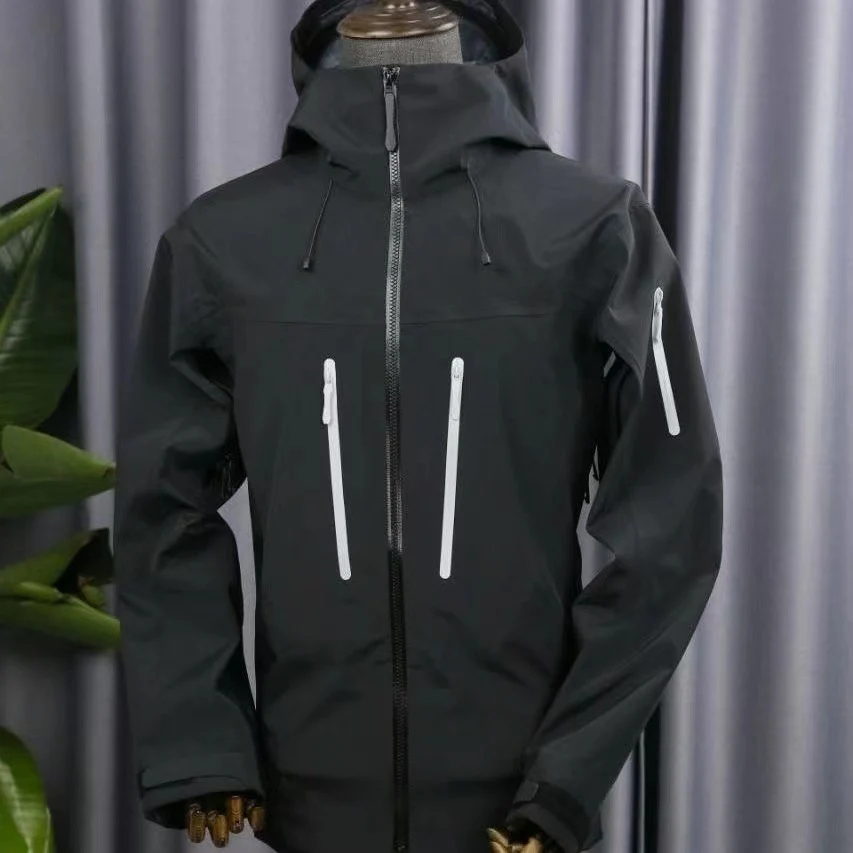
The previous jacket fell short on waterproofing and warmth
The buyer already had a supplier, but the existing jacket did not deliver the waterproof performance it wanted for its fishing apparel brand. The acrylic inner material was also falling short of its expectations for comfort and warmth. Replacing the supplier without changing the product specification would not have addressed those two concerns.
This was an established tackle business developing clothing under its own name, rather than buying a promotional jacket. The garment needed to support that brand’s relationship with anglers. Its outer protection and the experience of wearing it mattered together: a jacket can look suitable for fishing yet still disappoint when the lining feels uncomfortable or the weather protection is inadequate.
The initial commercial plan was a 150-piece run. Our development brief therefore centred on improving one jacket before expanding the order, with the waterproof system and inner material treated as separate requirements. That gave the sample a clear purpose: show whether the proposed changes solved the buyer’s original problems.
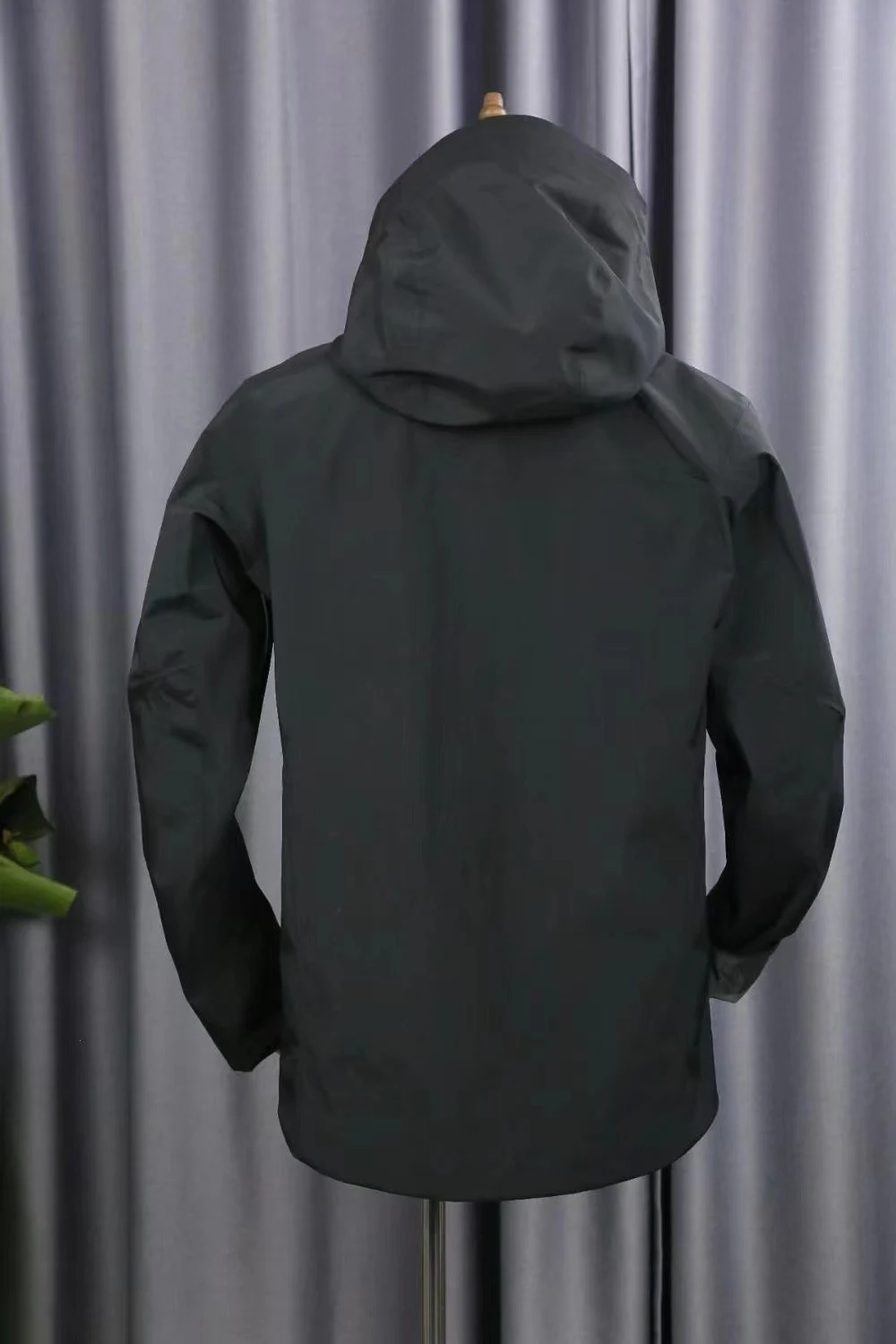
We separated rain protection from next-to-body comfort
A waterproof rating and a comfortable lining solve different problems. We built the proposal around both, rather than assuming that a heavier inner layer would compensate for inadequate protection or that changing the outer fabric alone would make the jacket more pleasant to wear.
For the shell, the relevant decisions were the water-resistance specification, sewn connections and zip openings. Sewing joins panels but also creates needle holes; seam sealing addresses those paths through the construction. The zip has a different role, so its selection belongs in the same brief without being confused with the fabric’s rating.
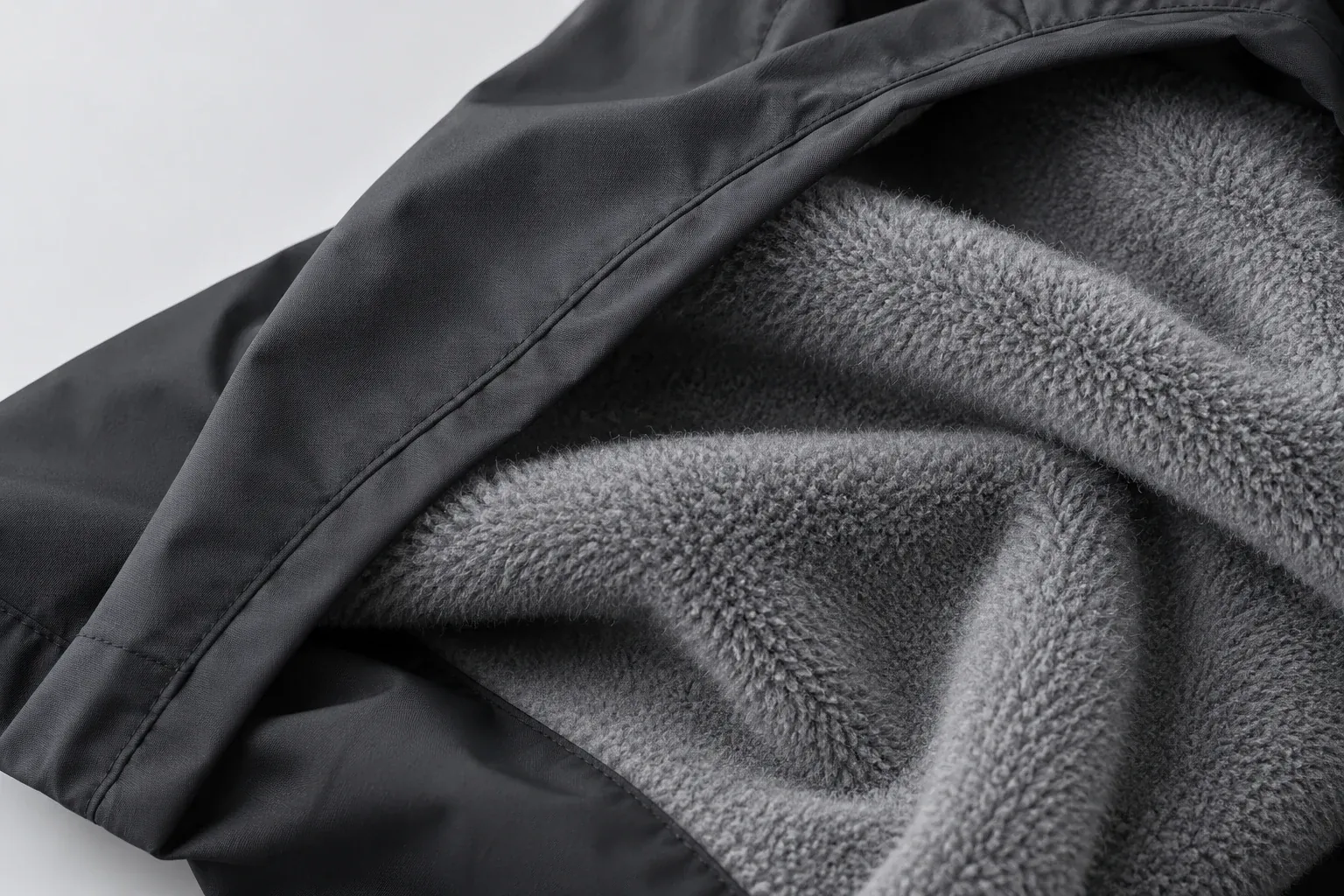
For the inner material, the question was what the buyer wanted its customers to feel when wearing the jacket. The original acrylic lining had not met that expectation. We proposed a higher-quality brushed material for the new version, while keeping the focus on the complete garment rather than making a blanket claim that one fibre is always better than another.
20,000 mm hydrostatic head, full seam taping and YKK zips
The revised project specification combined 20,000 mm hydrostatic head with fully taped seams and YKK zips. Hydrostatic head expresses resistance to water penetration as a water-column pressure. It is a material-performance figure, not a promise about how many hours someone can remain in rain, and it should not be confused with surface water beading.
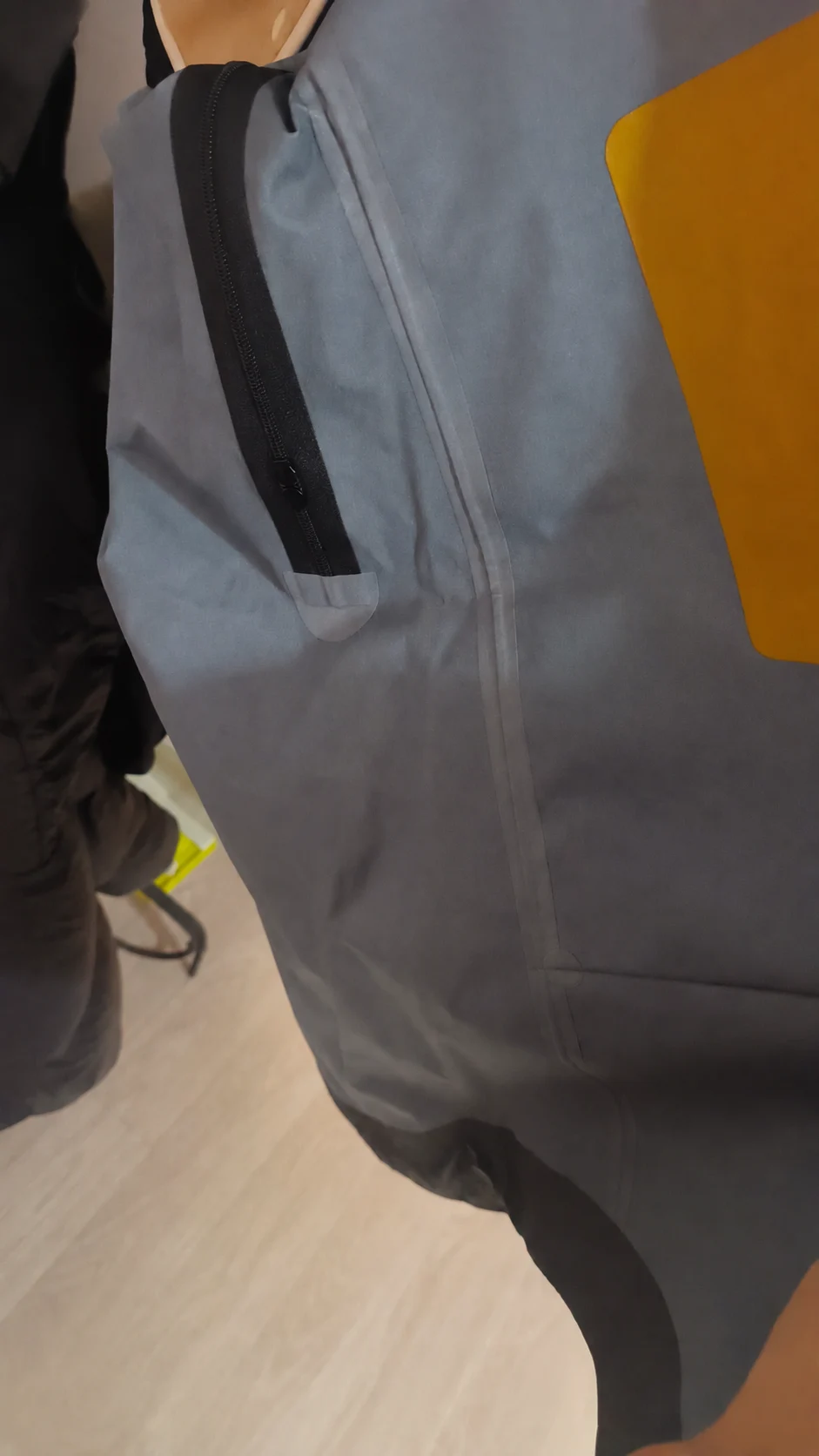
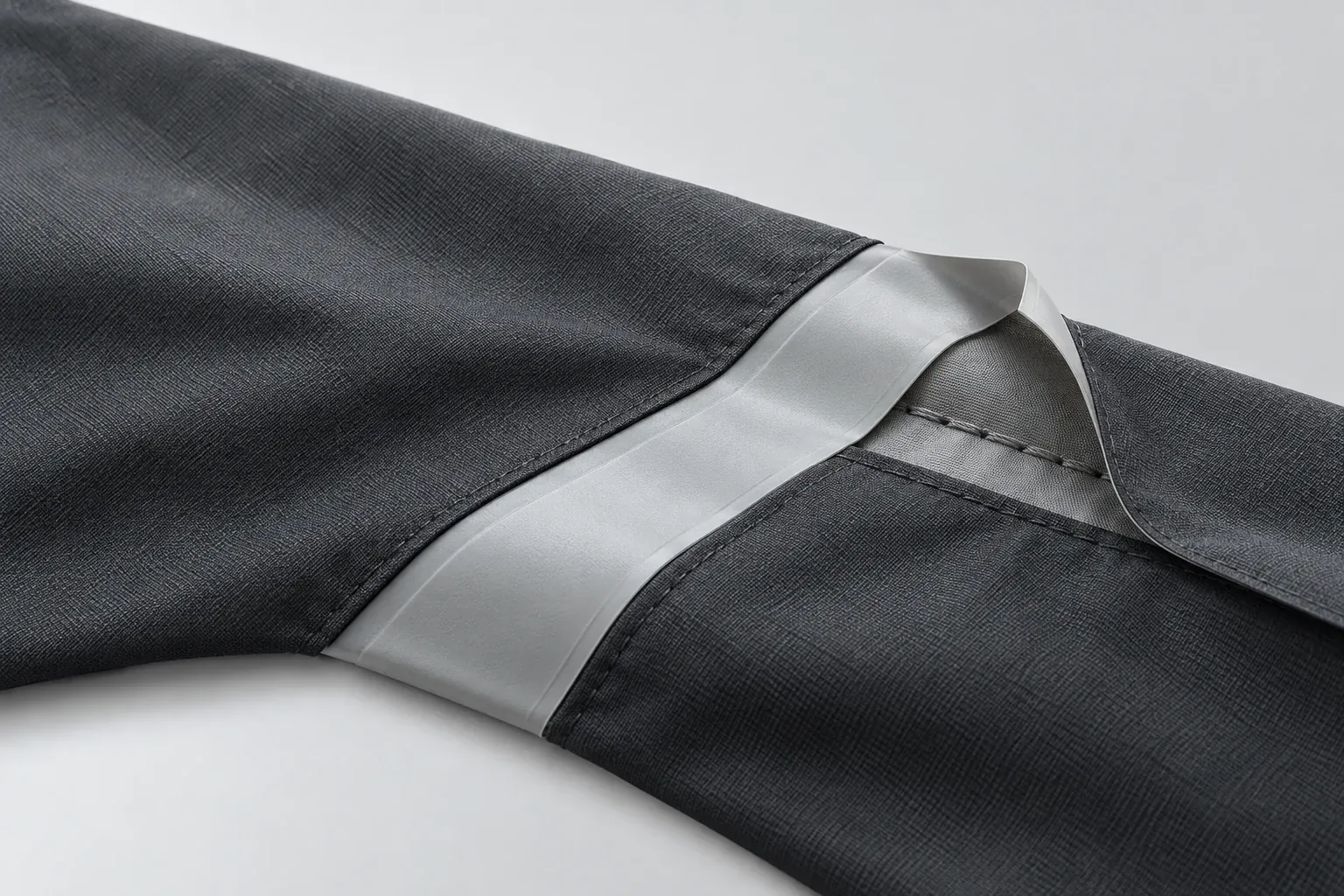
Full seam taping was central to the construction proposal. The tape covers sewn joins on the inside, helping close the needle-hole paths that an untaped connection would leave. Its role is to preserve protection across panel connections, rather than expecting the main fabric’s rating to cover every part of an assembled jacket automatically.
We selected YKK zips as part of the weather-protection scheme. A zip opening is a separate construction detail from a panel seam, so both needed attention in the custom specification. The waterproof design was therefore a coordinated set of choices, not a claim that a branded zip by itself could create the 20,000 mm rating.
The sample photographs below show the actual interior detail supplied for the project. The accompanying illustration explains how tape covers a sewn connection; it is not a test image or a reproduction of the sample’s exact layer construction.
A brushed lining replaced the original acrylic material
We changed the inner material to address the buyer’s concerns about both comfort and warmth. The upgraded brushed lining gave the project a different inner surface from the acrylic material used in the previous jacket. This was a purposeful material change, not simply another feature added to the exterior.
Brushing creates a raised textile surface, giving the inside a softer feel against the wearer’s clothing. Warmth still depends on the whole jacket: the lining, garment fit and layers worn underneath all matter. For this project, the complete sample allowed the buyer to assess those elements together rather than judge the new lining in isolation.
The waterproof work and lining upgrade were complementary. One addressed the buyer’s protection requirement; the other addressed the experience inside the jacket. Both needed to be present in the physical sample before the buyer could judge whether the new version suited its apparel brand.
| Project detail | Starting point | Custom version |
|---|---|---|
| Waterproof performance | Below the buyer’s required level | 20,000 mm hydrostatic-head specification |
| Weather-protection construction | The complete waterproof system needed improvement | Full seam taping and YKK zip selection |
| Inner material | Acrylic lining did not meet the buyer’s comfort and warmth expectations | Upgraded brushed lining selected for this jacket |
| Order commitment | An initial plan for 150 pieces | A final bulk order of 500 pieces after sample evaluation |
The brand approved the sample, then involved its own customers
The buyer was very pleased with the completed sample and took the evaluation beyond its own team. It arranged for its customers to try the jacket, then reported positive feedback to us. That sequence matters: the sample was assessed by the brand first and then by people it intended to serve.
Customer-led wear evaluation complements product development by bringing the complete garment into use. It allows the buyer to consider the jacket as a finished product rather than a collection of fabric and trim choices. In this project, the positive feedback supported the decision to move ahead with a larger bulk order.
The feedback described here came from the buyer and its customer evaluation. It helped establish whether the new jacket met the brand’s expectations for practical use; it was separate from the material’s hydrostatic-head specification.
The planned 150-piece run became a 500-piece bulk order
After reviewing the sample and customer feedback, the buyer increased its order from the originally planned 150 jackets to 500. The decision to commit to a larger first run followed the physical sample evaluation, giving the development work a clear commercial outcome.
The approved version brought the key decisions together: the hydrostatic-head specification, full seam taping, YKK zips and upgraded brushed lining. The buyer could now move into a 500-piece order around one agreed jacket, rather than continue with the waterproofing and lining compromises that had prompted the supplier change.
A stronger jacket proposal gave the buyer confidence to scale
This project started with two product weaknesses and ended with a sample the buyer was ready to order at a greater scale. The useful lesson for another tackle company is to describe what its existing jacket fails to deliver, then develop a specification that addresses those failures directly.
A reference jacket, a clear waterproof requirement and an explanation of the desired lining experience are useful starting points. They make the development conversation more specific than asking for a “premium fishing jacket”, and give the complete sample a meaningful basis for evaluation.
Need to improve an existing fishing jacket?
Send us your reference garment and the issues you want to solve. We can discuss a custom jacket specification, complete sample and production plan for your brand.
Discuss Your Jacket Projectinfo@ezfishingwear.com