There is no single perfect fabric for every fishing shirt in Australia. A shirt used on a humid tropical estuary has a different job from one worn offshore in wind and spray. The right specification depends on heat, sun exposure, moisture, abrasion, stretch, artwork, and how long the crew will stay on the water.
That sounds obvious, but many sourcing briefs still begin with only one line: “100% polyester, quick dry, UPF 50+.”
It is a start, not a complete fabric specification.
What fabric is best for fishing shirts in Australia?
For most fishing shirts in Australia, a lightweight, sublimation-ready polyester knit is the practical starting point. Tropical shirts need more airflow; offshore shirts need slightly more body and surface durability. Stretch blends need extra testing because stretch and moisture can change both fit and measured UV protection. Approve a printed garment sample, not fiber content alone.
Match the fabric to the fishing environment
| Use case | Useful starting direction | What to watch |
|---|---|---|
| Tropical and humid | Lightweight polyester knit, open structure, moisture management | Fabric can cling when wet; very open knits still need UPF verification |
| Saltwater inshore | Quick-dry polyester or polyester/spandex with stable recovery | Salt, sunscreen, repeated washing, and snagging |
| Offshore boat use | Mid-light fabric with wind tolerance, durable face, long-sleeve coverage | Spray, abrasion, repeated stretch, and colder return trips |
| Tournament team | Sublimation-compatible polyester with consistent white base and color control | Panel alignment, sponsor logos, size grading, and color approval |
| Resort or guide uniform | Smooth knit or lightweight woven with a polished hand feel | Collar stability, embroidery weight, and appearance after washing |
The table is a starting point. Final fabric approval should happen after a physical swatch or sample is reviewed in the intended color and construction.
Tropical heat: lightweight does not automatically mean cooler
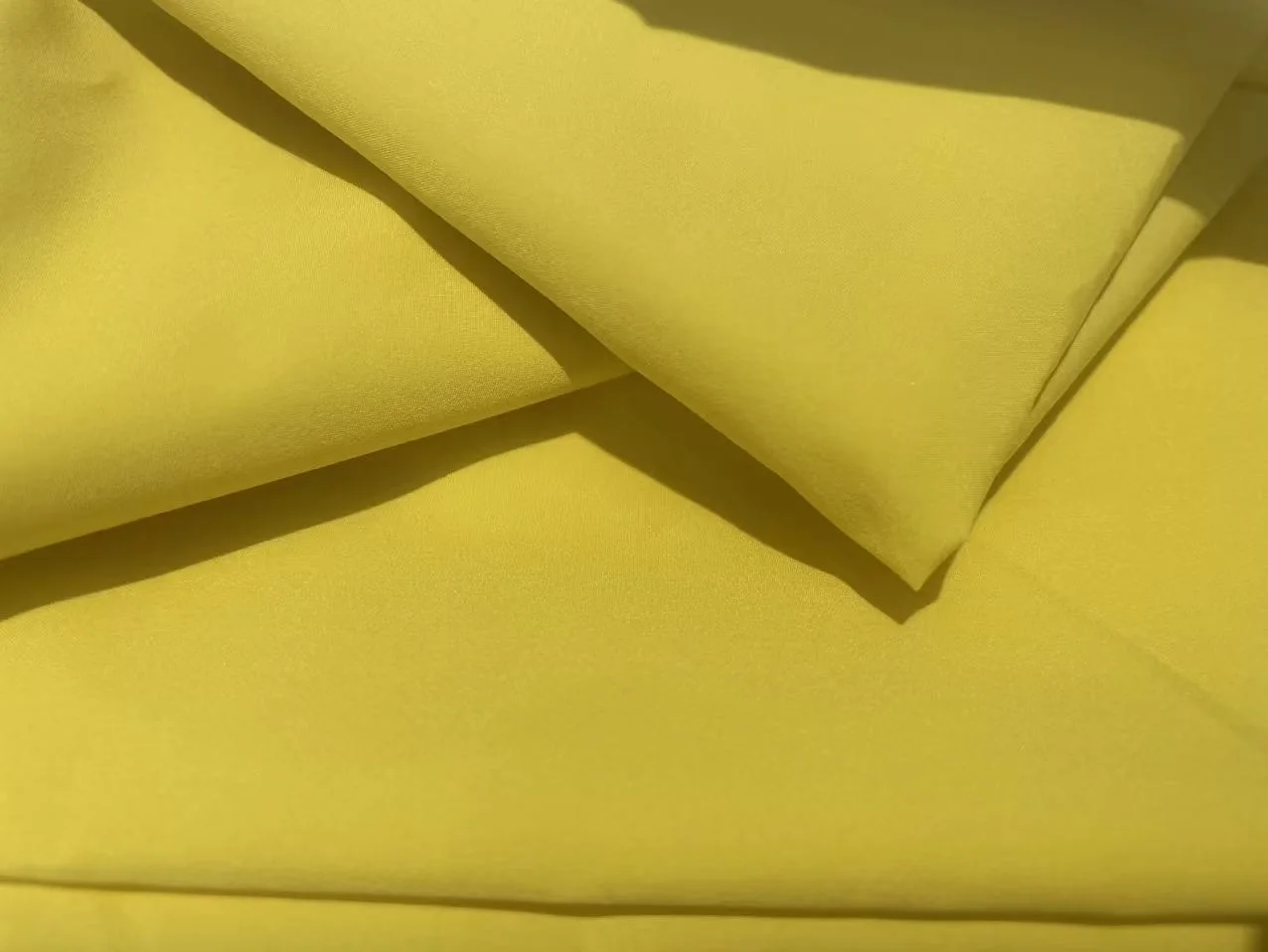
Fabric weight matters, but structure matters just as much. A very light fabric with a dense surface can feel hotter than a slightly heavier knit that allows air to move.
For northern Australian conditions, buyers often begin around a lightweight or mid-light polyester performance knit. The exact GSM is less important than the combination of:
- Air permeability
- Moisture movement
- Drying speed
- Surface feel against sweaty skin
- Opacity in pale colors
- Recovery after stretch
A shirt can be quick to dry on a laboratory rack and still feel uncomfortable on the body if it holds moisture against the skin. Ask for a sample, wear it in heat, wet part of it, and see how it behaves rather than relying only on the phrase “moisture wicking.”
Saltwater conditions expose weak specifications quickly
Salt itself is not the only problem. Fishing shirts also meet sunscreen, fish slime, deck surfaces, hook-and-loop closures, repeated washing, and long periods of damp wear.
For charter crews and frequent anglers, check:
- Whether the surface snags easily
- Whether the fabric pills after abrasion
- Whether stretch recovery changes when wet
- Whether dark sublimated areas show whitening when stretched
- Whether the collar, cuff, or hood twists after washing
- Whether odor remains after repeated use
Polyester is widely used because it dries quickly, holds sublimated color well, and can be engineered in many knit structures. It can retain odor if the fabric and finishing package are poorly chosen. Nylon often has a softer hand and good abrasion resistance, but all-over sublimation is generally built around suitable polyester fabrics.
This is why the print method should be decided at the same time as the fabric, not after the garment has been developed.
Polyester, nylon, and stretch blends
Polyester performance knit
This is the most common direction for custom fishing shirts, especially when the design uses full-color sublimation. It is practical for tournament artwork, sponsor logos, repeat patterns, and coordinated team programs.
The tradeoff is that not all polyester feels premium. Yarn type, knitting structure, finishing, and weight determine whether the shirt feels dry and smooth or plasticky and warm.
Polyester/spandex
A small amount of spandex can improve casting comfort and mobility. It also introduces more variables. Stretch can reduce measured UV protection, affect print appearance, and make seams harder to stabilize if the fabric is very elastic.
For a fishing shirt, more stretch is not always better. The goal is enough movement without a loose, heavy, or unstable garment.
Nylon/spandex
Nylon blends can work well for smooth solid-color sun shirts, lightweight woven button-ups, or premium stretch garments. They are useful when hand feel and abrasion resistance matter more than all-over sublimated artwork.
Decoration needs to be planned carefully because heat sensitivity and dye behavior can affect transfers and printing.
For a broader comparison, see our article on the best fabrics for fishing shirts.
Offshore shirts need coverage and stability
Offshore weather changes quickly. A shirt that feels perfect at the marina can feel too thin once wind and spray increase. For longer boat days, many buyers prefer a fabric that is still breathable but has a little more body and surface durability.
Long sleeves, a stable neckline, and sufficient torso length help the shirt stay useful while casting, bending, and reaching. A hood adds neck and head coverage, while thumb-hole cuffs can reduce exposed wrist area and stop sleeves from riding up.
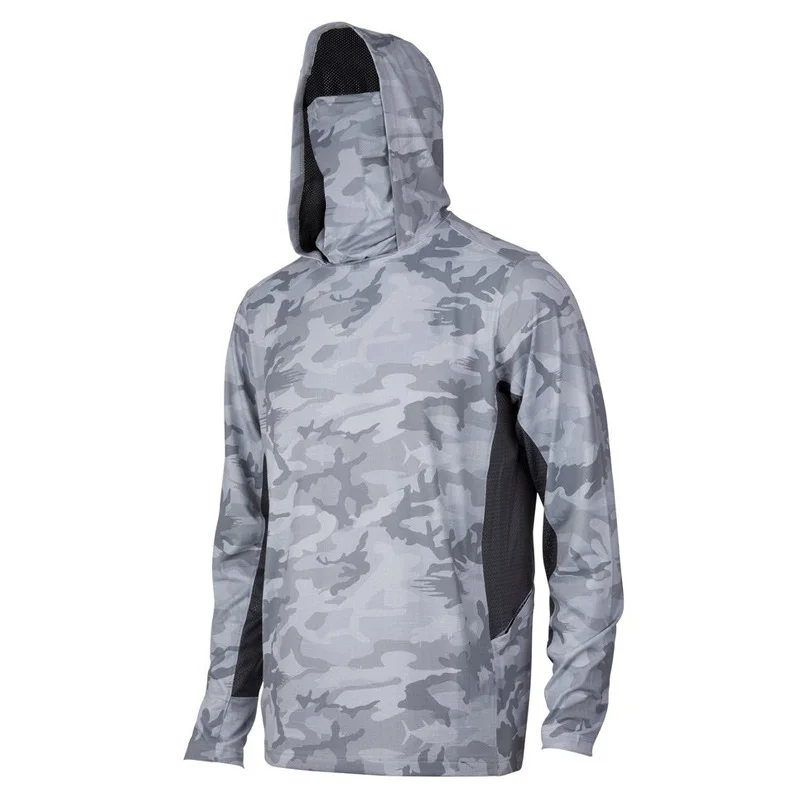
If your range includes hooded styles, compare construction details on our custom fishing hoodies page. A hood should be evaluated for depth, face opening, wind behavior, and compatibility with hats or neck gaiters. It should not be added just because “sun hoodie” is a popular product name.
UPF claims need more than a fabric supplier’s promise
UPF is the relevant rating for clothing. SPF is normally associated with sunscreen, even though shoppers often search for “SPF shirts.”
Fabric construction, color, stretch, moisture, and wear can affect ultraviolet transmission. If the finished product will carry a UPF claim, confirm what was tested, the test method, the fabric color, and whether wet or stretched conditions were included when relevant.
For the Australian market, use the current standard as the starting reference. ARPANSA’s page on Australian sun-protective clothing explains the AS/NZS 4399:2020 classifications: UPF 15 is minimum protection, UPF 30 is good protection, and UPF 50 or 50+ is excellent protection. It also warns that protection may be reduced when material is wet, stretched, worn, or exposed to chemicals.
Cancer Council Australia recommends covering as much skin as possible and choosing clothing with a high UPF rating. See its guidance on sun-protective clothing.
For product development, ask for the report rather than only a certificate photo. ARPANSA states that its clothing and fabric testing is performed to AS 4399 and that its reports contain the information required for correct labelling. Check:
- Laboratory and report identification
- Test method and date
- Exact fabric or sample reference
- Color tested
- Dry and wet values, where applicable
- Whether the sample was tested stretched
- Any limitations stated in the report
Our article comparing UPF 30 and UPF 50+ fishing shirts explains what the rating difference means in a sourcing conversation.
Sublimation changes the fabric decision
All-over digital sublimation is a strong fit for Australian fishing teams because it handles gradients, fish artwork, sponsor logos, sleeve graphics, and individual colorways without creating a heavy printed layer.
The fabric must still be approved as part of the printed system. A white polyester base, ink profile, heat settings, and final color approval all affect the result. Dark printed areas should be checked at normal stretch, especially around shoulders, elbows, and larger sizes.
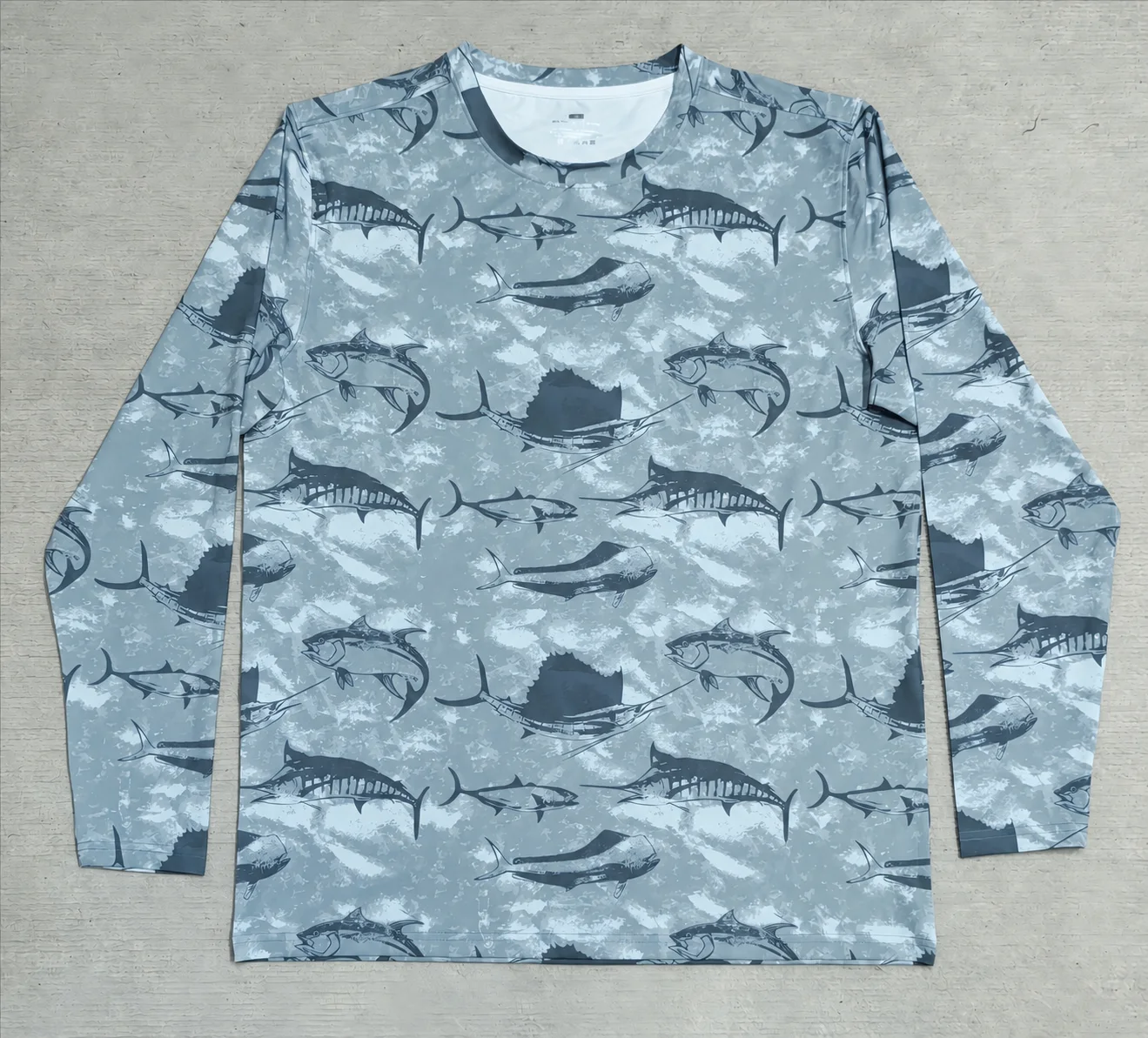
Before bulk production, review:
- Artwork scale on each garment size
- Matching at side seams and sleeves
- Sponsor logo clarity
- Color difference between screen and fabric
- Show-through when the fabric stretches
- Print migration or shade variation
If the product uses a small chest logo rather than all-over artwork, embroidery, screen print, or heat transfer may be more appropriate. The decoration method should match the garment’s stretch, airflow, and intended positioning.
Color is a performance and commercial decision
Light colors are often chosen for heat and visibility, but they can become transparent or show stains more easily. Dark colors can provide a strong retail look and may perform differently in UV testing, but they also absorb more solar heat.
Do not approve color from a computer monitor alone. Use a printed strike-off or sample under natural light. For team and retail programs, record approved color references so repeat orders do not drift.
Fluorescent and high-visibility colors require additional care. A bright color or reflective trim does not automatically make a fishing shirt certified safety apparel. If the garment must meet a workplace standard, specify that separately and review the applicable Australian requirements.
A practical fabric brief for an Australian supplier
You can get a more useful factory recommendation by sending the following:
- End use: saltwater, tropical, offshore, tournament, resort, or work crew
- Garment type: crew-neck shirt, sun hoodie, polo, or button-up
- Target climate and typical wearing time
- Preferred weight or a reference garment
- Stretch requirement
- Artwork and decoration method
- Intended UPF claim and required test conditions
- Size range and fit direction
- Quantity per design and color
- Delivery city and required date
Avoid specifying technical terms simply because they sound premium. If you request cooling yarn, antibacterial finishing, four-way stretch, UPF 50+, and recycled content in one line, the factory still needs to know which features are essential and which are optional. Every added requirement affects fabric availability, MOQ, testing, lead time, and price.
Build the first sample around the hardest condition
If the same shirt will be used from tropical estuaries to offshore trips, sample it for the harshest realistic use. Check the shirt wet, stretched, and after washing. Wear it with the hat, gaiter, life jacket, or outer layer that the customer will actually use.
The sample should answer practical questions: Does the sleeve ride up? Does the neck feel tight? Does the fabric cling? Can the wearer move freely? Are logos readable? Does the shirt still look good after a full day?
That feedback is more useful than choosing fabric from a swatch book alone.
Questions buyers ask about Australian fishing-shirt fabric
Is 100% polyester always the best choice?
It is the safest starting point for lightweight, quick-drying shirts with all-over sublimation, but it is not automatically comfortable or durable. Yarn, knit structure, finishing, weight, and surface texture determine how a polyester fabric behaves. Nylon blends can suit solid-color stretch garments, while a small spandex content can improve movement when recovery is controlled.
What GSM should a tropical fishing shirt use?
GSM should be treated as a screening number rather than a final answer. Two fabrics at a similar weight can feel very different because one has a dense face and the other has a more open structure. Compare airflow, opacity, wet cling, drying, stretch recovery, snag resistance, and the required UPF result on physical samples.
Does a darker sublimation print change the shirt’s performance?
It can change heat feel, appearance under stretch, and color behaviour. Check dark areas at the shoulders, elbows, side panels, and larger sizes for whitening or show-through. Approve a printed strike-off and a sewn sample under natural light rather than relying on the artwork shown on a monitor.
Should the fabric or finished shirt be tested for UPF?
The claim must match the evidence and the way the product is sold. Confirm the tested sample reference, color, condition, method, classification, and labelling requirements. Garment coverage also matters because a tested fabric protects only the skin covered by the garment.
To develop a range, review our custom fishing shirts, custom fishing polos, and custom fishing hoodies. You can also compare the landed-cost tradeoffs between a direct factory and local supplier. When you have a target garment, quantity, artwork, and delivery location, send the project details for a fabric and sampling recommendation.