Every year, a number of fishing apparel buyers discover the same problem in January: their spring stock is still waiting for sample approval, and the factory is about to close for Chinese New Year. In 2027 the holiday falls on February 6, which means the practical production window for spring stock closes in mid-to-late January.
This guide shows how to work backward from the date your fishing shirts, sun hoodies, or team apparel must be in your warehouse. It uses the same planning references we give customers in our MOQ, sampling, and lead time guide: about two weeks for a custom sample and about one month for bulk production once everything is approved. Shipping is quoted separately and depends on the route.
Why Chinese New Year Moves Your Real Deadline
Chinese New Year is the longest shutdown in the Chinese manufacturing calendar. For apparel buyers, three effects matter:
- Fabric mills and trim suppliers close first. If fabric, zips, labels, or packaging are not in the factory before mid-January, bulk cannot be finished before the holiday even if sewing capacity is available.
- Sewing lines slow before the holiday. Workers travel home in the one to two weeks before New Year’s Day, so output drops before the official closure.
- Restarting takes weeks. Factories reopen gradually after the holiday. Lantern Festival falls on February 20, 2027, and many factories do not run at full capacity until late February or early March.
Freight is affected too. Ocean and air space fill up in the weeks before the holiday, and rates often rise. A shipment planned for the last few days before closure is the first one to slip.
Work Backward From Your In-Warehouse Date
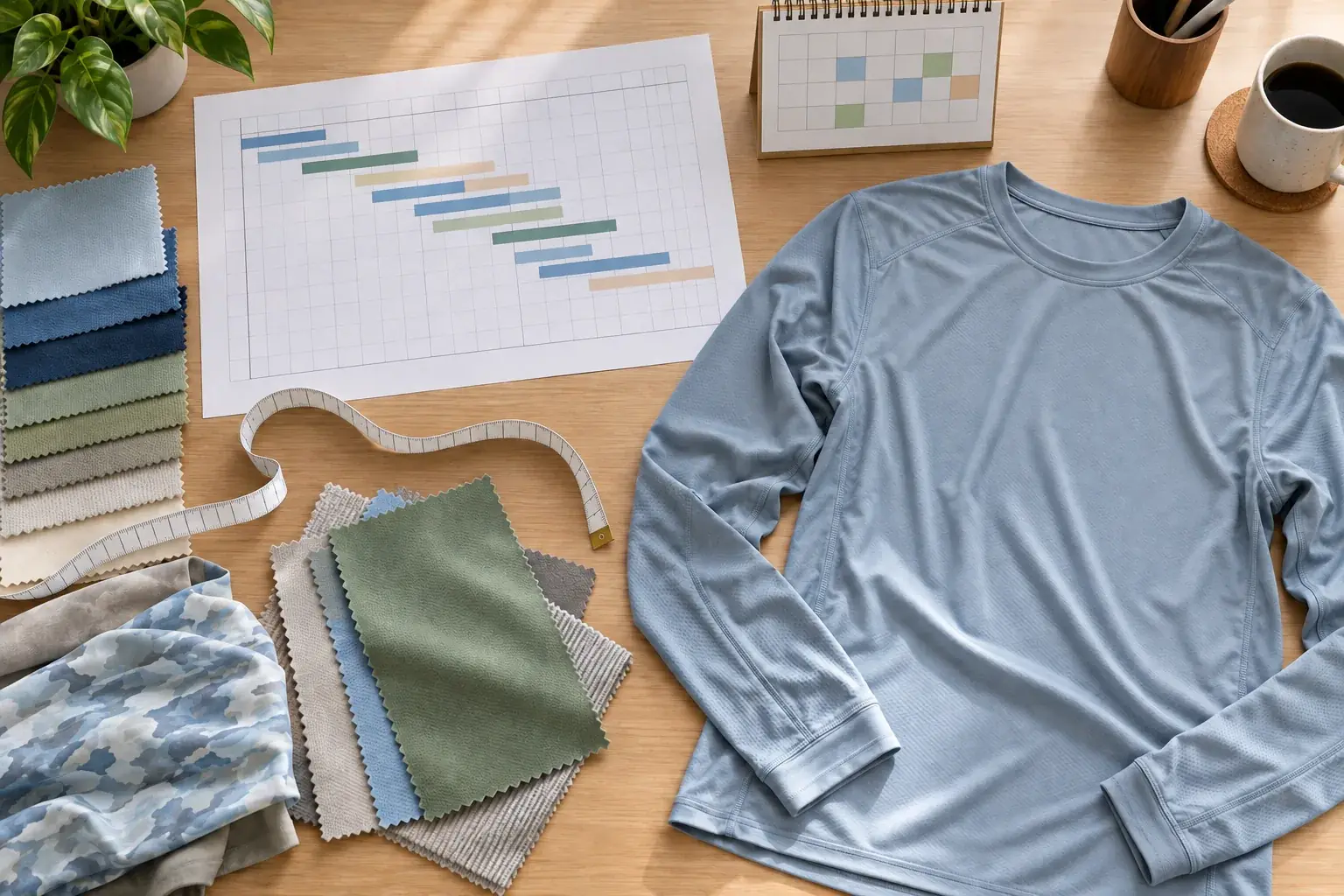
Start with one date: when must the goods be in your warehouse or at your customer’s door? Then subtract each stage. The table below shows a typical path for a new custom style that needs to ship before the holiday.
| Stage | Target date (2026–2027) | What must be ready |
|---|---|---|
| Brief and quotation | By mid-November 2026 | Style, fabric direction, colors, artwork, quantity per style and color, destination |
| Custom sample | Late November 2026 | Confirmed fabric, measurements, construction details, trims, logo files |
| Sample review and approval | By early-to-mid December 2026 | Fit comments, color and logo approval, labels and packaging decision |
| Order confirmation and materials | Mid-December 2026 | Final size breakdown, deposit, bulk fabric and trims ordered |
| Bulk production and inspection | Mid-December 2026 to mid-January 2027 | Locked production file and approved pre-production sample |
| Freight booking and departure | Mid-to-late January 2027 | Carton details, Incoterm, consignee, customs documents |
| Chinese New Year | February 6, 2027 | Factory and many suppliers closed |
Dates are planning references, not guaranteed delivery promises. Custom-dyed fabric, special trims, extra sample rounds, and inspection requirements can all add time. The final schedule is confirmed in the quotation and production order.
If your approval slips past mid-December, the pre-holiday path becomes tight. At that point, the safer choice is usually to plan for production after the holiday rather than rush a sample approval.
Three Ordering Paths for Spring 2027

Path A: New styles shipping before the holiday
Best for brands launching new fishing shirts, sun hoodies, or team shirts for early spring. Requires a clear brief by mid-November and quick sample feedback. Prepare a tech pack before sampling so the first sample answers most of the open questions.
Path B: Repeat orders of approved styles
If the style, fabric, and size chart were approved in a previous order, there is no new sample stage. Confirming the order, quantities, and any artwork changes by early December usually leaves enough time for bulk production before the holiday. Check fabric availability first, especially for colors that need a new dye lot.
Path C: Production after the factory reopens
If the brief is not ready, plan for bulk from late February or early March 2027. Goods typically ship in April and arrive around late April or May, depending on the route. This is often still in time for summer fishing season, when UPF fishing shirts and sun hoodies sell most, but it is late for an early-spring floor set.
You can combine paths. A common approach is to ship core repeat styles before the holiday (Path B) and develop new styles in January for a post-holiday run (Path C).
What to Prepare This Month
To keep Path A or B open, gather these items now:
- Product list with quantity per style and color
- Fabric direction: weight, function (UPF, cooling, stretch), and color references
- Artwork files in vector format, with logo sizes and positions
- Size range and any fit comments from previous orders
- Labels, hang tags, and packaging requirements (see our hang tags and packaging options)
- Destination, preferred shipping method, and the date stock must arrive (see logistics and shipping)
- One person who can approve samples and artwork quickly

The most common cause of a missed holiday window is not sewing time. It is a late change to artwork, colors, labels, or quantities after the schedule has started. Lock decisions early and keep one current production file.
Quality Risks Around the Holiday
Rushed production immediately before the holiday, and the first weeks after reopening, carry higher quality risk. Experienced workers may leave early or return late, and new staff need time to reach standard. To manage this:
- Approve a pre-production sample before bulk cutting starts.
- Agree on measurement tolerances and inspection points in writing.
- Ask for inline and final inspection photos, or arrange a third-party inspection.
- Avoid starting a brand-new style in the first week after reopening if the quality bar is high.
Our guide on how to evaluate a fishing shirt manufacturer lists the questions to ask about inspection and approval.
A Note for Australian and Southern-Hemisphere Buyers
For Australia and New Zealand, February falls in late summer, and the key selling season for sun shirts runs from spring through summer (September to February). Chinese New Year still affects ordering, but the deadline that matters is usually for next season’s spring stock. A practical plan is to develop and approve samples in the first half of the year and ship bulk by mid-year. See our custom fishing shirts for Australian brands page for local considerations.
Planning Next Season While You Are Here
Spring is also the time to sample fall-winter products. If you plan to add cold-weather styles, our winter fishing hoodie guide explains how to specify fleece-lined hoodies so samples can be approved before summer.
Spring 2027 Production FAQ
When is Chinese New Year 2027?
Chinese New Year falls on Saturday, February 6, 2027. Many apparel factories and fabric mills slow down one to two weeks before the holiday and usually return to normal output two to four weeks after it, depending on how quickly workers come back.
When should I place a spring 2027 order for custom fishing shirts?
For a new style that must ship before Chinese New Year, aim to confirm the brief, fabric, and artwork by mid-November 2026 and approve the sample by early-to-mid December. Repeat orders of an approved style can usually be confirmed a little later, around early December.
What happens if I miss the pre-holiday production window?
Production moves to the period after the factory reopens. Bulk usually restarts from late February or early March 2027, so goods would typically ship in April and arrive in late April or May. That still suits many summer sun-shirt programs but is late for an early-spring launch.
Does Chinese New Year affect shipping as well as production?
Yes. Freight space is tight and rates often rise in the weeks before the holiday, and ports and trucking run at reduced capacity during it. Book freight early and treat any shipment planned in the final week before the holiday as at risk.