Search interest in fishing hoodies does not disappear when summer ends. Buyers look for “fishing sweatshirts”, “fishing hooded sweatshirts”, “cold weather fishing gear” and “ice fishing hoodie”. Most of the products they find, however, are lightweight UPF sun hoodies built for hot water, not for a 5°C morning on the bank.
That gap is an opportunity for fishing brands, clubs, and retailers. A winter fishing hoodie is a different garment from a sun hoodie, and it needs a different specification. This guide walks through the decisions that matter before you request a sample.
Start With the Conditions, Not the Fabric
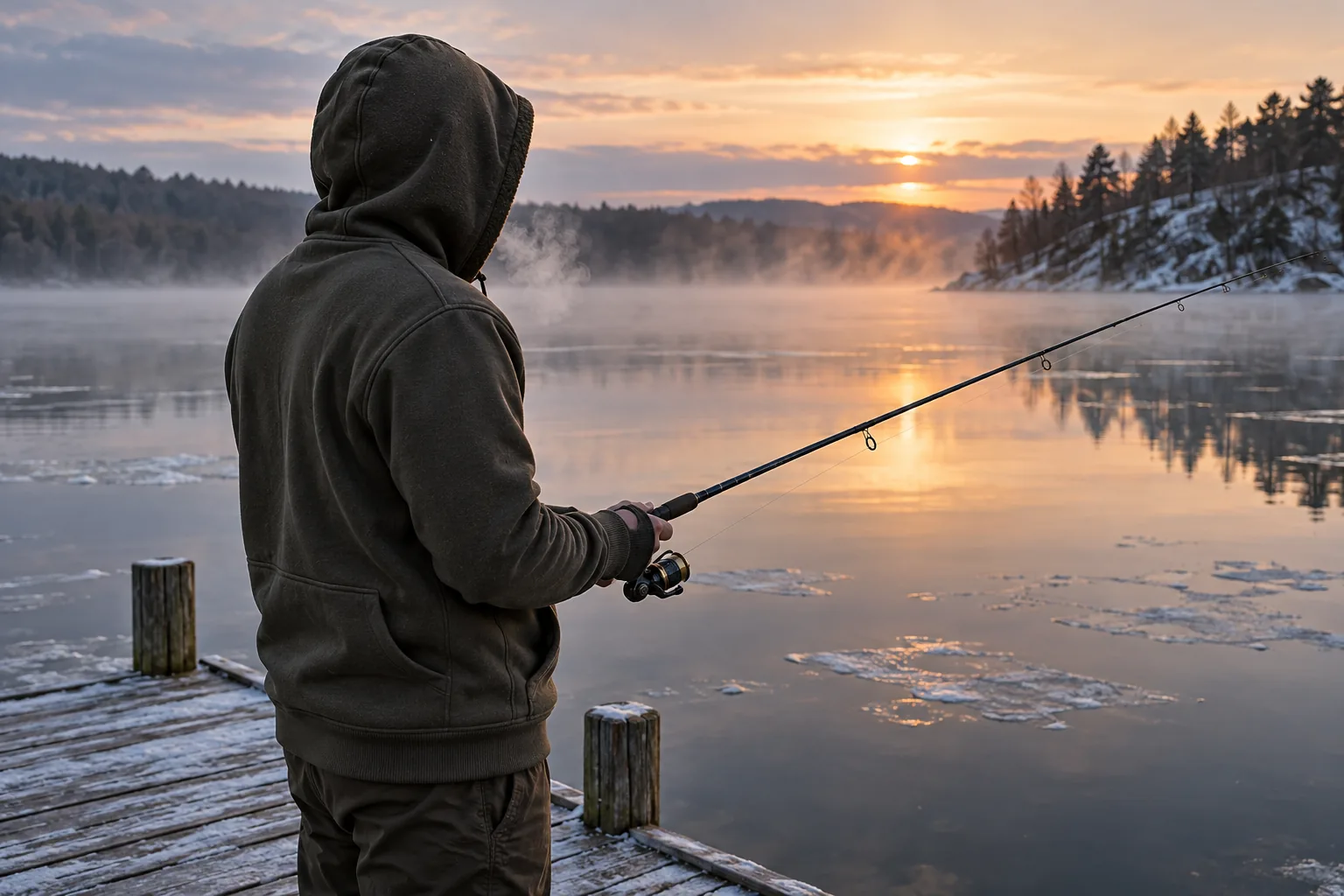
Before choosing a fleece, write down how the hoodie will be worn:
- Standalone layer for cool, dry days. Autumn bass fishing, early-morning boat launches, dock and tournament wear. The hoodie is the outer layer, so warmth and appearance matter most.
- Mid-layer under a jacket. Steelhead, winter trout, offshore runs and ice fishing. The hoodie must trap heat, move moisture, and fit under a shell without bunching.
- Lifestyle and merch. Club, team, and brand fans who wear the hoodie away from the water. Hand feel, color, and logo quality drive the purchase.
Each use pushes the fabric, fit, and trims in a different direction. Trying to cover all three in one style usually produces a hoodie that is too heavy to layer and too thin to stand alone.
Choose the Fleece Construction and Weight
| Construction | Typical weight | Best use | Watch-outs |
|---|---|---|---|
| Grid fleece (poly or poly/spandex) | About 200–260 gsm | Active mid-layer, ice fishing, layering under shells | Less wind resistance on its own; grid pattern shows through light prints |
| Brushed-back polyester fleece | About 280–340 gsm | Everyday winter fishing hoodie, club and team programs | Pilling on cheaper yarns; check after wash testing |
| Heavyweight brushed fleece | About 340–380+ gsm | Standalone hoodie for cold, dry days and lifestyle wear | Slower to dry; bulky under a jacket |
| Bonded softshell face with fleece back | Varies by laminate | Wind- and spray-exposed boat use | Higher fabric minimums; less stretch unless specified |
| Sherpa- or pile-lined hood and body | Varies | Maximum warmth for static fishing | Heavy, warm indoors, and harder to decorate |
Weights above are typical planning ranges. The right number is the one that feels correct on the worn sample in your customers’ climate, so ask for fabric swatches or a fabric header card before locking the style.
Polyester fleece is the default for fishing because it dries faster and holds less water than cotton-rich sweatshirt fabric. A cotton-blend hoodie can still make sense for lifestyle collections, but it should not be marketed as on-water cold-weather gear.
Add Weather Resistance Where It Counts
Many buyers ask for a “waterproof fishing hoodie”. In practice, a hoodie protects against spray and light rain, not sustained wet weather. Common options are:
- DWR (durable water repellent) finish on the outer face to bead spray and light drizzle. Ask whether the finish is PFAS-free if you sell into markets that are restricting it.
- Bonded softshell outer face for better wind and spray resistance on boats.
- Wind-blocking membrane inside the body panels only, to keep the sleeves and hood breathable.
Be precise in product copy. Describe what the finish does and where a waterproof fishing jacket is still needed. That builds trust with experienced anglers and avoids returns.
Hood, Cuff, and Pocket Details That Matter in Winter
The details that separate a fishing hoodie from a generic sweatshirt are concentrated in a few places:
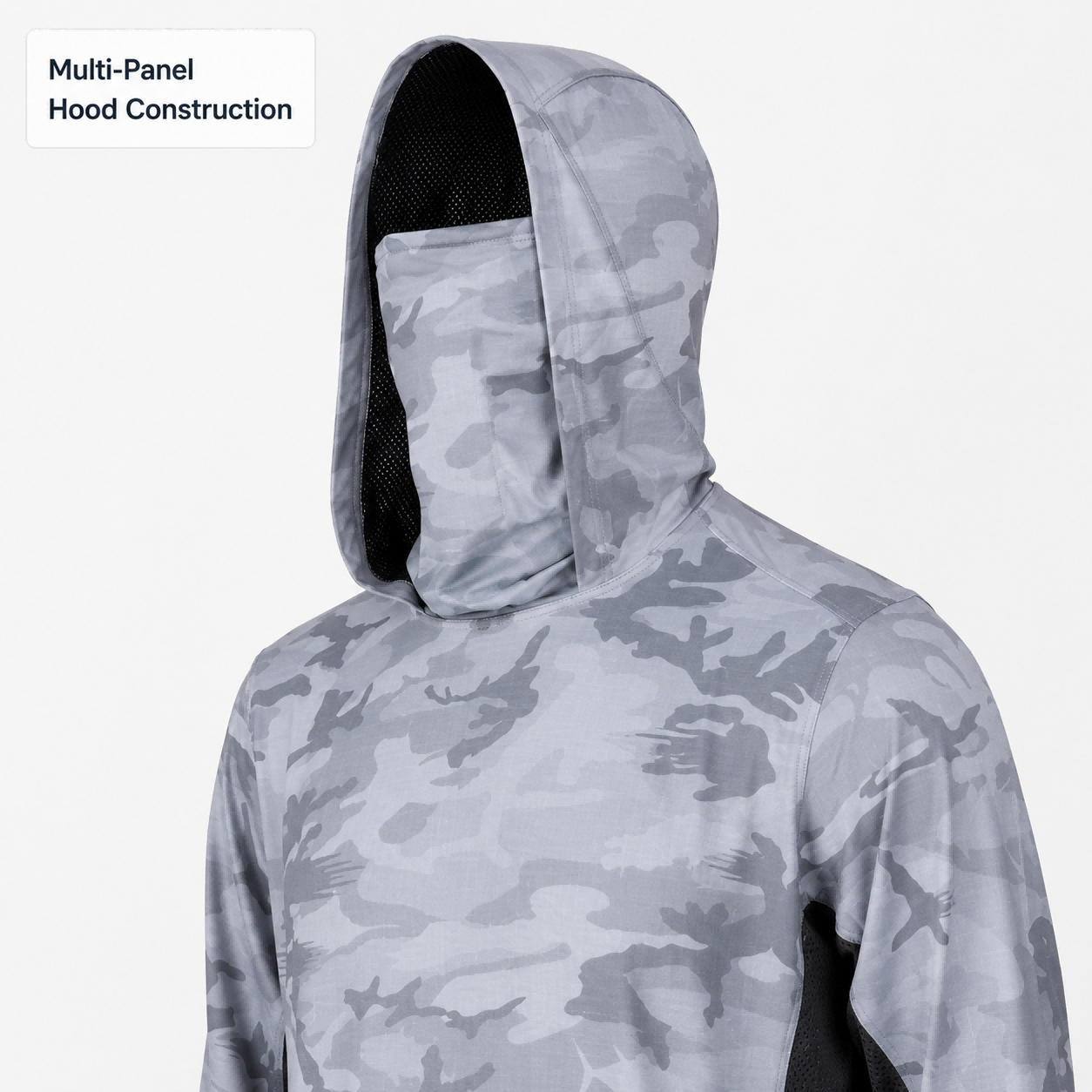
- Multi-panel or scuba-style hood. A shaped hood stays in place in wind and while turning the head. A three-panel hood with a reinforced edge keeps its shape after washing.
- Adjustable drawcord or toggle. Cord locks are easier to use with cold hands than knotted cords. Confirm the cord end finish for children’s sizes.
- Integrated neck gaiter or face cover. Useful for wind and ice fishing. Specify whether it is brushed on the inside and how it folds away.
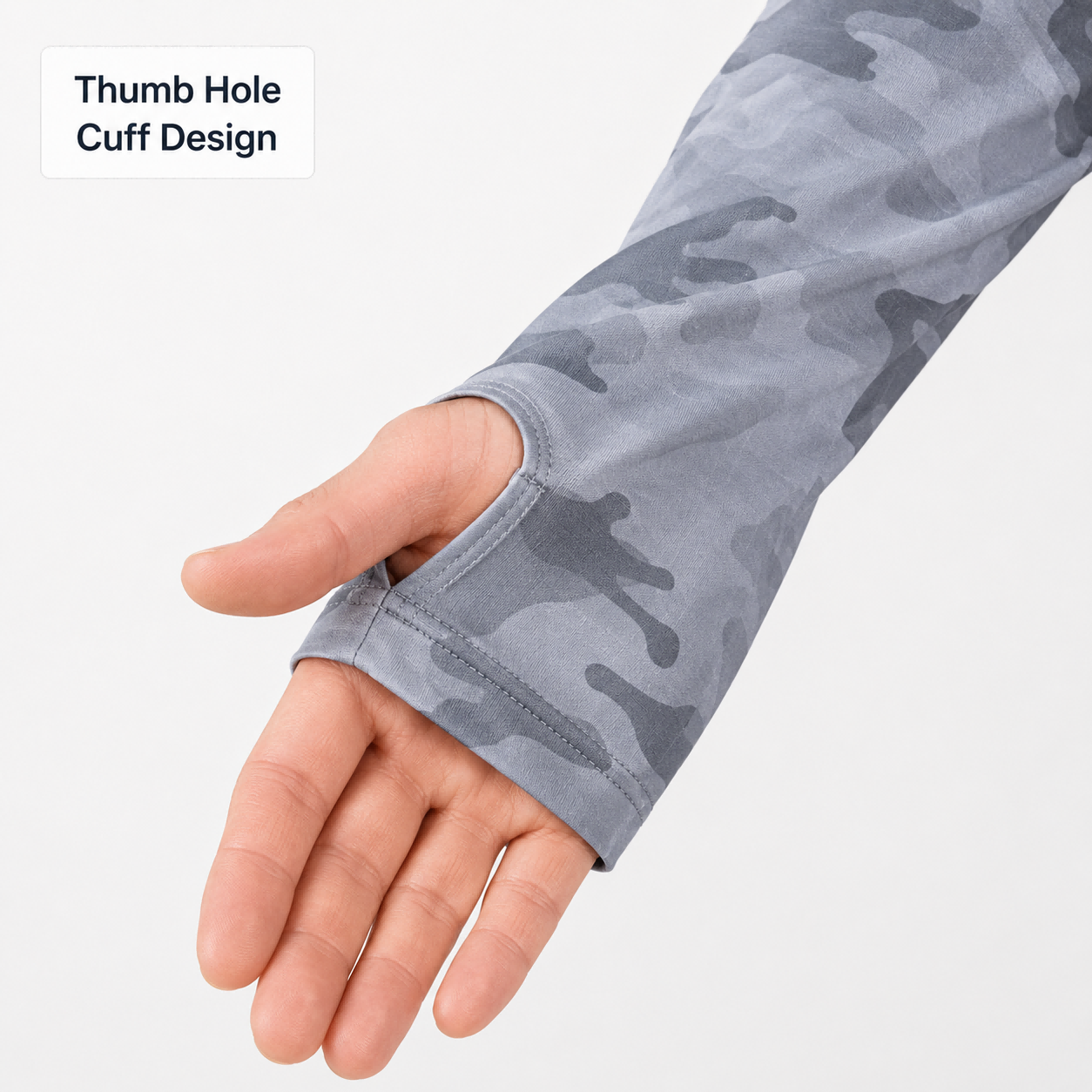
- Rib cuffs with thumb holes. Rib cuffs seal out cold air. Thumb holes keep sleeves down when wearing gloves. Our thumb hole design guide covers cuff styles and edge finishes in detail.
- Zip security pocket. A hidden zip pocket behind the kangaroo pocket protects keys and licences. Decide on zip size and puller shape for glove use.
- Drop-tail hem. A slightly longer back stays covered when bending over the gunwale or a hole in the ice.
Fit for Layering
Winter anglers wear base layers underneath and often a shell or bib on top. Adjust the block accordingly:
- Add ease through the chest and armhole if the hoodie is worn over a thermal base layer.
- Check the sleeve length with arms extended forward, as when casting or jigging, not only standing still.
- If the hoodie is sold as a mid-layer, measure it against the jacket it will be worn under. A bulky hood or kangaroo pocket can make a shell uncomfortable.
- Keep the size chart consistent with your other fishing tops. Customers who know their size in your sun hoodie should not have to guess. See our fishing apparel size chart for reference measurements.
Pick a Logo Method That Suits Fleece
Decoration choices change once you move from a smooth polyester sun hoodie to brushed fleece.
| Logo method | Works well on fleece? | Notes |
|---|---|---|
| Flat or 3D embroidery | Yes | The most durable option on fleece; use backing to stop puckering |
| Woven, leather, or rubber patches | Yes | Premium look for brand and club programs |
| Screen printing | On the smooth outer face | Test wash durability; avoid very heavy ink coverage on stretch fleece |
| Heat transfer | Yes, with care | Check for shine marks or flattened pile around the transfer |
| Full sublimation | Limited | Requires light-colored polyester; not suitable for dark fleece |
For a broader comparison of decoration methods, see embroidery vs. sublimation for fishing apparel. Private-label buyers should also confirm neck labels, hang tags, and packaging early. Our hang tags and packaging page lists the common options.
Build a Small Winter Capsule Around the Hoodie
A winter fishing hoodie sells better when it is part of a small, coordinated cold-weather range rather than a single SKU. Practical additions include:
- Matching beanie or fishing hat with the same logo treatment
- Neck gaiter or face mask in a brushed fabric
- Fishing gloves for cold-water handling
- Fishing pants or bibs for ice-fishing customers
Keeping colors and logo placements consistent across the range reduces development cost and makes the collection easier to merchandise.
When to Develop Winter Hoodies
Winter products are developed out of season. If the hoodies need to reach your customers by early autumn, a practical sequence is:
- Winter or early spring: finalise the brief, fabric direction, colors, and logo method.
- Spring: produce and approve samples, including a wear test in cold conditions.
- Early summer: place the bulk order once fabric availability and size breakdown are confirmed. Our MOQ for custom fishing hoodies starts from 100 pieces per style and colorway; specialty fleece or custom-dyed colors can raise the fabric minimum.
- Mid-summer: complete bulk production, inspection, and ocean freight so stock lands before the season starts.
Our MOQ, sampling, and lead time guide explains how sample and bulk timing are calculated, and the spring 2027 production planning guide shows how the Chinese New Year shutdown affects ordering windows.
Winter Fishing Hoodie Checklist Before You Request a Quote
- Target use: standalone, mid-layer, or lifestyle
- Fleece construction, target weight, and colors
- Weather finish required, if any
- Hood type, face cover, cuffs, thumb holes, and pockets
- Fit notes and size range
- Logo method, positions, and artwork files
- Labels, hang tags, and packaging
- Quantity per style and color (our MOQ starts from 100 pieces per style and colorway, with sizes mixed), and the date the goods must arrive
Send these points through the form on this page or visit our custom fishing hoodies page to see our fall-winter fleece-lined styles. If you are building a full private-label range, our private label fishing apparel service covers development from sample to packed cartons.
Winter Fishing Hoodie FAQ
What fabric weight is best for a winter fishing hoodie?
Most winter fishing hoodies sit between about 280 and 380 gsm. Lighter grid or brushed fleece around 200 to 260 gsm works as a mid-layer under a jacket, while heavier brushed-back fleece suits a standalone hoodie for cool, dry days. Confirm the weight on a worn sample rather than on paper.
Can a fleece fishing hoodie be waterproof?
A fleece hoodie is not a waterproof garment. A water-repellent finish or a bonded softshell face can shed spray and light rain, but anglers who face sustained rain or ice-fishing slush still need a waterproof jacket or bib over it.
Which logo method works best on fleece hoodies?
Embroidery, woven or leather patches, and screen printing on the smooth face are the most reliable choices. Full sublimation works only on light-colored polyester faces, so it is usually reserved for lightweight sun hoodies rather than dark winter fleece.
What is the MOQ for custom winter fishing hoodies?
Our MOQ for custom fishing hoodies starts from 100 pieces per style and colorway, and sizes can be mixed within an approved style. Specialty fleece, bonded fabrics, or custom-dyed colors can raise the minimum, so we confirm it with the full specification.
When should a brand sample winter fishing hoodies?
For a fall-winter launch, plan to approve samples in spring and place the bulk order in early summer. That leaves time for fabric sourcing, bulk production, inspection, and ocean freight before retailers and clubs start ordering cold-weather products.