
For an Australian brand ordering its first 100 custom fishing shirts, a useful budget starts with one defined product: one approved style and colourway, a planned size breakdown and a delivery destination. Add sample development, bulk production and any separately payable delivery costs before deciding whether the order fits your budget.
At EZ Fishing Wear, our starting fishing shirt MOQ is 100 pieces per style and colourway, with sizes normally mixed within an approved style. Fabric, custom-dyed colours, trims, decoration and packaging can affect the final minimum. A sample can be discussed before you commit to bulk production.
This guide uses a 100-piece first order to explain what to request and how to compare the answers. Your payable prices, sample terms and delivery costs come from the confirmed quotation.
In this guide: Understand the 100-piece minimum · Price the sample · Build the budget · Compare quotes · Request a quote.
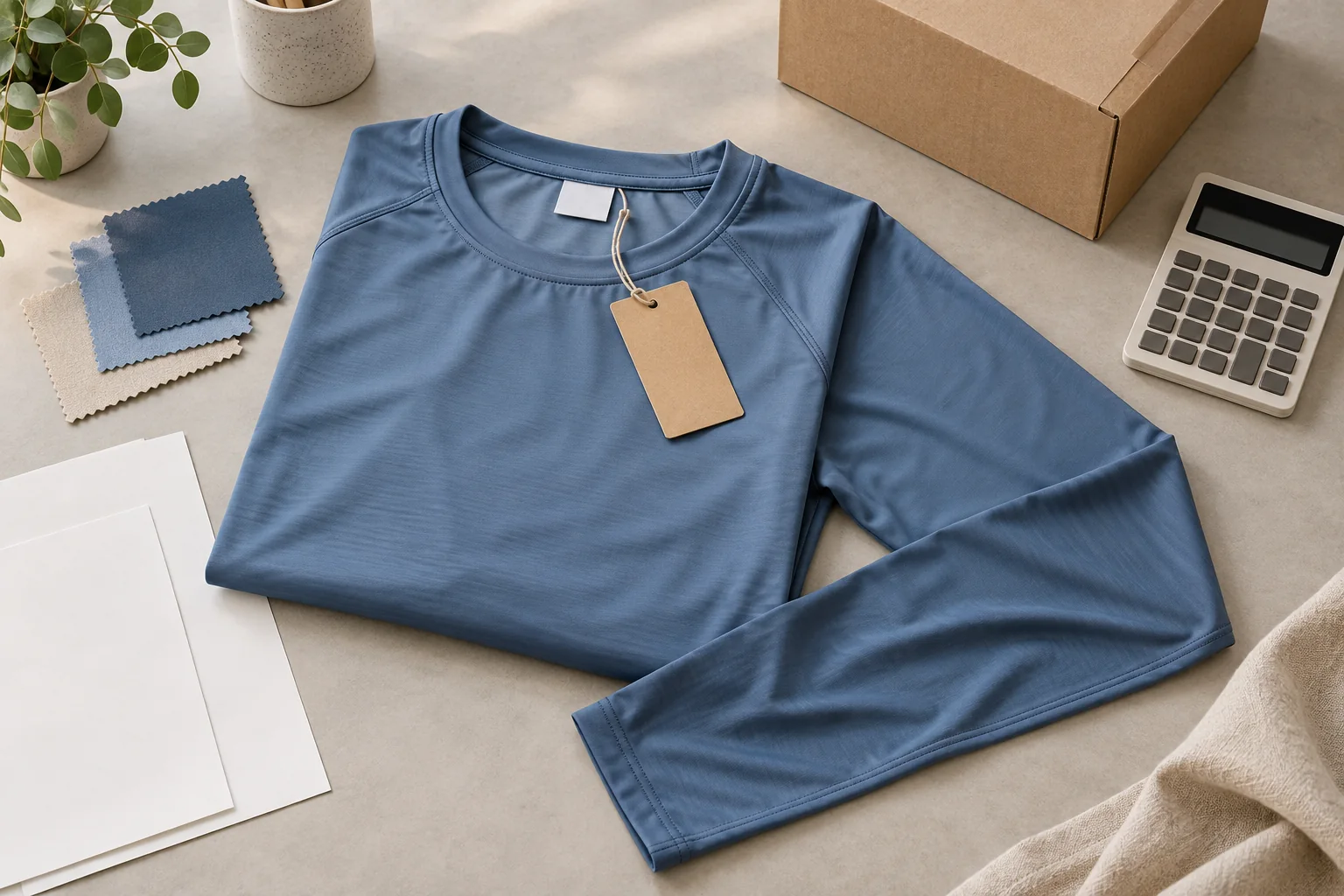
What does a 100-piece MOQ actually cover?
Think in production groups, not just the total number of shirts. A sun hoodie and a woven button-up use different patterns and construction. Two colourways can require separate material or printing arrangements. Adding their quantities together does not automatically satisfy the minimum for either group.
| Proposed first order | How to plan it |
|---|---|
| 100 long-sleeve shirts in one approved style and colourway, with mixed sizes | Matches the starting order structure, subject to the complete specification. |
| 50 shirts in one colour and 50 in another | Two colourways; do not assume the 100-piece minimum can be shared. Ask us to review the split. |
| 60 sun hoodies and 40 button-up shirts | Separate constructions; each needs its own feasibility and minimum review. |
| 100 shirts divided between men’s and women’s patterns | Confirm development and minimums for each pattern rather than treating the difference as sizing alone. |
For a simple size-planning example, 15 S, 25 M, 30 L, 20 XL and 10 2XL add up to 100 shirts. This is arithmetic only, not a recommended Australian size ratio. Use your customer measurements or wearer feedback to set the actual distribution, and confirm any extended-size charges.
If you are testing several product ideas, choose the first garment most likely to answer your main commercial question. You can review fishing jerseys, sun hoodies and button-up fishing shirts before settling the brief.
Agree what the sample fee includes
A request for “one sample” can describe several different jobs. Say what you need to learn before asking for its price.
| Sample request | What it can help you assess | What remains to confirm |
|---|---|---|
| Available swatches or an existing garment | Material options, hand feel and an existing construction | Your final fit, artwork, labels and full production specification. |
| An unbranded development or fit sample | Measurements, movement, seams, pockets and coverage | Final decoration, branding and any substitute materials. |
| A fully customised sample | The proposed combination of fabric, colour, construction, artwork and brand details | Its declared substitutions, remaining corrections and the scope approved for bulk. |
A plain sample may be useful while your logo is unfinished. If you need to judge a large back print or embroidery on a lightweight shirt, include that decoration in the sample brief. Otherwise, the part that most affects the finished appearance and comfort remains untested.
Ask for these items in the sample quotation
- Pattern and specification work: whether pattern adaptation, a new pattern or help completing the product brief is included.
- Artwork preparation: whether the supplied file is production-ready and whether print layout or embroidery digitising is separately charged.
- Materials and finishing: the fabric, buttons or zips, decoration, neck and care labels, hangtag and packaging included in this sample.
- Revisions: what the quoted fee covers, how changes are reviewed and when another sample fee could apply.
- Testing: whether a new test is needed for your proposed material or claim, and whether it is separately authorised and priced.
- Shipping: sample quantity, courier charge, destination postcode and the stated delivery scope.
Confirm any sample credit in writing before subtracting it from your budget. The agreement should identify the qualifying bulk order, amount credited, conditions and invoice where it will appear. Do not assume the sample fee, revisions, courier and testing all follow the same credit policy.
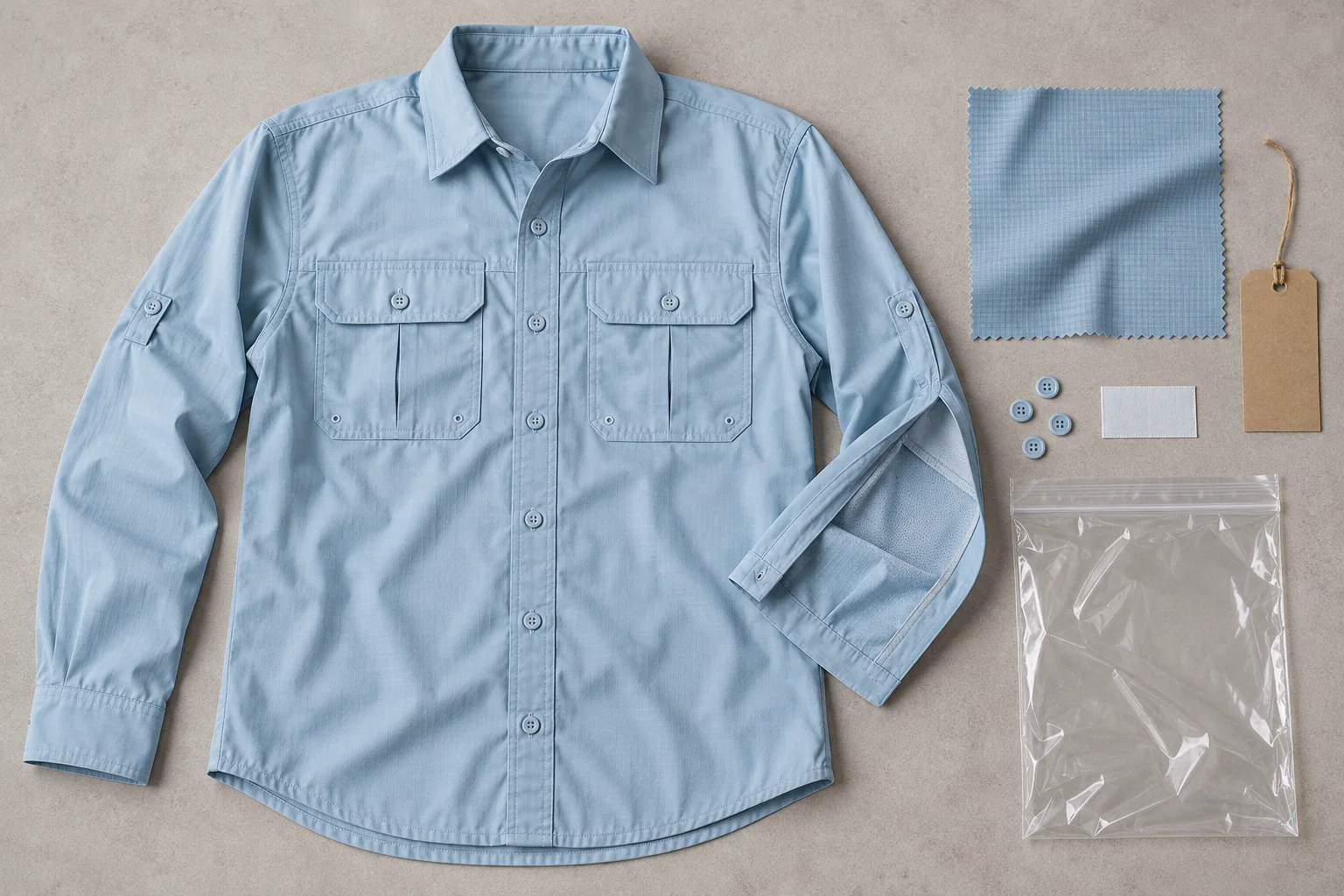
For the actual garment review, use our sample approval checklist. It covers the measurements, fit, material identity and comments to resolve before authorising production.
What changes the price of 100 shirts?
At this quantity, the specification matters as much as the number of pieces. A lightweight crew-neck jersey with one print route is a different job from a woven shirt with contrast panels, vents, pockets and multiple embroidered logos.
| Decision | What to fix before comparing prices |
|---|---|
| Fabric | Material reference or composition, finished GSM, stretch, stock or custom colour, finish and required performance evidence. |
| Construction | Fit, collar or hood, sleeve details, pockets, vents, closures and reinforcement. |
| Decoration | Method, artwork coverage, logo size and positions, embroidery detail and any variable names or numbers. |
| Brand components | Neck and care labels, hangtags, barcode or size stickers and individual packaging. |
| Development | Number and purpose of samples, pattern work, artwork preparation, revisions and additional tests. |
Ask which items are included in the unit price and which appear separately. A label already included in the per-shirt price should not be added again as an extra cost.
For Australian sun-protection products, keep the proposed claim connected to the actual evidence and garment design. ARPANSA explains that its material test reports do not evaluate a product’s design or body coverage. Review the Australian sun-protective clothing guidance alongside the report for your selected material. Our Australian fabric guide can help narrow the first material discussion.
Build your 100-piece first-order budget
Use one currency for the comparison, and record the currency of each original quotation. Separate the money needed for development from the bulk-order and delivery payments so you can see both the total commitment and when cash is required.
Copy the following structure into your own budget. Enter a quoted amount, “included”, “not applicable” or “awaiting quote” for every row.
| Budget line | Amount in your comparison currency | Record alongside the amount |
|---|---|---|
| Sample and agreed development | Enter quoted total | Sample quantity, purpose, pattern and artwork scope, revisions and payment timing. |
| Sample courier | Enter quoted total or included | Australian postcode and charges covered by the shipping quote. |
| 100 bulk shirts | 100 × confirmed unit price | Exact fabric, style, colourway, size breakdown and included decoration. |
| Separately quoted labels and packaging | Enter total or included | Components not already paid through the shirt price. |
| Agreed testing or independent inspection | Enter total or not applicable | Who authorises the work, its scope and when it is payable. |
| Bulk freight and insurance | Enter total or included | Shipment method, named destination and packing assumptions. |
| Import, clearance and Australian delivery charges | Enter separately payable amounts | What your delivery quotation covers and what remains with the importer. |
| Confirmed sample credit | Deduct only an agreed credit | Qualifying conditions and the invoice on which it is applied. |
First-order cash budget = development and sample shipping + 100 × bulk unit price + other separately payable order and delivery charges − confirmed credits.
Count each charge once. Keep unconfirmed items visible instead of treating them as zero. Dividing this total by 100 gives an all-in first-order planning figure per bulk shirt, including the development investment allocated to that run.
That figure is different from the factory’s unit manufacturing price. It is also different from a future reorder price: later quantities, material availability, new tests, artwork changes and delivery requirements need a current quotation.
Make the Australian delivery scope explicit
Give us the actual postcode and say whether the goods are going to a home, business, warehouse or fulfilment provider. Include any receiving appointments, split deliveries or required arrival date.
If you are comparing FOB and delivered proposals, ask who arranges and pays for each remaining part of the journey. A delivered quote should identify its named destination and the included charges; do not infer the scope from a headline such as “shipping included”.
The Australian Border Force explains the costs of importing goods and GST on importations. Use the actual product and shipment details with your broker to confirm the amounts applicable to your order. This budget does not assume a duty exemption or prescribe an import tax calculation.
For your internal AUD budget, record the exchange-rate assumption and any payment or conversion charges. Customs valuation has its own ABF exchange-rate rules, so a planning conversion is not automatically the value used for an import entry.
Compare quotes for the same shirt
Send each shortlisted supplier the same reference and ask them to mark any proposed substitutions. Compare fabric, construction, artwork, labels, sample scope and delivery before comparing the final number.
If you request 100-, 250- and 500-piece options, keep the approved specification and delivery basis the same. Ask for both the unit price and total amount required. A lower unit price at a higher quantity can still mean a larger cash commitment and more stock to sell.
For Australian brands choosing a sourcing route, our factory-versus-local-supplier comparison looks at that decision separately. Use this article to budget the 100-piece order once the proposed product is clear.
Keep the first run focused
Choose one core construction and a controlled colourway before expanding the range. Ask us to compare suitable available fabrics with a custom-developed option, including the effect on minimums, cost and timing.
Prioritise the details your customer needs: a reliable fit, appropriate fabric, useful coverage and the right branding. Decide on extra pockets, contrast panels, special trims and premium packing deliberately. Their individual costs and approval steps belong in the quotation.
Then resolve the major changes during sample review. Keep the approved measurements, material reference, artwork, label files and packing instructions together for production and future enquiries.
Allow separate time for sample making, your review, revisions, bulk production and shipping. Our typical planning references are about two weeks for a custom sample after the key details are confirmed, and about one month for bulk after approval and order readiness. The MOQ and production timeline guide explains the starting conditions. Confirm the actual schedule against your required arrival date.
Send a brief for your first 100 shirts
A tech pack is helpful, but you can start with a reference garment or clear images. Send the following so we can identify missing decisions and quote a defined sample and production scope:
- Shirt type and reference images: jersey, sun hoodie, polo or button-up.
- Intended customer and use: retail, guides, charter crew, club or event.
- Quantity per style and colourway, with a proposed size and fit breakdown.
- Fabric priorities, composition or GSM if known, and any required test evidence.
- Artwork, logo positions, decoration, labels and packaging requirements.
- Australian delivery postcode, receiving arrangements and required arrival date.
- Whether you want an existing sample, a fit sample or a fully customised sample first.
First-order questions
Can I mix sizes in a 100-piece custom fishing shirt order?
Sizes can normally be mixed within one approved style and colourway. Confirm the size range and grading plan before production. Different men’s, women’s or youth patterns may need separate development and minimums.
Can I split 100 shirts across two colours or different styles?
The starting MOQ is 100 pieces per style and colourway. Two colours or different shirt constructions do not automatically share that minimum. Send the proposed breakdown so we can confirm what is workable before quoting.
Can I order a custom sample before committing to 100 shirts?
Yes. We can discuss a paid custom sample before a bulk commitment. Agree its fabric, size, construction, artwork, labels, fee and shipping scope first. A development sample does not authorise bulk production.
How much does a fishing shirt sample cost, and is it credited?
The fee is quoted for the actual sample scope. Confirm whether pattern work, artwork, decoration, labels, revisions and courier are included. Any credit against a later bulk order must be stated in the written quotation with its qualifying conditions.
Do I need a tech pack to request a first-order quote?
No. Start with reference images or a garment, the intended wearer, fabric priorities, quantity, size range, branding and delivery details. Missing specifications need to be agreed before the final sample and production price can be confirmed.
Does the quoted shirt price include delivery to Australia?
Only the written quotation establishes what is included. Confirm the currency, delivery term and named destination, then identify freight, insurance, clearance, duties, GST and local delivery that remain payable separately. Avoid adding a charge again if it is already included.